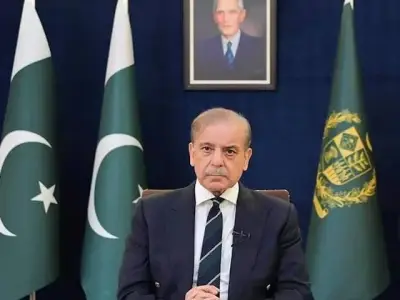
Prime Minister Shehbaz Sharif has constituted a committee to review the Telecommunication Reorganization (Amendment) Bill, 2026, Pakistani state media reported on Sunday, after lawmakers objected to provisions they say could undermine constitutional property rights by giving telecom operators broad powers to access private land.
Contentious Provisions of the Bill
Among the most contentious provisions of the bill is a clause under which a property owner’s failure to respond to two official notices would be treated as “implied consent” for telecom installations, according to members of the Senate. The bill in its present form also allows authorities to override local zoning rules and regulations governing housing societies, granting telecom operators access through public and residential areas with limited scope for appeal.
Committee Composition and Mandate
Law Minister Azam Nazir Tarar will head the committee to review the bill. The committee also includes Senator Sherry Rehman, IT Minister Shaza Fatima, Economic Affairs Minister Ahad Cheema, Attorney General Mansoor Awan, and IT experts. “The committee will review the right-of-way for the establishment of telecommunication facilities and deliberate on the operations related to the domain of private property and housing societies before submitting its recommendations,” the Radio Pakistan broadcaster reported on Sunday.

Senate Concerns and Extension
The report came days after Senator Palwasha Khan, who chairs the Senate Standing Committee on IT, told Arab News she had secured a 45-day extension to review the draft after lawmakers identified “serious flaws” in the bill. “In its current form, the bill conflicts with Articles 23 and 24 of the Constitution, which protect citizens’ rights to own and use property,” Khan said on Friday, adding the legislation was already passed by the National Assembly, the lower house of parliament.
Digital Infrastructure Context
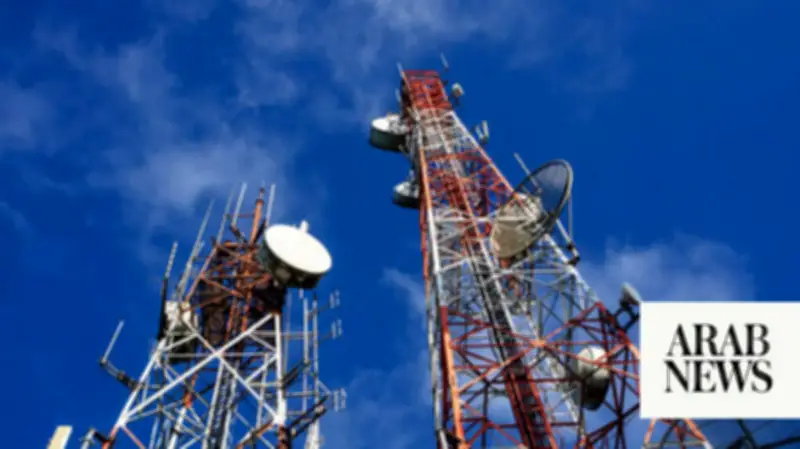
The dispute comes as Pakistan seeks to expand digital infrastructure in a market with more than 207 million mobile and fixed-line subscriptions and 58,423 cell sites, according to the Economic Survey 2025-26. Industry officials have long cited weak network infrastructure as a major obstacle and only 14-19 percent of telecom towers are connected to fiber networks, leaving most users dependent on mobile broadband services.
Government Defense and Revisions
IT Minister Fatima recently defended the bill in remarks to a private broadcaster, saying it was intended to remove barriers to network expansion. “The intent of this law has always been to serve the public good because we sincerely believe that Internet access is a necessity today,” Fatima said, adding that her government was willing to revise provisions that had raised concerns. “Where the wording relating to above-ground installations lacks clarity, we will certainly improve it.”
Critics’ Objections
Critics say the draft remains “overly broad.” Khan said the legislation would impose fines of up to Rs50 million (over $175,000) for obstructing telecom infrastructure projects and could give operators excessive access rights. “The legislation is drafted in a way that could allow private companies to classify virtually anything as telecommunications equipment and install it anywhere,” she said, adding that a person sitting in their home could receive notices, become entangled in prolonged litigation, and ultimately find that the final decision rests with a government official. Khan said officials had told the senate committee that mobile towers were excluded from the bill but failed to explain provisions in the draft that appeared to suggest otherwise.
Clarification on Penalties
Fatima earlier rejected perception that homeowners could face arbitrary penalties. She said the fines would apply only where a property owner breaches an agreement after an operator has already invested in the infrastructure. “The provision does not mean that someone can simply force their way onto private property,” Fatima said, adding that constitutional protections would remain in force.