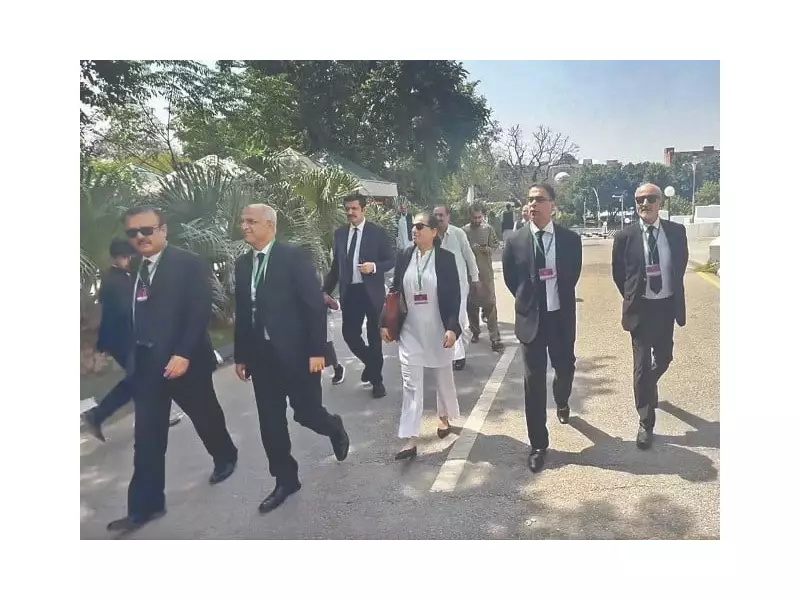
In a significant development shaking Pakistan's legal foundations, four judges from the Islamabad High Court have taken the bold step of preparing a constitutional challenge against the recently enacted 27th Constitutional Amendment. The judges are moving to contest what many legal experts describe as a fundamental restructuring of the country's judicial hierarchy.
The Judges Leading the Challenge
Justices Mohsin Akhtar Kiani and Babar Sattar are among the principal applicants in this constitutional battle. They are joined by Justices Saman Rafat Imtiaz and Sardar Ejaz Ishaq Khan, forming a united front against the controversial legislation. The group has completed drafting their petition and forwarded it to the apex court for formal submission, which is expected to occur in the coming days.
However, sources within the Supreme Court indicate that no petition from the Islamabad High Court judges had been received as of Thursday. Officials from the newly established Federal Constitutional Court similarly confirmed they had not yet received any application challenging the amendment.

Resignations and Widespread Criticism
The constitutional amendment has triggered massive backlash across Pakistan's legal community. In a dramatic protest against the amendment's approval, the senior-most judges of the Supreme Court — Justices Mansoor Ali Shah and Justice Athar Minallah — resigned from their positions. Both judges condemned the move as what they called 'a grave assault on the Constitution of Pakistan.'
The fallout continues to deepen, with speculation mounting that more judicial resignations may follow. The amendment has drawn widespread criticism from opposition parties, lawyers, judges, and legal commentators, who uniformly describe it as an attack on constitutional and fiduciary principles.
Sweeping Institutional Changes
The 27th Constitutional Amendment, which became law after receiving presidential assent, introduces transformative changes to Pakistan's governance structure:
The Supreme Court now stands subordinate to the Federal Constitutional Court under the new constitutional framework. This represents a fundamental shift in judicial authority that has alarmed many constitutional experts.
Revised Articles 199 and 200 now empower the president to transfer high court judges between provinces based on recommendations from the Judicial Commission. Any judge who declines such transfer will be deemed retired from service.
Article 248 has been amended to grant the president lifetime legal immunity, which can only be waived if the individual assumes public office again.
Changes to Article 243 will abolish the office of the Chairman Joint Chiefs of Staff Committee effective November 27, 2025, thereby concentrating strategic military authority under the Chief of the Defence Forces.
The amendment also establishes the Federal Constitutional Court with original jurisdiction over constitutional disputes involving the government and all matters relating to fundamental rights. All petitions or appeals currently pending before the Supreme Court will be transferred to this new court.
In a major shift, the amendment abolishes the Supreme Court's suo motu powers and removes Articles 184, 186 and 191A from the Constitution entirely.
This constitutional challenge by four sitting high court judges represents an unprecedented moment in Pakistan's judicial history, setting the stage for a landmark legal battle that could determine the future balance of power within the country's institutions.