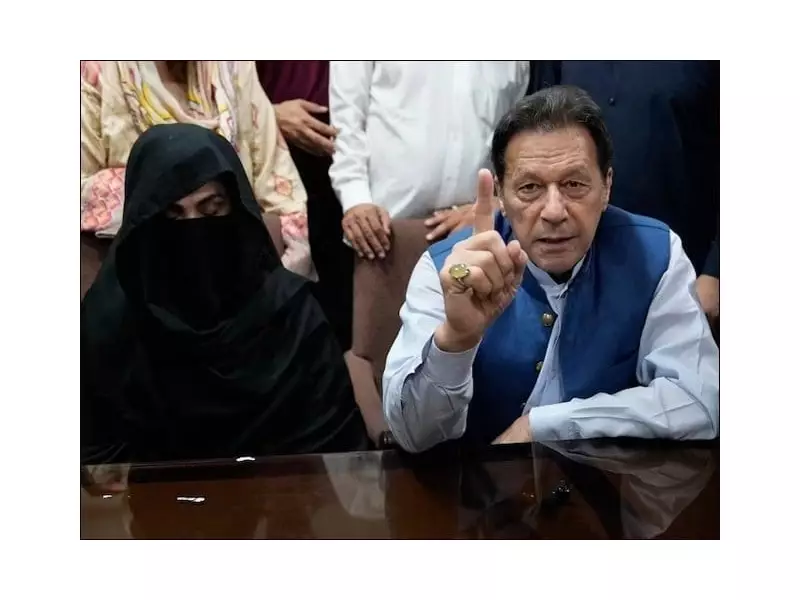
In a significant legal move, Pakistan Tehreek-e-Insaf (PTI) founder and former prime minister Imran Khan and his wife Bushra Bibi have approached the Islamabad High Court (IHC) to challenge their recent convictions in the Toshakhana criminal case. The appeals, filed on Saturday, seek to overturn the verdict and sentences handed down by a trial court just days earlier.
The Grounds for Appeal
The appeals, submitted through senior lawyer Sardar Latif Khan Khosa, argue that the trial court's decision was fundamentally flawed. The petitioners have contended that the judgment was delivered in haste, lacked proper reasoning, and was based on insufficient evidence. A key point raised is the alleged denial of the right to a fair trial, including the right to present a final defense argument.
The trial court, presided over by Judge Muhammad Bashir, had sentenced both Imran Khan and Bushra Bibi to 14 years of rigorous imprisonment on January 31, 2024. The court also imposed a hefty fine of Rs 1.573 billion on the couple and disqualified them from holding any public office for a period of ten years. This conviction was separate from other legal cases involving the former premier.

Seeking Immediate Relief
Alongside the main appeals challenging the conviction, the legal team has also filed separate applications requesting the suspension of the sentences. These applications plea for the sentences to be put on hold until the final adjudication of the appeals. This is a standard legal procedure that, if granted, could potentially lead to the release of the convicts on bail while the higher court reviews the case.
The appeals highlight several procedural irregularities. They state that the trial was concluded with extraordinary speed, denying the accused adequate time and opportunity to defend themselves. Furthermore, the appeals challenge the very basis of the charges, arguing that the prosecution failed to prove the essential elements of the offense beyond a reasonable doubt.
The Toshakhana Case Context
The Toshakhana case revolves around allegations that Imran Khan and his wife illegally retained state gifts received during his tenure as prime minister. The case, filed by the National Accountability Bureau (NAB), accused them of misdeclaring the value of these gifts and failing to deposit them in the state repository as required by law. The trial court's conviction marked a major development in this long-running legal and political saga.
The filing of these appeals in the Islamabad High Court sets the stage for the next major legal battle. The IHC will now examine the trial court record, hear arguments from both the defense and prosecution, and determine whether the convictions should stand, be overturned, or result in a retrial. The outcome is being closely watched, given its significant implications for the country's political landscape.
The appeals process in the high court is expected to unfold over the coming weeks. Legal experts suggest that the IHC may first take up the applications for sentence suspension before delving into the substantive arguments of the main appeals. The proceedings will be a critical test of the legal arguments presented by Imran Khan and Bushra Bibi's defense team.