In a significant development for Pakistan's judiciary, the Judicial Commission of Pakistan (JCP) has put forward key recommendations for top judicial positions, marking its first major meeting since a pivotal constitutional change.
Key Recommendations for Superior Judiciary
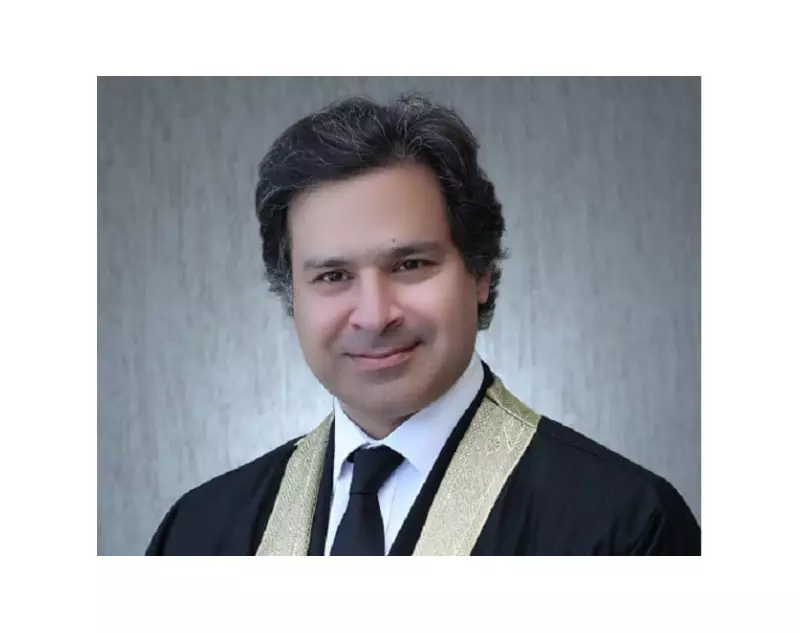
The commission, in a session chaired by Chief Justice of Pakistan Justice Yahya Afridi, reached a majority decision to recommend Justice Miangul Hassan Aurangzeb for appointment as a permanent judge of the Supreme Court. Justice Aurangzeb is currently serving as an acting judge of the apex court.
Furthermore, the JCP reached a unanimous consensus on two other crucial appointments. It recommended Justice Zafar Ahmed Rajput for the position of Chief Justice of the Sindh High Court and Justice Muhammad Kamran Khan Mullakhel as Chief Justice of the Balochistan High Court.

Considerations and Current Roles
Sources revealed that for the permanent Supreme Court vacancy, the commission evaluated three senior judges: Justice Sarfraz Dogar, Justice Mohsin Akhtar Kayani, and the ultimately recommended Justice Miangul Hassan Aurangzeb.
For the leadership of the Sindh High Court, the names under consideration included Justice Zafar Ahmed Rajput, who is the acting chief justice, alongside Justice Iqbal Kalhoro and Justice Mahmood Khan. Justice Muhammad Kamran Mullakhel, the recommended candidate for Balochistan, is already serving as the acting Chief Justice of the Balochistan High Court.
Formation of Committees for Judicial Rules
Beyond appointments, the JCP took steps to refine judicial procedures. By a majority opinion, it established a five-member committee tasked with formulating rules. This influential committee comprises:
- Federal Constitutional Court judge Justice Aamir Farooq
- Attorney General Mansoor Usman Awan
- Senator Farooq Naek
- Senior lawyers Ali Zafar and Ahsan Bhoon
Simultaneously, a separate judges' committee was formed to finalize the rules of the Supreme Judicial Council (SJC). This committee is headed by Justice Jamal Mandokhail and includes Justice Hassan Azhar Rizvi and Lahore High Court Chief Justice Aalia Neelum as members. This committee will propose amendments to the SJC rules.
Post-Amendment Context and Institutional Roles
This meeting holds particular importance as it is the first formal JCP gathering concerning superior judiciary appointments following the enactment of the 27th Amendment to the Constitution of Pakistan. On November 18, three judicial forums were reconstituted under this amendment: the JCP, the SJC, and the Practice and Procedure Act (PAPA) committee under the Supreme Court.
The JCP is the constitutional body empowered to recommend judges for elevation to the superior courts. The SJC is responsible for examining complaints of misconduct against judges of these courts. The SC's PAPA committee handles the formation of benches and the listing of cases.
These decisions represent a major step in shaping the leadership and operational framework of Pakistan's superior judiciary in the new constitutional landscape.