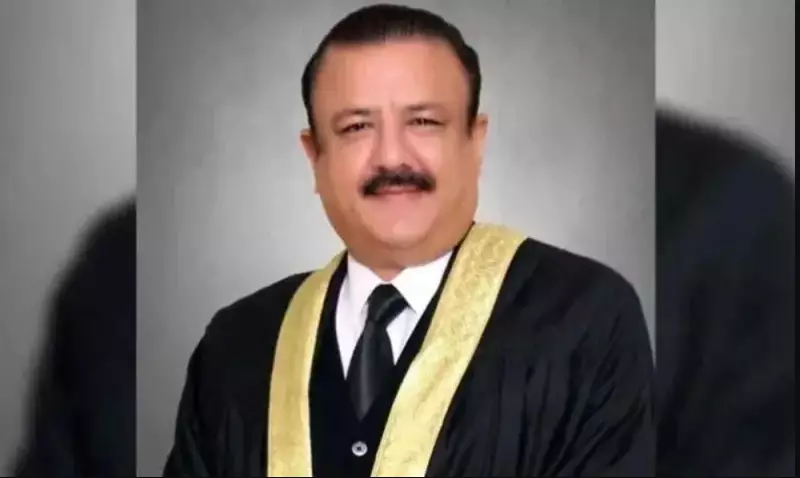
Justice Tariq Jahangiri of the Islamabad High Court (IHC) has decided to escalate his legal defense, opting to challenge the ongoing proceedings in his alleged fake degree case before the Federal Constitutional Court (FCC). This move marks a significant new phase in the high-profile controversy surrounding the judge's academic credentials.
A Multi-Pronged Legal Strategy
According to informed sources, Justice Jahangiri has assembled a formidable three-member team of senior lawyers to represent him across different judicial platforms. Advocate Akram Sheikh and Barrister Salahuddin are slated to plead his case before the IHC itself. Meanwhile, Advocate Uzair Bhandari will take the lead in arguing before the Federal Constitutional Court.
The judge's legal team is preparing to file an appeal, likely later today, specifically targeting the IHC's decision that declared the petition against him maintainable. The core of this appeal will be to contest the high court's order that allowed the proceedings in the alleged degree case to continue. In addition to the FCC route, Justice Jahangiri is also expected to file fresh applications before the IHC seeking further legal relief.

Origins and Escalation of the Controversy
The saga began last year when a letter, purportedly from the University of Karachi's controller of examinations, started circulating on social media. This letter cast doubt on Justice Jahangiri's academic qualifications. Following this, in July last year, a formal complaint regarding the alleged fake degree was submitted to the Supreme Judicial Council (SJC), the constitutional body responsible for investigating misconduct allegations against judges.
Separately, lawyer Mian Dawood filed a petition in the IHC earlier this year challenging the judge's appointment. The case took a dramatic turn on September 16, when an IHC division bench issued an interim order restraining Justice Jahangiri from performing his judicial functions. This order, passed without prior notice to the judge, sparked intense debate in legal circles about the authority of a high court to suspend a sitting judge through an interim directive.
Supreme Court Intervention and Current Status
The Supreme Court intervened on September 29, setting aside the restraining order against Justice Jahangiri. A five-member constitutional bench, headed by Justice Aminuddin Khan, ruled that a high court cannot bar a judge from working while hearing a quo warranto petition. The apex court clarified that its decision was limited to the legality of the interim order and did not address the merits of the underlying allegations.
The Supreme Court subsequently directed the IHC to decide all preliminary objections and then proceed with the matter according to the law. It is worth noting that Justice Jahangiri was one of the six IHC judges who, last year, wrote a letter to the SJC alleging interference by intelligence agencies in judicial affairs—a move that ignited a nationwide debate on judicial independence.
The upcoming legal battles in the FCC and the IHC will now determine the next chapter in this complex case that sits at the intersection of judicial accountability and institutional autonomy.