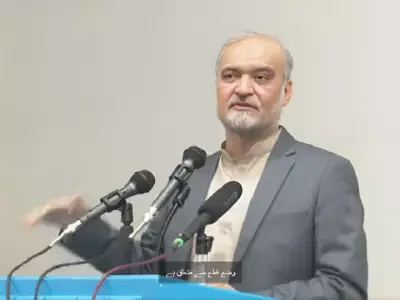
Justice Tariq Mehmood Jahangiri of the Islamabad High Court (IHC) has escalated a legal battle concerning his judicial appointment to the country's top constitutional forum. The judge filed a constitutional petition before the Federal Constitutional Court (FCC) on Wednesday, challenging an IHC order that allowed a Quo Warranto writ against him to proceed.
Legal Challenge Against IHC Order
Justice Jahangiri moved the FCC under Article 175F(1)(c) of the Constitution. The petition names several respondents, including Mian Dawood, the Secretary of the Ministry of Law and Justice, the President of Pakistan, the Secretary of the Judicial Commission of Pakistan, the Parliamentary Committee, the Higher Education Commission, and Karachi University. He is represented by his counsel, Uzair Karamat Bhandari.
The case originates from an order by a two-judge IHC bench, comprising Chief Justice Sardar Muhammad Sarfraz Dogar and Justice Muhammad Azam Khan, on December 9, 2025. That bench deemed a Quo Warranto writ filed by Mian Dawood as maintainable. The writ challenges Justice Jahangiri's appointment as an IHC judge, alleging he holds an invalid LLB degree and is thus not qualified for the office. The bench had issued a notice to the judge, directing him to file a reply within three days.

Core Legal Arguments Presented
In his petition to the FCC, Justice Jahangiri raises a fundamental legal question. He asks whether a Quo Warranto petition can be sustained against a sitting superior court judge when the challenge is based purely on factual grounds that require evidence to be adjudicated.
He contends that the IHC's order is unconstitutional, unlawful, and violates his fundamental rights, particularly under Article 10-A (right to a fair trial). A key argument is that the order conclusively decided the writ's maintainability without giving him a hearing, effectively deciding the issue "behind his back."
The judge asserts that the controversy revolves around the validity of his LLB degree, a factual dispute spanning over three decades. He argues that such factual issues cannot be resolved by a High Court exercising its constitutional jurisdiction under Article 199. According to him, only a court of competent jurisdiction, after a full trial involving witness testimony and evidence, can make such a determination.
Allegations of Procedural Irregularity and Bias
Justice Jahangiri's petition highlights several procedural concerns. He states that the IHC order granted him only three days to respond to allegations concerning decades-old events, without providing him copies of the relevant record.
Furthermore, he points to a potential conflict of interest. The petition notes that the Quo Warranto proceedings were conducted under the administrative and judicial authority of Chief Justice Dogar. It mentions that Justice Jahangiri had previously challenged Chief Justice Dogar's own transfer and appointment to the IHC, a matter that remains pending before the Federal Constitutional Court.
The petition alleges that Chief Justice Dogar "not only fixed the matter before a bench headed by himself" but also passed procedural orders "in haste," thereby creating "an appearance of bias." It also claims that a report from Karachi University, filed in the IHC on December 2, 2025, deliberately concealed information about related proceedings and a stay order from the Sindh High Court.
Justice Jahangiri has vehemently denied all allegations regarding his educational credentials, stating they cannot be proven without a full-fledged trial. He maintains that in Quo Warranto proceedings, the court's scrutiny should be limited to whether he was eligible for appointment under Article 193 of the Constitution at the time of his appointment.