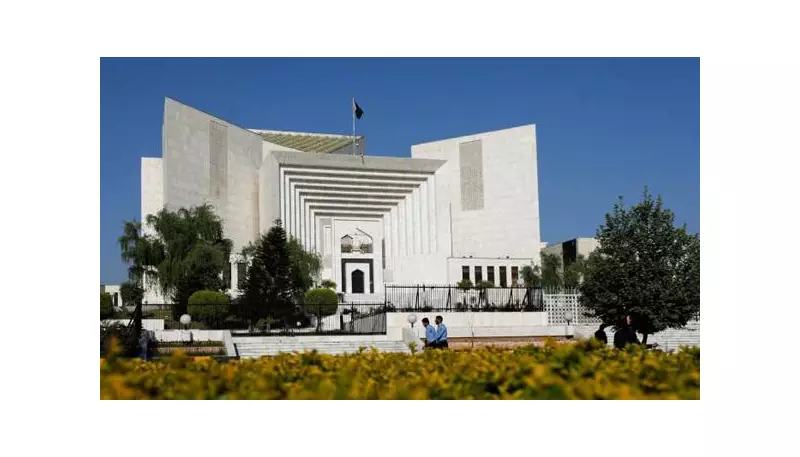
In a significant development for Pakistan's judicial system, the backlog of cases before the Supreme Court has seen a dramatic reduction. Fresh statistics released on Wednesday show the total number of pending cases in the apex court now stands at 33,796.
A Major Shift in Case Load
This marks a substantial decrease from the 56,608 cases that were under hearing as recently as November 13. The primary driver behind this sharp decline is the transfer of a massive batch of cases to the newly established Federal Constitutional Court (FCC). Official data confirms that 22,910 cases were moved from the Supreme Court's docket to the FCC.
The past week also saw regular judicial activity, with 333 new cases filed in the Supreme Court and 304 cases disposed of. Experts within judicial circles view this combination of strategic case transfer and timely disposal as a crucial step. They believe it is easing the immense burden on the country's highest court, a move expected to enhance the overall efficiency and effectiveness of the justice delivery system.

Bail Plea Dismissed in Narcotics Case
In a separate proceeding on Wednesday, the Supreme Court dismissed a bail petition filed by an accused in a narcotics case. A two-member bench, headed by Justice Naeem Akhtar Afghan and including Justice Ishtiaq Ibrahim, heard the plea from accused Waleed, who was arrested in September this year on charges of drug possession.
The court noted that the bail petition had been withdrawn and accordingly dismissed it. Justice Afghan expressed skepticism about the speed with which the case reached the Supreme Court, questioning how the accused approached the apex court so swiftly after his September arrest. He remarked that if there was any mala fide intent on the part of the police, the accused must clearly identify it.
Arguments and Court's Observations
The defense counsel argued that Waleed was arrested during a domestic dispute, after which the police registered a narcotics case against him. This claim prompted pointed questions from the bench. Justice Afghan asked how the police arrived at the scene of a domestic quarrel in the first place.
Justice Ibrahim wondered how a domestic dispute could escalate to the alleged planting of heroin, while Justice Afghan questioned who would place one kilogram of heroin during a family argument. The court was informed that the case involved the recovery of one kilogram of heroin and 120 grams of ice (crystal meth).
The defense further contended that there were no private witnesses to the incident and no video recording of the arrest. Justice Afghan observed that such arguments were more pertinent for the trial proceedings, not for a bail hearing. The bench directed the police to submit the challan promptly and instructed the trial court to conclude the trial against the accused at the earliest. The case was originally registered by Islamabad police in September.