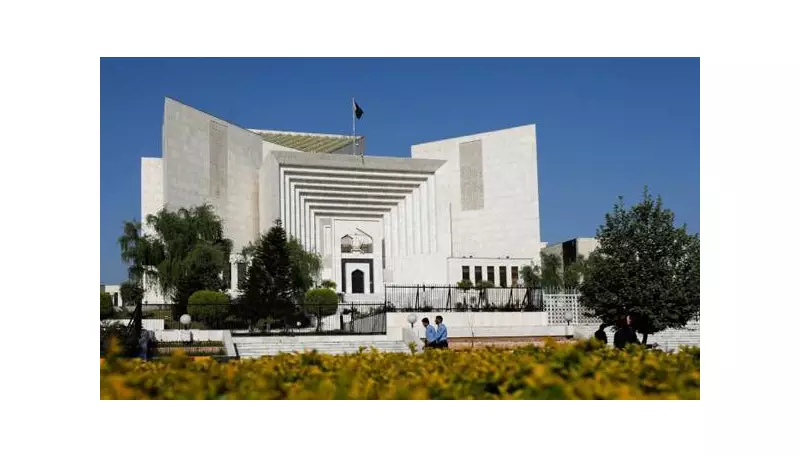
The Supreme Court of Pakistan has reserved its judgment on a significant legal challenge concerning the transfer of a murder case from one court to another. This development came during Thursday's proceedings where a three-member bench heard arguments from both sides.
Legal Battle Over Jurisdictional Authority
The core issue revolves around whether the Lahore High Court possessed the constitutional authority to transfer the murder case from one trial court to another. The appellant challenged this transfer decision, arguing that the LHC overstepped its jurisdictional boundaries.
During the proceedings, the Supreme Court bench carefully examined the constitutional provisions and legal precedents governing such transfers. The justices raised crucial questions about the interpretation of relevant laws and the scope of high courts' powers in case transfers.

Detailed Court Proceedings and Arguments
The three-member bench, comprising senior judges of the Supreme Court, heard extensive arguments from legal counsel representing both parties. The discussion focused on technical legal aspects and constitutional interpretations that could set important precedents for future similar cases.
Legal experts present in the courtroom noted that the court's eventual decision could have far-reaching implications for the judicial system's functioning. The verdict is expected to clarify the boundaries of high courts' authority in transferring cases between lower courts.
The murder case at the center of this legal battle involves serious criminal charges that initially prompted the transfer request. While the specific details of the murder case weren't extensively discussed during these proceedings, the constitutional questions took center stage.
Awaiting the Landmark Judgment
With the judgment now reserved, legal circles and stakeholders await the Supreme Court's written order. The decision is expected to provide much-needed clarity on jurisdictional matters between different tiers of the judicial system.
This case represents another instance where higher courts are being called upon to define the limits of judicial authority within Pakistan's legal framework. The Supreme Court's eventual ruling will join a growing body of jurisprudence that shapes how courts interact and exercise their respective powers.
The timing of the verdict remains uncertain, as the court typically takes necessary time to deliberate on complex constitutional matters before issuing a detailed judgment. Legal experts anticipate that the decision could come within the coming weeks.