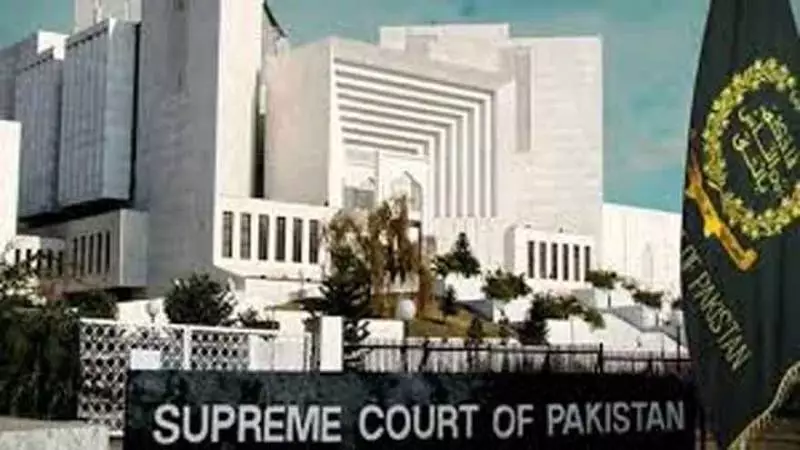
In a significant ruling that reinforces the authority of the lower judiciary, the Supreme Court of Pakistan has overturned a decision by the Lahore High Court (LHC). The apex court has upheld the power of a session judge to hear a case concerning the transfer of an investigation, marking a crucial moment for judicial hierarchy and the autonomy of trial courts.
The Core of the Legal Dispute
The legal battle centered on a petition filed by Muhammad Afzal. He had approached a session judge in Sargodha, challenging the transfer of an investigation from the Anti-Corruption Establishment in Sargodha to its counterpart in Lahore. The session judge had accepted this petition, asserting jurisdiction over the matter.
However, this decision was challenged in the Lahore High Court. A single bench of the LHC, presided over by Justice Anwarul Haq Pannu, took a contrary view. The LHC bench ruled that the session judge did not possess the authority to entertain such a petition. Consequently, the LHC set aside the session judge's order, stripping the lower court of its jurisdiction in this specific transfer case.

Supreme Court's Definitive Verdict
Dissatisfied with the LHC's interpretation, the petitioner, Muhammad Afzal, took the matter to the highest judicial forum. A three-member Supreme Court bench, led by Justice Syed Mansoor Ali Shah and including Justice Athar Minallah and Justice Syed Hasan Azhar Rizvi, heard the appeal.
After thorough deliberation, the Supreme Court bench delivered a unanimous verdict. The court allowed the appeal, set aside the LHC's judgment, and restored the original order passed by the session judge in Sargodha. This decisive action reaffirmed the session judge's legal standing to hear the petition regarding the investigation transfer.
Implications for Pakistan's Judicial Framework
This ruling carries substantial weight for the structure of Pakistan's legal system. By overturning the LHC's decision, the Supreme Court has sent a clear message about the defined powers vested in different tiers of the judiciary. It strengthens the principle that session judges, as part of the trial court system, have legitimate authority within their territorial and legal domain.
The judgment prevents the unnecessary escalation of every lower court decision to high courts, potentially reducing case backlogs and empowering district judiciary officials. It underscores the Supreme Court's role as the ultimate arbiter in clarifying jurisdictional boundaries and upholding the intended balance of judicial power as envisioned by law.
Legal experts view this as a reinforcement of the lower judiciary's role, ensuring that citizens can seek redressal at the appropriate forum without being forced to approach higher courts prematurely for certain classes of legal grievances.