Judicial Crisis Grips Sindh High Court
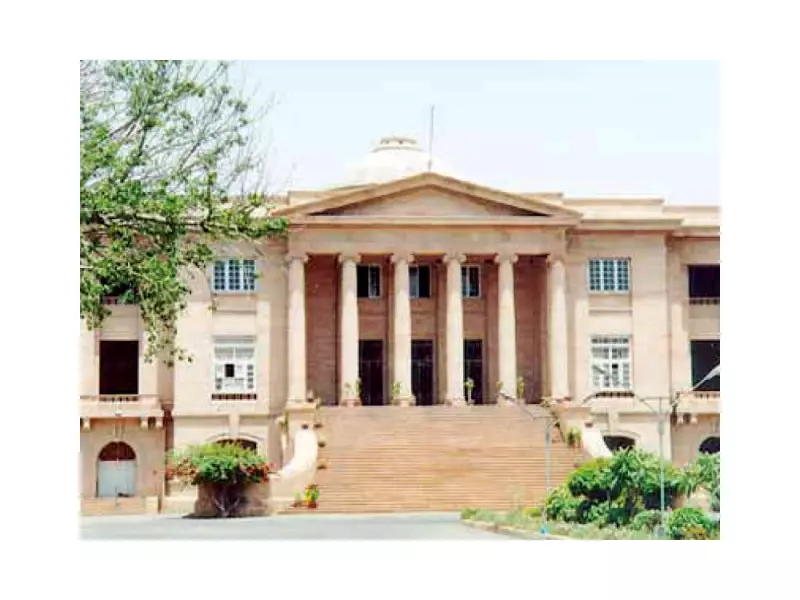
The Sindh High Court experienced significant disruption on Friday as multiple judges abstained from their courtroom duties in protest against the controversial 27th constitutional amendment. Instead of presiding over cases, the protesting judges gathered in the chamber of the acting chief justice, leaving the court partially paralyzed.
While the constitutional bench headed by Justice Adnan Iqbal Chaudhry continued hearing cases, the senior-most constitutional bench judge Justice KK Agha joined the protest by absenting himself from court. Several other judges assigned to regular benches also did not appear, resulting in most of the day's cause lists remaining unexecuted.
Legal Community Voices Strong Opposition
Legal experts and bar associations have raised serious concerns about the amendment creating ambiguity over high court jurisdictions. Mirza Sarfaraz, General Secretary of the Sindh High Court Bar Association, along with other bar leaders, addressed reporters claiming the amendment has effectively abolished the Supreme Court.

During a press conference held at the City Court's Committee Room under the Karachi Bar Association banner, lawyers declared that legal professionals across Pakistan are observing a strike against the amendment. They also vowed to push for the repeal of the PECA Act. Notably, the presidents of both SHCBA and KBA were absent from the press conference.
Mirza Sarfaraz criticized the manner of pushing through successive constitutional amendments, describing it as targeted and amounting to an assault on judiciary. He recalled that the 26th Amendment had already crippled the justice system by establishing constitutional benches, and now the 27th Amendment has terminated Supreme Court's authority through creation of a Federal Constitutional Court.
Constitutional Concerns and Nationwide Impact
The bar leader labeled the amendment as illegal and un-Islamic, arguing that no president or public office-holder could claim lifelong immunity under the Constitution. He emphasized that the 1973 Constitution represented a consensus document, further improved by the 18th Amendment, and questioned whose interests the new amendments were serving.
What fear do they have of the courts? Sarfaraz asked, criticizing repeated changes to the Judicial Commission's status. He referenced historical precedents from the eras of Hazrat Umar and Hazrat Ali (RA), stating that equality before the law remains the foundation of justice.
KBA Secretary Rehman Korai added that politicians were handed papers and asked to sign blindly, alleging the amendment contradicts democratic norms, Islamic values, and constitutional traditions. He warned that the Federal Constitutional Court would adversely impact provinces and expressed concerns about favorite judges being lined up for appointment to the new court.
The Karachi Bar continued its boycott of court proceedings, shutting the City Court's gates as part of the protest. The strike addresses both Supreme Court judges' resignations and the controversial 27th Amendment. The KBA expressed solidarity with Justice Athar Minallah and Justice Mansoor Ali Shah, predicting more resignations are likely while reiterating commitment to securing PECA Act's repeal.