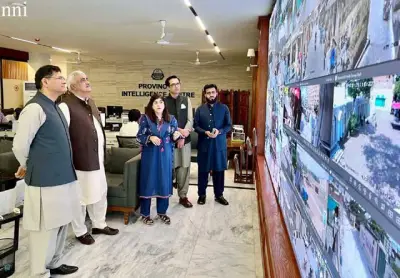
The government of Pakistan has taken a decisive step to address growing public unrest by establishing a new, specialized riot control force. This unit is specifically tasked with managing and containing unlawful protests and violent assemblies across the nation.
Mandate and Legal Framework of the New Force
Authorized under the Police Order of 2002, this dedicated force will operate with a clear mandate to handle situations where demonstrations turn violent or breach legal boundaries. The decision comes in response to a perceived need for a more structured and professional approach to crowd control, moving beyond the ad-hoc deployment of regular police units.
The Inspector General of Police (IGP) for Islamabad has been directed to spearhead the formation and training of this unit. The force will be equipped with modern, non-lethal crowd control gear and its personnel will undergo rigorous training in de-escalation tactics and proportionate response measures.

Operational Protocol and Public Safety
The core objective of the new force is to protect public life, property, and state infrastructure during periods of civil disturbance. Officials emphasize that the unit's primary role is to prevent violence and ensure that lawful protests can proceed without descending into chaos or vandalism.
Its operational protocols are designed to distinguish between peaceful assembly and unlawful rioting. The force will only be mobilized when a gathering is declared unlawful by competent authorities, typically due to violence, destruction of property, or a significant threat to public order.
Addressing Concerns and Ensuring Accountability
The establishment of this force has sparked discussions about the balance between maintaining public order and upholding the right to peaceful protest. Government spokespersons have assured that the unit will operate within strict legal confines and its actions will be subject to oversight.
The move is seen as a direct response to recent episodes of severe unrest that have strained the resources of conventional police departments. By creating a specialized body, the state aims to enhance its capability to manage crises while theoretically freeing up regular police to focus on routine law enforcement and crime prevention.
The success of this initiative will largely depend on the training, discipline, and transparent operational rules governing the force. Its formation marks a significant development in Pakistan's internal security strategy, highlighting a shift towards more institutionalized mechanisms for handling civil disobedience and mass protests.