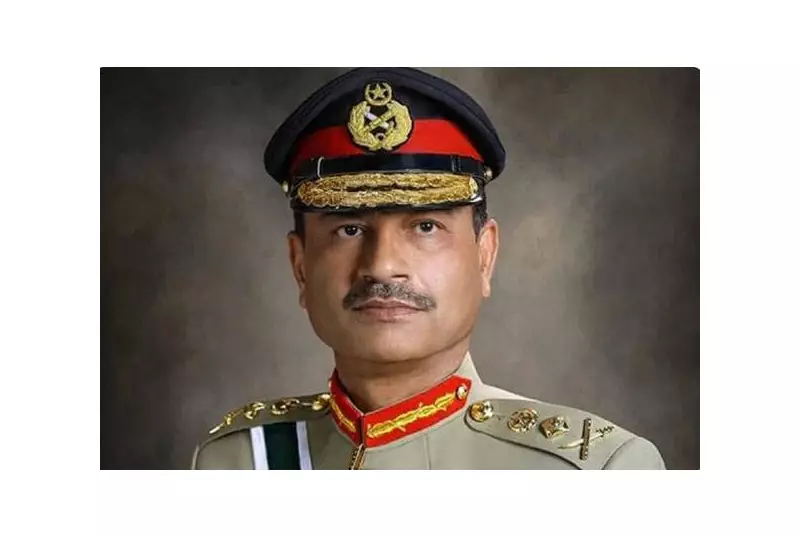
In a groundbreaking development that reshapes the command structure of the nation's armed forces, General Asim Munir has been appointed as Pakistan's first-ever Chief of Defence Forces. This monumental decision, announced on December 5, 2025, marks a historic shift from the traditional tri-service leadership model towards a unified command.
A New Era of Unified Military Command
The appointment of General Asim Munir to the newly created position of Chief of Defence Forces represents the most significant reform in Pakistan's military hierarchy in decades. The move effectively consolidates the leadership of the Army, Navy, and Air Force under a single, supreme commander. This strategic restructuring is designed to foster greater synergy and operational cohesion among the different branches of the military.
Concurrently, Lieutenant General Irfan shallah has been elevated to the position of Chief of the Army Staff (COAS), taking over the reins of the Pakistan Army. This dual announcement underscores a comprehensive transition at the highest echelons of the country's defence establishment. The changes are seen as a step towards modernizing the command and control apparatus to meet contemporary security challenges.

The Rationale Behind the Historic Restructuring
This historic shift is not merely a change in titles but a fundamental rethinking of how Pakistan's defence forces are led. The creation of the Chief of Defence Forces role aims to streamline decision-making processes and ensure a more integrated approach to national security. For years, military analysts and policymakers have debated the need for a unified command structure to enhance jointness in operations, training, and strategic planning.
By appointing General Asim Munir, the current leadership has placed a seasoned and experienced commander at the helm of this new system. His extensive background and understanding of the complex security landscape are expected to be pivotal in successfully implementing this new model. The reform is anticipated to improve coordination during joint operations and optimize the allocation of defence resources across all services.
Implications for Pakistan's Security Architecture
The implications of this appointment are far-reaching. The establishment of a Chief of Defence Forces brings Pakistan in line with the military structures of several other modern nations, where a single point of military advice exists for the civilian government. This move is likely to strengthen the chain of command and provide clearer lines of authority during multifaceted security operations.
Furthermore, the promotion of Lieutenant General Irfan shallah as the new Army Chief ensures continuity and stability within the largest service branch. The seamless transition of leadership is critical for maintaining operational readiness and morale. This restructuring signals a forward-looking approach, prioritizing adaptability and unified strength in the face of evolving regional and global threats.
In conclusion, the appointment of General Asim Munir as Pakistan's inaugural Chief of Defence Forces on December 5, 2025, is a watershed moment in the nation's military history. It embodies a strategic vision for a more cohesive, efficient, and robust defence posture. As this new command structure takes effect, the entire nation will be watching how this historic shift enhances Pakistan's security and defence capabilities in the years to come.