Massive Crowds Gather in Tehran for Khamenei Funeral
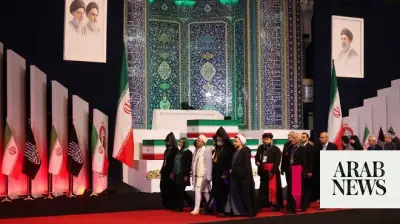
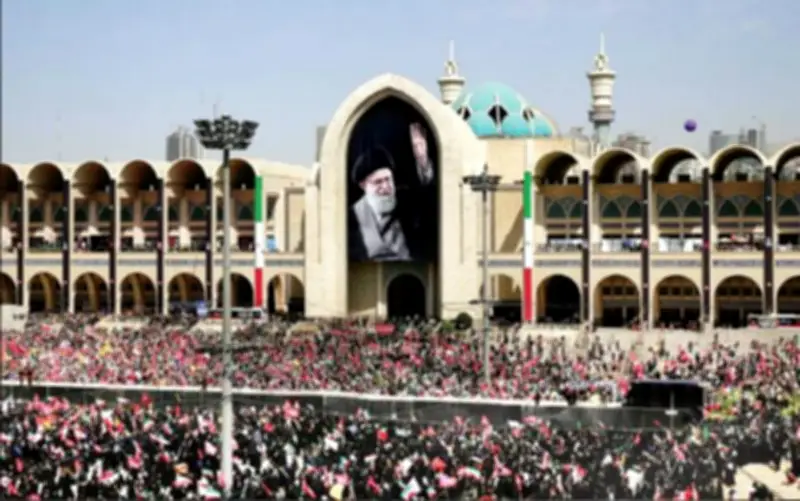
Massive crowds gathered as Iran began a days-long funeral Saturday for the late supreme leader Ayatollah Ali Khamenei, with many calling for “revenge” and “death to Israel,” months after an airstrike killed him at the start of the war. Authorities unveiled the casket containing Khamenei’s body in a glass case at the Grand Mosalla in Tehran, Iran’s capital. Mourners wept at the sight, with some chanting: “Our word is one! Revenge! Revenge!” and “We will kill, we will kill he who killed our Imam.”
Mourning and Calls for Retribution
Some carried banners and red flags, a symbol of revenge in Shiite Islam, while billboards across the city bore Khamenei’s image. Crowds of men rhythmically beat their chests in mourning, a common practice at Shiite funerals. “We have come not for the funeral but for revenge,” a eulogist at the event chanted. “We’re never going to give up your blood, which is the reddest line.”
“We must rise up and, God willing, avenge the blood of our leader,” said Hamidreza Shabani, an 18-year-old student. “I am here to say goodbye to my beloved leader Ali Khamenei,” said a weeping Hananeh Mousavi, 27, who attended the funeral alongside her mother. “I never expected to see such a day. I wish I had died before this tragedy.”

Details of the Funeral and Airstrike
An outdoor stage set up at the Grand Mosalla resembled the stage where Khamenei once gave his speeches at a husseiniyah, or Shiite congregation hall, at his compound in downtown Tehran. That site was destroyed in the Israeli airstrike that killed Khamenei and some of his family at the start of the Iran war on February 28. The caskets of his dead family members sat beneath his, which had his black turban atop it, identifying him as a direct descendant of the Prophet Muhammad (PBUH). Some mourners carried portraits of Iran’s new supreme leader Mojtaba Khamenei, who has succeeded his father but remained out of public sight.
US and International Reactions
US President Donald Trump says he is “shocked” to see Iranians cry at Khamenei’s funeral, according to Al Jazeera. “I thought people hated him,” Trump reportedly tells Axios. The US President adds in a phone interview that he could “eliminate everyone” attending the funeral, but “there will be no one left to negotiate” if he goes ahead with his threat. Trump tells Axios that Iran and the US had decided to take a break from talks until after Khamenei’s funeral. “Neither side will shoot the other during the funeral proceedings,” he says.
IRGC Navy Chief Warns of Divine Retribution
The chief of Iran’s Islamic Revolution Guards Corps (IRGC) Navy warns that “divine retribution” against the US and Israel is “not far away.” “We are confident that divine retribution against the terrorist US and the illegitimate Zionist regime is not far away, and that the banner of truth will remain raised at the summit of dignity and power,” says Rear Admiral Ali Ozmaei in a statement to mark the funeral of slain leader Ayatollah Ali Khamenei, according to Iranian state media. “Those who committed this crime believed they could halt the path of truth, but instead they exposed themselves to history’s condemnation and to the wrath and severe retribution of this nation,” he adds, referring to Khamenei’s killing. Ozmaei appears to be the replacement for Alireza Tangsiri, who was killed in an Israeli airstrike in March.

Negotiations and Ceasefire
Acting Iranian Defence Minister, Majid Ibn al-Reza, says the country will give a “necessary and decisive” response if commitments under the memorandum of understanding with the US are violated, Al Jazeera reports citing Iranian state media. The ISNA news agency quotes him as saying that Tehran signed the ceasefire at the request of regional countries, despite its distrust of Washington. Negotiations between the US and Iran are set to resume on July 11, following Iran’s late supreme leader Ali Khamenei’s days-long funeral, the Saudi-owned Al Arabiya news outlet reports. According to the report, the negotiations are expected to address several key issues, including sanctions on Tehran, Iran’s frozen funds and nuclear talks. The two countries last held indirect technical talks in Doha on Wednesday, which US President Donald Trump described as “very good.” According to Iran, the sides agreed on a partial release of billions of dollars of frozen Iranian funds, though US officials reportedly denied that such an understanding was reached. The negotiations come after the US and Iran signed a memorandum of understanding two weeks ago, which gave them 60 days to negotiate a final deal covering Iran’s nuclear program.
Crowd Turnout and Security Concerns
Iran offered food, lodging and transport to boost crowd numbers for Khamenei funeral. Millions expected for week-long events. Iran’s government expects to see millions flood the streets of the capital in scenes reminiscent of the burial of the late supreme leader Ayatollah Ruhollah Khomeini in 1989. Organizers sprayed water on the crowds and offered cold drinks to help those with the summertime heat. “We attended the funeral to show that we are all committed to defending our country and religion,” said Ali Kazemi, who came from the northwestern city of Tabriz, some 530 kilometers (330 miles) away from Tehran.
Iranian security officials have rejected Supreme Leader Mojtaba Khamenei’s request to attend the burial of his slain father and predecessor, Ali Khamenei, because they fear Israel will kill the son or track him back to his hiding spot, The New York Times reported Saturday. Mojtaba Khamenei seeks to attend his father’s July 9 burial in Mashhad and perform funeral rites, but has so far been refused, the Times said, citing two unnamed Islamic Revolutionary Guard Corps members and a person involved with planning the multi-day funeral that began on Saturday. Khamenei has not been seen in public since he was injured, and his father, wife, and son were killed in the opening strikes of the US-Israeli bombing campaign in Iran on February 28. According to the Times, he was absent from a memorial for his wife in Tehran on Wednesday. Four senior Iranian officials cited by the Times said Khamenei’s continued absence from the public eye has triggered concern about the sustainability of his rule. While a written statement attributed to Khamenei okayed negotiations with the US, hardline Iranian conservatives have vowed to resist diplomacy until he appears in public or produces a voice recording, the Times said. In the meantime, hardliners have called for the prosecution and even the death of Iranian negotiators, who hail from the self-described pragmatist wing of Iran’s conservative camp.