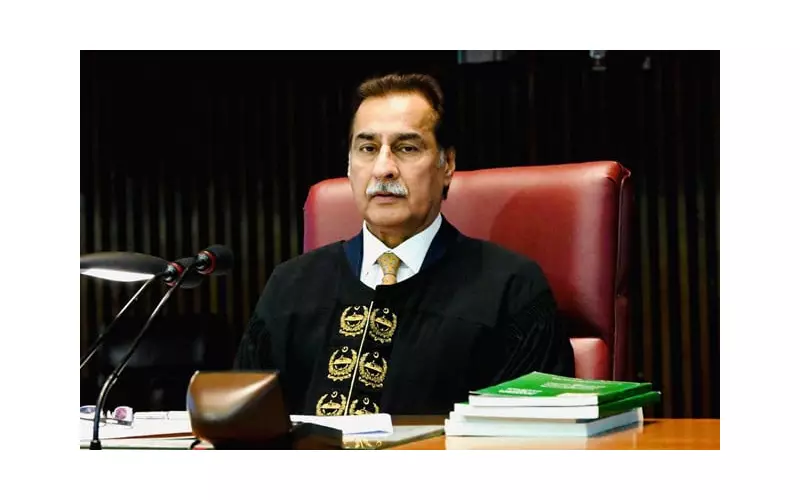
The National Assembly session faced significant disruption on Monday as proceedings came to an abrupt halt due to lack of quorum, forcing Deputy Speaker Syed Ghulam Mustafa Shah to adjourn the meeting until the following day.
Session Proceedings Disrupted
During the afternoon session, Pakistan Tehreek-e-Insaf (PTI) lawmaker Muhammad Iqbal Khan raised the quorum issue, pointing out the insufficient number of members present in the house. The deputy speaker immediately directed the assembly staff to count the members, confirming that the required quorum was indeed missing.
The counting revealed only 64 members present, falling significantly short of the mandatory 86 members needed to constitute a quorum in the 342-member house. This development forced the deputy speaker to suspend the proceedings despite having a substantial agenda that required attention.

Legislative Agenda Postponed
The adjournment resulted in the postponement of several important legislative matters that were scheduled for discussion. Four government bills were on the agenda, including The Pakistan National Shipping Corporation (Amendment) Bill, 2024, The Private Power and Infrastructure Board (Amendment) Bill, 2024, The Pakistan Postal Services Management Board (Amendment) Bill, 2024, and The National Highway Authority (Amendment) Bill, 2024.
Additionally, the house was supposed to discuss various motions under Rule 259 concerning the laying of official documents before the assembly. The quorum crisis effectively put all these important matters on hold, delaying critical legislative work.
Political Implications and Context
This incident marks another chapter in the ongoing political tensions within the National Assembly. The opposition parties, particularly PTI, have been actively using parliamentary tools to disrupt government proceedings. The quorum issue has become a frequent tactic in recent sessions, highlighting the deepening political divisions and the government's challenges in maintaining attendance during important debates.
Political analysts note that such disruptions reflect the broader political polarization in the country and the opposition's strategy to highlight what they perceive as the government's inability to manage parliamentary affairs effectively. The repeated quorum issues also raise questions about members' commitment to their parliamentary responsibilities.
The session was adjourned until 11 am on Tuesday, with hopes that the required quorum would be available to resume the important legislative business. However, the persistent quorum problems suggest that such disruptions might continue to plague the National Assembly proceedings in the coming sessions.