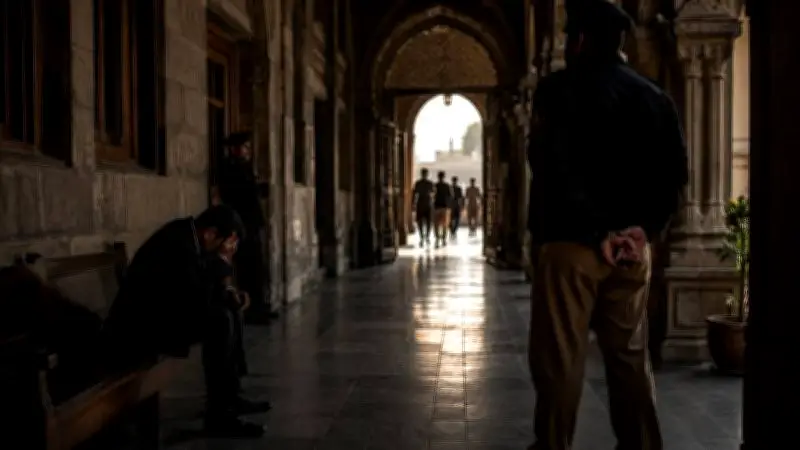
The Islamabad lower courts were relatively quiet on 24th January 2026, as the local bar had announced a strike because two of its lawyers had been arrested in an unlawful manner and were now likely to face what effectively amounts to silencing dissent. The judgment ultimately ended up creating a template for digital authoritarianism and providing us again with a reminder that any state can easily warp its own legal tools to punish its own conscience.
The Verdict Against Imaan Mazari and Hadi Chattha
The trial court's verdict against Imaan Zainab Mazari-Hazir and Hadi Ali Chattha remains a 'milestone' in our chequered constitutional history. It was handed down while they sat as captive spectators over a video link from Central Jail, Rawalpindi. The allegations in simple terms were related to defending marginalised people from the peripheries, speaking out against enforced disappearances, and demanding justice for political dissidents.
The state maintains that the number of missing persons has gone down significantly, that issues of people in the peripheries are being managed by one of the most progressive parties in the country, and that political dissent undermines any economic progress. Whose narrative is more factual? History shall judge that on its own merits, but the message was clear that the cost of participation and protest is no longer the same.

Fundamental Questions About Political Speech
My take is not based on legal largesse, but relates to a fundamental question which both the state and society need to answer: should we be treating raw, at times emotive and provocative political speech as an existential national security threat? How should a state respond to deep and uncomfortable disagreements? The Leviathan would weaponise the law to silence its most vocal critics, while a constitutional democracy would let it go because ultimately the government ought to be run by discussion.
Historical precedents show that states which are able to withstand such challenges without misusing laws or suppressing critical legal observers create an active civil society where 'venting off' takes place. If a trial court determines that expressing solidarity with rights leaders or demanding civilian accountability constitutes 'glorifying an offence', then it narrows the path for peaceful and institutional dispute resolution.
Pakistan's Justice Paradox: Harsh On Dissent, Weak On Crime
Allowing citizens to voice strong disagreements is a practical necessity for state survival and not merely a moral preference, as long as it stays within the ambit of the Constitution. There are many other countries and regions which have gone through such phases in their evolution. One recalls that the European Court of Human Rights (ECtHR) once reviewed the conviction of an advocate who accused state authorities of complicity in rights violations. The ECtHR ruled that the limits of permissible criticism are significantly wider against the government than against a private citizen.
Nelson Mandela was made to stand in a dock, and he turned the accusation back onto the state using logical arguments. He stated that when peaceful channels of grievance are legally sealed, the state itself creates the conditions for 'otherisation' and at times radicalisation.
Academic Facts and Ground Realities
The judgment by the learned judge in Islamabad makes for an interesting read, as it states Imaan warned that 'targeting innocent civilians' intensifies insurgency and is equivalent to sedition. The vast literature on COIN states the same, and we maintain that our state takes absolute precautions while dealing with some of the greatest insurgencies in the post-9/11 world. The idea that stating an obvious academic fact which does not resonate with the ground realities can get you into prison is, at best, unfair.
They could have avoided going down this path much more easily. It is particularly saddening to see it happening to those with whom you have had disagreements regarding the path, without ever doubting that our end goal remains to see a prosperous Pakistan.

Historical Echoes of Suppression
The arrest of people with strong opinions is not new to our polity. It echoes the dark legal structures used by regimes across time to criminalise prisoners of conscience. We have had a cyclical and self-destructive habit of mistaking the thermometer for the fever. Our reflexive response to anybody pointing out failures is to brand them 'anti-state' and isolate them.
Faiz Sb was jailed and branded a conspirator for his ideological words. Asma Jahangir, who in her death was recognised as one of the bravest voices of the land, was routinely vilified, placed under house arrest, and labelled a traitor. The labels serve no purpose, and instead, a secure state always engages its citizenry via its elected representatives.
The Role of Higher Courts
How Pakistan's Student Movements Were Once Architects Of Dissent. Pakistan cannot achieve structural stability or legal predictability by maintaining an excessively rigid approach towards its legal critics. The Islamabad High Court and the Supreme Court have an opportunity to anchor the state's legal framework in reviewing the criminal revision petitions and appeals of Imaan Mazari and Hadi Ali Chattha.
The accommodation of dissent is a sign of institutional resilience and not structural weakness. It helps to foster long-term national progress, and the state must allow for open disagreement. Some cases test the society along with the institutions and the citizenry that watch from the sidelines, as the writer continues to do, while hoping that we would choose the path that leads to a safe, secure, and progressive Pakistan.