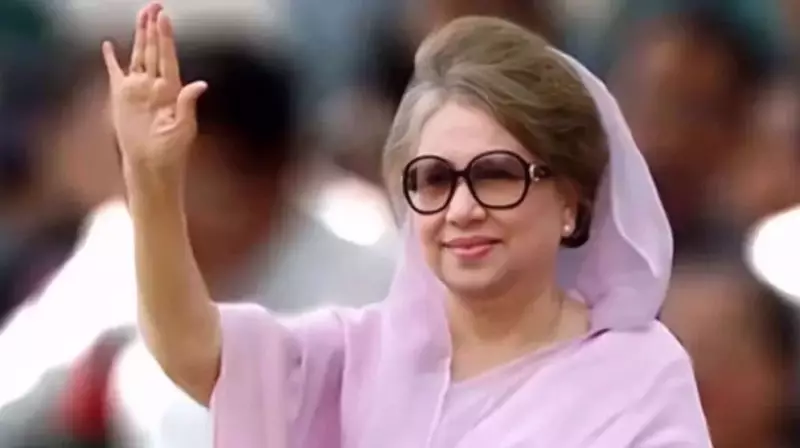
The political landscape of Bangladesh and South Asia has lost a towering figure. Begum Khaleda Zia, the former Prime Minister of Bangladesh and chairperson of the Bangladesh Nationalist Party (BNP), passed away on Monday. She was 80 years old.
A Political Journey Ends
Khaleda Zia, a central figure in Bangladeshi politics for decades, died after a prolonged battle with illness. Her death was confirmed by sources close to her family and party officials. She had been undergoing treatment for various health complications for an extended period.
Zia served as the Prime Minister of Bangladesh three times – from 1991 to 1996, again from 2001 to 2006, and briefly in 1996. Her political career was defined by a fierce rivalry with Sheikh Hasina of the Awami League, creating a dynastic political dynamic that has shaped the nation's modern history.

Health Struggles and Legal Battles
In recent years, the former prime minister's health had significantly deteriorated. She suffered from liver cirrhosis, arthritis, and complications related to diabetes and heart conditions. Her medical treatment had been a subject of national discussion and political contention.
Her health struggles were compounded by a series of legal convictions. Khaleda Zia was convicted in multiple corruption cases, which her party and supporters have consistently labeled as politically motivated. Since 2018, she had been largely confined, receiving treatment at her residence in Dhaka's Gulshan area after being released from jail on conditional grounds.
Her son, Tarique Rahman, who is the acting chairman of the BNP, lives in exile in London. Her other son, Arafat Rahman, passed away in 2015.
Legacy and Regional Impact
The death of Khaleda Zia marks the end of an era in Bangladeshi politics. As the widow of former President Ziaur Rahman, who founded the BNP, she led the party for decades, making it one of the two major political forces in the country. Her passing leaves a significant vacuum within the BNP's leadership structure.
Her influence extended beyond Bangladesh's borders, affecting regional diplomacy and relations with neighboring countries, including Pakistan, India, and Myanmar. The news of her death is expected to draw reactions from leaders across South Asia and the Muslim world, acknowledging her role as a key political player.
The government of Bangladesh, led by her long-time rival Prime Minister Sheikh Hasina, is expected to announce official mourning arrangements. Security has been heightened in Dhaka and other major cities as the nation prepares for her funeral and a period of political uncertainty.
Begum Khaleda Zia's life was intertwined with the nation's tumultuous journey from military rule to democracy. Her legacy, contested and complex, will undoubtedly be debated for years to come as Bangladesh navigates its future without one of its most defining political personalities.