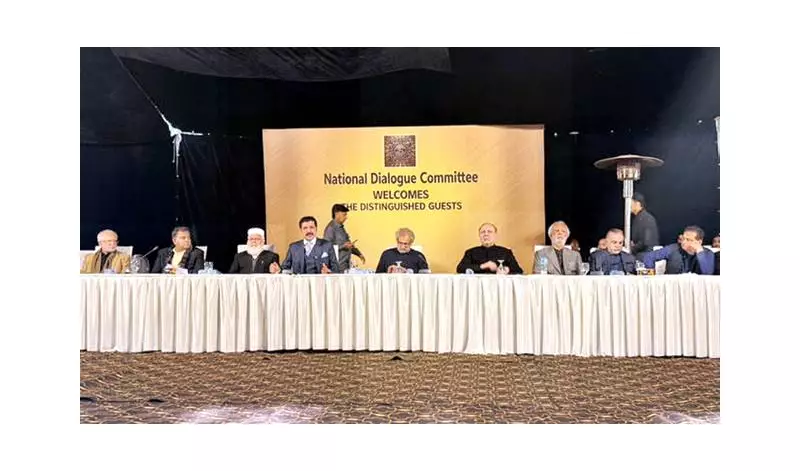
A coalition of former Pakistan Tehreek-e-Insaf (PTI) leaders and prominent political figures has issued a strong appeal for the ruling alliance and the opposition to engage in a formal dialogue. The aim is to reduce the intense political polarization and bring stability back to the country.
A Call for Calm and Conversation
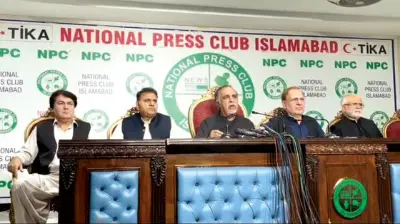
The proposal was formally presented on Wednesday at the conclusion of a conference organized by the newly established National Dialogue Committee (NDC). The event was spearheaded by former PTI stalwarts, including Fawad Chaudhry, ex-Sindh governor Imran Ismail, Mehmood Moulvi, and Shahzad Waseem.
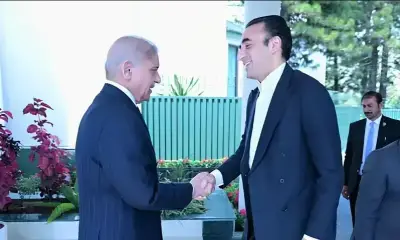
Participants, which included notable politicians, lawyers, and civil society members, specifically urged the government to begin talks with the jailed former Prime Minister Imran Khan's PTI. This call aligns with Prime Minister Shehbaz Sharif's recent invitation for dialogue, extended during a federal cabinet meeting last month, where he emphasized that political harmony is crucial for national progress.

"The prime objective of the dialogue was that we want to bring the political temperatures down," stated Imran Ismail after the conference. He warned that the current political heat is so high it discourages necessary discussions on Pakistan's critical issues, which in turn blocks investment.
Addressing Core Issues and Proposing Solutions
The conference took place against a backdrop of heightened tensions between the PTI and the state's institutions. Imran Khan, who remains incarcerated on multiple charges he deems politically motivated, has accused the military and government of conspiring to oust him from power through alleged election rigging in 2024 and fabricated cases. Both the government and military deny these allegations.
Muhammad Ali Saif, a former adviser to the Khyber Pakhtunkhwa chief minister, told attendees that extreme political polarization has pushed Pakistan into a "dysfunctional state." He identified the rift between the PTI and state institutions, particularly the army, as the most fundamental and crucial issue facing the nation.
The NDC summit resulted in a joint communique proposing six specific confidence-building measures:
- Lifting the alleged ban on political activities.
- Appointing leaders of the opposition in the Senate and National Assembly.
- Immediate release of women political prisoners, such as Bushra Bibi and Yasmin Rashid.
- Withdrawal of cases against supporters of political parties.
- An end to media censorship.
- An agreement that neither the government nor opposition should use the Pakistan Armed Forces for politics or engage in negative propaganda against them.
Broader Participation and the Path Forward
The gathering saw participation from a diverse group, including former Prime Minister Shahid Khaqan Abbasi of Awaam Pakistan, Jamaat-e-Islami's Liaquat Baloch, MQM-Pakistan's Waseem Akhtar and Haroon Ur Rashid, and Supreme Court Bar Association president. Journalists Asma Shirazi and Fahd Husain were also present. Notably, representatives from the PPP, PML-N, and the current PTI leadership did not attend.
The NDC has called on Prime Minister Shehbaz Sharif, President Asif Ali Zardari, and PML-N chief Nawaz Sharif to take the first step in initiating talks. The committee stated that once the government forms its negotiation team, the NDC will announce the opposition's team after consulting its jailed members.
Regarding a potential meeting with Imran Khan, Imran Ismail said, "Let us create some environment. Let us bring some temperatures down and then we will do it." Meanwhile, the PTI has accused the government of preventing its members from meeting Khan in Rawalpindi prison.
The business community's concerns were also highlighted. Overseas Pakistani businessperson Amir Khan lamented that frequent political changes erode investor confidence, stating he found that "faces have changed after a year," complicating investment plans.
This concerted push for dialogue underscores a growing consensus among a segment of the political elite that de-escalation is urgently needed to address Pakistan's political and economic challenges.