Lahore's Roads: More Than Just Routes
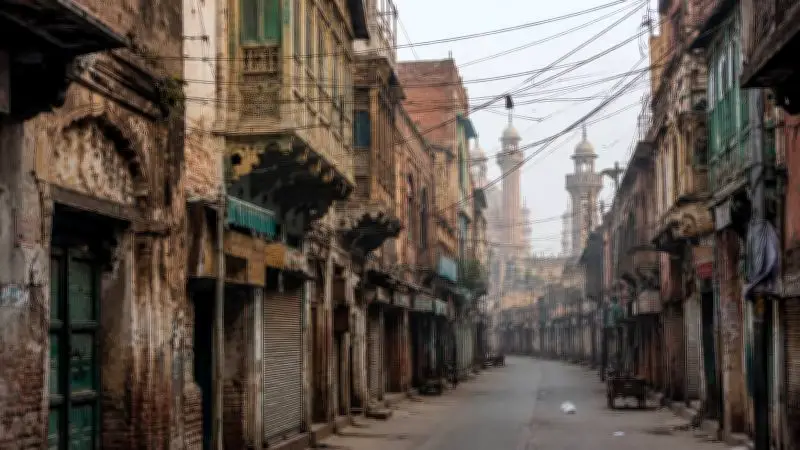
Lahore's roads are not merely conduits for travel; they carry memories, habits, and layers of history. A name may change on a signboard, but people often continue to use the name they have inherited from the city itself. The current review of Lahore's historic names should not be reduced to a narrow identity dispute or a sentimental exercise. It presents an opportunity to ask a more important question: what should Lahore honor, what should it preserve as part of its historical record, and how can the city remember its many pasts without erasing one to make space for another?
The Colonial Imprint on Lahore
Scholars of urban memory argue that streets, monuments, and routes are ordinary ways in which power enters daily life. Ann Laura Stoler's concept of "colonial aphasia" captures the difficulty of speaking plainly about the violence, hierarchy, and authority embedded in the past. The British colonial rule reorganized Lahore's geography, as William Glover demonstrated, reusing older structures and placing new institutions upon an already layered city. H. R. Goulding recorded how Lahore's roads became a roll call of imperial worthies: commissioners, lieutenant-governors, engineers, soldiers, and administrators. These names were not neutral labels; they were part of the grammar through which the empire made itself visible and durable in everyday space.
Goulding notes that the Mall was first aligned in 1851 by Colonel Napier as a direct road from Anarkali to Mian Mir. The Upper Mall was shown in maps before 1876 as Lawrence Road, while the Lower Mall had once been simply the Mall. This shows that even Lahore's best-known colonial boulevards were products of change, adjustment, and administrative ambition, not timeless features.

Postcolonial Renaming and Its Politics
After independence, the Lahore Municipal Corporation began planning "Islamic names" for roads. In 1952, Malik Muhammad Akhtar proposed changing Lahore's name to Dasht-i-Muhammad and naming roads after Muslim scholars, Sufis, and martyrs. Some suggestions were exclusionary, such as renaming Guru Tegh Bahadur Street to Aurangzeb Street. After the 1965 war, Councillor Mian Muhammad Sharif proposed renaming all roads named after non-Muslims after martyrs of that war. The government advised changing major roads first, and a list of sixty roads was prepared, including McLeod, Nicholson, and Lawrence Roads.
However, opposition existed. In 1955, Malik Ghulam Nabi and Sheikh Rafiq Ahmad argued against changing names, calling it a cheap publicity stunt and emphasizing the need to preserve history. They suggested honoring heroes by building schools and parks instead. Some renaming proposals were practical, like Cooper Road becoming Bijli Ghar Road, or Katchery Road becoming Alberuni Road.
Popular Memory vs. Official Nomenclature
Despite official changes, Lahoris often continue to use older names. Dual signboards and persistent use of names like Temple Road and Lakshmi Chowk show the gap between official nomenclature and lived language. This gap is evidence that lived memory often survives beyond formal changes.
A Call for Historical Plaques and Context
Lahore should resist both imperial nostalgia and historical oversimplification. The wiser distinction is between preserving a record and conferring honor. If a road name survives as a historical marker, it should be accompanied by a plaque explaining who that person was and their role in colonial rule. A plaque does not glorify; it teaches and converts silence into context. This is especially important for roads tied to the 1857 rebellion, such as Nicholson and Chamberlain Roads, which belong to a language of colonial triumph. Historical plaques at Mian Mir, near Anarkali, and on roads named for colonial officers would place the imperial chapter in its fuller historical context.

Revealing Buried Histories
Colonial construction often overwrote older sacred and garden landscapes. Government House grew around the tomb of Muhammad Qasim Khan, the Lahore High Court stands near the shrine of Shah Chiragh, and Dai Anga Mosque was converted into a residence. These places urgently need historical plaques because the visible building and buried memory no longer match. Lahore's pre-Mughal layers also require recognition. The 1959 excavation at Lahore Fort uncovered pre-Muslim strata, including a mud-brick wall, pottery, and animal figurines, pointing to an older urban past. Lahore Museum could consider a permanent gallery devoted to this excavation.
Honoring Heroes Without Erasing History
New universities, parks, and institutions can be named after those Pakistan wishes to celebrate, while older names, sites, and layers should remain part of the city's historical record. If Fatima Jinnah deserves a great medical university, her memory need not depend on effacing the earlier story of Balak Ram Medical College. A city as old as Lahore does not become nobler by becoming forgetful; it becomes nobler by learning to speak all its pasts clearly, honestly, and in public.