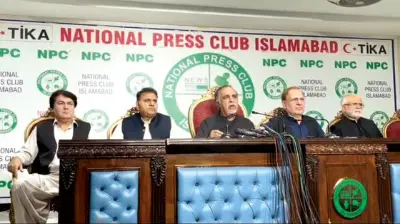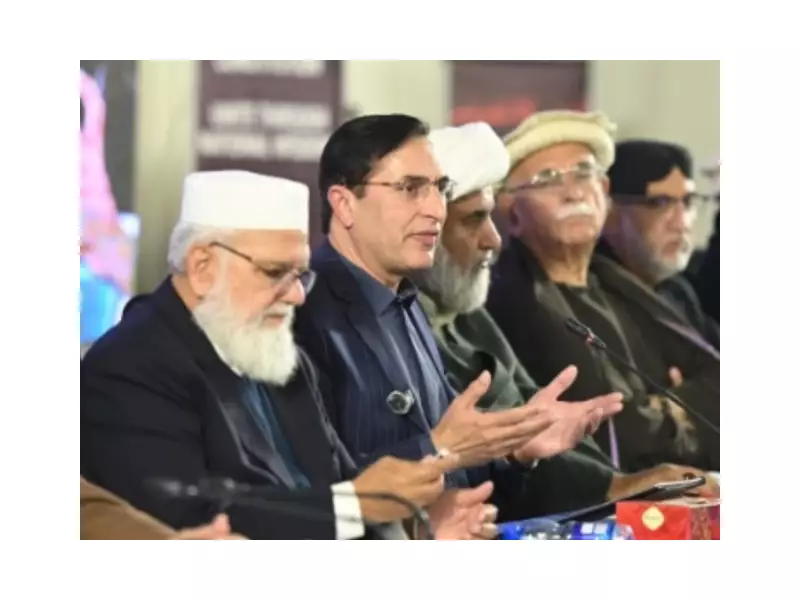
In a significant political gathering, leaders from various parties have issued a clear call to the Pakistan Tehreek-e-Insaf (PTI), urging the party to spearhead a national struggle for constitutional rights and justice. The consensus at the event was a firm rejection of any path of reconciliation with the current power structure, marking a pivotal moment in the country's political landscape.
A Unified Call for Resistance Over Compromise
The conference, which brought together a diverse array of political voices, served as a platform to articulate deep-seated grievances against the existing political order. Participants unanimously advocated for a strategy of resistance instead of reconciliation. The central message directed at PTI was to transform into the vanguard of a broader movement aimed at reclaiming what was described as stolen public mandates and upholding the rule of law.
Prominent figures, including Mahmood Khan Achakzai of the Pashtunkhwa Milli Awami Party (PKMAP), played a key role in framing this narrative. Achakzai explicitly called upon PTI to "lead the struggle" for the nation's rights. He emphasized that the current situation demanded a fight for justice, not negotiations, setting the defiant tone for the entire conference.

Key Voices and Their Condemnations
The gathering featured strong condemnations from several political stalwarts. Senator Mushtaq Ahmed of the Jamaat-e-Islami (JI) did not mince words, labeling the treatment of PTI and its founder as the "worst fascism" in the nation's history. His statement underscored the depth of perceived injustice that fueled the conference's resolutions.
Similarly, Shafqat Mahmood of PTI reinforced the party's stance, declaring that any dialogue would be contingent upon the acknowledgment of what he termed the "May 9 tragedy" and the restoration of what PTI claims is its stolen electoral mandate. This condition highlights a significant barrier to any potential political negotiations in the near future.
Other notable speakers, such as Ammar Ali Jan of the Haqooq-e-Khalq Party and Liaquat Ali Tarakai, echoed the sentiment that the era of compromise with established powers is over. Their contributions solidified the conference's outcome as a collective endorsement of a confrontational path forward.
The Road Ahead: Implications for Pakistani Politics
The resolutions passed and the rhetoric employed at this national conference signal a hardening of political positions. By publicly urging PTI to lead a struggle and outright rejecting reconciliation, the participating parties have effectively drawn a line in the sand. This development suggests that the political arena may be heading toward a period of intensified confrontation rather than backroom deal-making.
The call for a united front under PTI's leadership, while clear in its intent, also raises questions about the practicalities of such an alliance among parties with differing regional and ideological bases. However, the unified language against the current status quo indicates a shared perception of crisis that could override these differences, at least in the short term.
This conference has undoubtedly added a new layer of complexity to Pakistan's ongoing political drama. It positions PTI not just as a party in opposition, but as the purported standard-bearer for a wider movement demanding systemic change, setting the stage for a potentially tumultuous chapter in the nation's governance.