When the Taliban entered Kabul in August 2021, many Afghans were struck by a sense of déjà vu. Nearly three decades ago, the movement had first captured the capital after the Soviet withdrawal and the collapse of a fragile Afghan state. This time, it was the exit of US and NATO forces that cleared the path. The parallel is not merely symbolic. In both moments, the Taliban emerged victorious from a prolonged insurgency, inheriting a country whose institutions had failed to survive without foreign backing. What followed then and what confronts them now is the same unresolved challenge: translating military success into sustainable governance.
Yet the Taliban were never a purely Afghan phenomenon. Their rise was shaped by a wider Cold War confrontation that turned Afghanistan into a proxy battlefield between global powers. As former Pakistani army chief General Aslam Beg has documented in his writings, the militant networks that later fed into the Taliban movement took shape during the anti-Soviet jihad, drawing on refugee populations, religious seminaries in Pakistan, and extensive Western funding. The system that emerged was designed to produce fighters, not administrators. That legacy continues to define the Taliban’s rule today.
From Insurgency to Authority
Three decades later, the Taliban face the same transition they failed to make the first time: moving from insurgency to administration. According to security analyst Imtiaz Gul, the problem is not merely technical but civilisational. He describes the Taliban as an intensely conservative, tribal movement rooted in a worldview that sees little need for a modern nation-state. Their idea of authority, he argues, is territorial control rather than institutional governance. This helps explain why the Taliban have struggled to adapt to the demands of running a country. Their rigid interpretation of religion, combined with Afghanistan’s deeply tribal social fabric, has limited their ability to build inclusive, functioning institutions. Gul points out that while previous governments attempted, however imperfectly, to construct state structures, those systems collapsed overnight once external support disappeared, exposing how shallow institutionalisation had been.

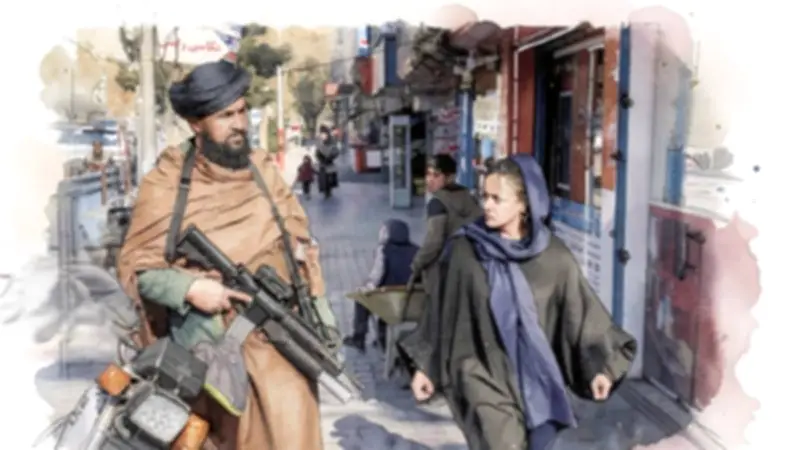
Major cities like Kabul maintain a semblance of social life, with private media and dining still existing, though heavily constrained by ad hoc enforcement. The Taliban did not inherit a blank slate, but they did inherit a broken one: depleted bureaucracy, severe brain drain, and a society exhausted by four decades of war. Their instinctive response has been to centralise power tightly within a narrow leadership circle, viewing outsiders, even fellow Afghans, with suspicion.
A Different Afghanistan, A Familiar Fear
Yet Afghanistan today is not Afghanistan in 1996. From Kabul, journalist Ali Latifi offers a ground-level view that complicates prevailing international narratives. He notes that daily life in major cities bears little resemblance to the Taliban’s first period in power. Despite restrictions, urban social life exists in ways that would have been unthinkable in the 1990s. Families dine out, women shop together, private media continues to operate, albeit within red lines, and music, once entirely banned, survives quietly in homes, cars, and wedding halls.
Latifi also highlights a paradox: governance at the bureaucratic level has, in some respects, become more functional. Routine paperwork is processed without the bribery that plagued the previous republic. Crime, once rampant, has dropped sharply, largely due to the certainty and severity of punishment. But normalcy exists under a shadow. Enforcement is often ad hoc, creating an atmosphere where people feel secure day-to-day yet remain conscious that their freedom depends on discretion and luck. Violence may be less visible, but fear has not disappeared; it has simply become quieter.
Exclusion as a Structural Fault Line
Where Latifi sees adaptation, Afghan activist Ahmed Sharifzad sees a system nearing collapse. Speaking from outside the country but drawing on contacts within, Sharifzad argues that the Taliban have failed the most basic test of legitimacy: inclusion. He describes a government dominated by a single ethnic group, excluding communities that together constitute the majority of Afghanistan’s population.

For Sharifzad, this exclusion is not cosmetic but existential. He claims that heavy taxation, economic suffocation, and the diversion of resources toward militant networks have deepened public resentment. In his view, the Taliban’s internal rigidity, particularly their rejection of dialogue, has closed off peaceful political evolution, leaving confrontation as the only remaining language. Sharifzad’s perspective stands in sharp contrast to the image of relative calm described by Latifi. Yet the two accounts are not mutually exclusive. Afghanistan today can be both less violent than before and deeply unstable; socially adaptable at the surface yet politically brittle underneath.
Inclusion, Illusion, and the Weight of History
Yet the demand for an inclusive national government, articulated by Taliban critics such as Ahmed Sharifzad, raises questions that Afghanistan has failed to answer before. Sharifzad attributes the current crisis to ethnic exclusion and alleges that public tax revenues are being diverted toward militant groups operating against Pakistan and the wider region. His prescription—a broad-based government representing Afghanistan’s diverse ethnic communities—echoes a familiar refrain from the post-2001 era.
What remains unresolved, however, is whether inclusion alone would alter Afghanistan’s historic political posture or its regional behaviour. Past Afghan governments—whether nationalist, coalition-based, or Western-backed—consistently rejected the Durand Line, cultivated close ties with India, and adopted confrontational positions toward Islamabad. From Daud Khan to the Northern Alliance and the Ashraf Ghani administration, political pluralism did not translate into regional accommodation. There is no clear guarantee that a future “national government” would behave differently, nor that power-sharing would prevent renewed factionalism, internal paralysis, or proxy alignments. Inclusion may offer a moral alternative to Taliban rule, but whether it can resolve Afghanistan’s deeper structural conflicts, or stabilise its relationship with the region, remains an open question.
The Question of Learning
So what, if anything, have the Taliban learned from history? They have learned how to maintain internal cohesion. They have learned the importance of discipline and centralised command. They have learned to avoid the visible chaos that doomed earlier Afghan regimes. What they appear not to have learned is that control is not the same as consent. Imtiaz Gul draws attention to global examples where armed movements transitioned into political actors but notes that Afghanistan’s tribal conservatism and ideological rigidity make such transformations exceptionally difficult. Without a willingness to broaden political participation and reinterpret authority beyond force, the Taliban risk repeating the very failures that once drove Afghans to accept them as an alternative.
A Future Still Unwritten
The Taliban’s greatest challenge may not be opposition on the battlefield, but irrelevance in diplomacy. Afghanistan remains economically strangled, diplomatically isolated, and dependent on humanitarian relief. While the outside world debates engagement versus isolation, ordinary Afghans bear the cost of sanctions, frozen assets, and halted investment. Whether the Taliban can navigate relations with major powers—particularly the United States and Europe—will shape Afghanistan’s future more than any internal decree. Engagement without reform risks legitimising exclusion; isolation without strategy risks deepening human suffering.
Afghanistan now finds itself at a familiar crossroads, more than three years after the Taliban regained control of the country. Having consolidated power under circumstances similar to their first rise in the 1990s, following the withdrawal of a foreign military, the movement is no longer in a moment of transition. The question it faces is no longer how it seized power, but whether it has used the time since to move beyond war and govern differently. Whether they recognise that lesson remains the unanswered question.