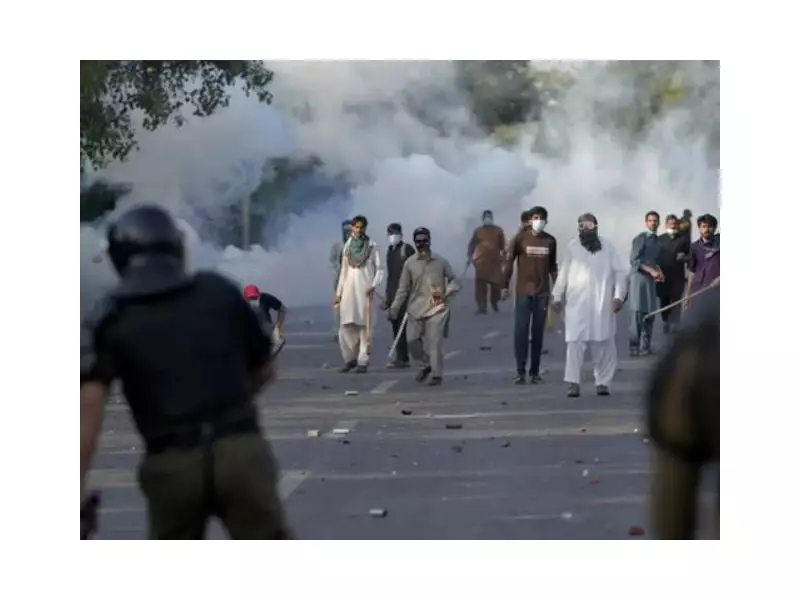
In a significant political development, the provincial government of Khyber Pakhtunkhwa has decided to withdraw dozens of cases filed against workers and supporters of the Pakistan Tehreek-e-Insaf (PTI) in the aftermath of the violent protests that erupted on May 9 last year.
Cabinet Approves Legal Move
The decision was formally approved during a recent cabinet meeting chaired by Chief Minister Ali Amin Gandapur. The government has identified a total of 55 specific cases that will be withdrawn through the legal process. This move signals a major shift in the provincial government's approach to the legal aftermath of the widespread protests.
Barrister Muhammad Ali Saif, who serves as the Adviser to the Chief Minister on Information, publicly confirmed the cabinet's decision. He stated that the provincial administration is now actively pursuing the legal avenues required to formally quash these cases. The cases in question were registered across various districts of Khyber Pakhtunkhwa following the unrest on May 9, 2023.

Focus on Reconciliation and Legal Process
The Adviser emphasized that the government's action is rooted in a desire for political reconciliation and follows the proper legal framework. He clarified that the withdrawal process is not instantaneous but involves submitting applications to the relevant courts. The government's legal teams are preparing the necessary documentation to present before the judiciary, seeking the termination of proceedings in these 55 cases.
This development is particularly notable given the context of the May 9 events, which involved protests and attacks on military and state installations after the arrest of PTI founder Imran Khan. Hundreds of cases were registered nationwide against party workers. The KP government's decision is one of the first large-scale initiatives by a provincial administration, now led by PTI itself, to legally shield its own workers from the consequences of those events.
Implications and Next Steps
The withdrawal of these cases is expected to have considerable political and legal ramifications. For the PTI workers named in these cases, it promises relief from prolonged court battles and potential penalties. Politically, it reinforces the party's narrative of standing by its supporters and challenging the legal actions taken against them in the wake of the protests.
Barrister Saif's announcement underscores the provincial government's commitment to this course of action. The success of this initiative now hinges on the responses from the courts where these cases are pending. The move is being closely watched as a potential precedent for similar actions in other provinces or regarding other cases linked to the May 9 protests.
The decision marks a pivotal step by the KP government in addressing one of the most contentious and politically charged legal legacies of the past year, setting the stage for further developments in the complex interplay between politics and the judiciary in Pakistan.