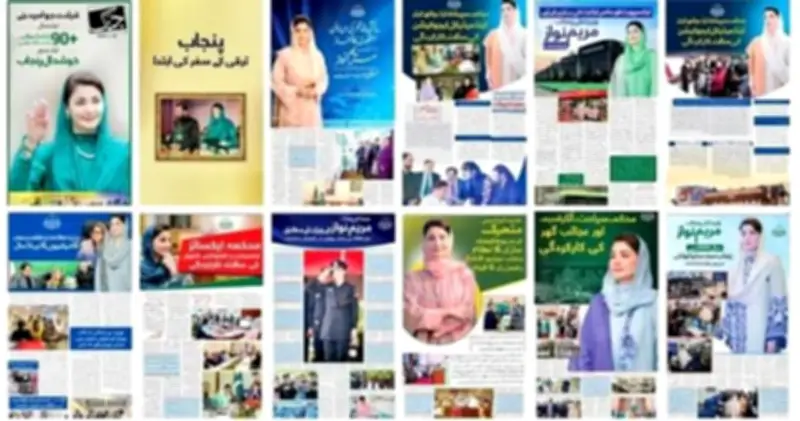
Last February, residents of Punjab opened their newspapers to find sixty pages of photographs of the same person: their Chief Minister. Three hundred images of Maryam Nawaz, spread across a glossy supplement, paid for with public money. The Lahore High Court found the charge serious enough to issue notices and demand government replies within a fortnight. Nobody was particularly surprised. This is how Punjab politics has worked for as long as most Punjabis can remember.
The Sharif family has governed Punjab for roughly nineteen of the past thirty-five years. Their formula has remained consistent across every tenure: build something visible, distribute something tangible, put your face on both. Roads, hospitals, metro buses, laptops, ration bags—the delivery changes, the logic does not.
The Mechanics of Clientelism
Political scientists have a name for this: clientelism. It is the practice of exchanging material benefits for political loyalty, not as a universal right, but as a targeted reward. The job goes to the voter who shows up. The card goes to the constituency that delivers. The benefit is real, but it is also conditional, and that conditionality is precisely the point.

Maryam Nawaz's government has taken this template and scaled it. The Himmat Card, the Kissan Card, the Suthra Punjab programme, e-bikes for students, and health cards for the elderly. Each scheme is genuine in what it delivers. And each one is branded, visibly and unmistakably, with a single name.
Approval Ratings in Context
A survey conducted by the Institute for Public Opinion Research in April 2026, covering seven thousand respondents across all thirty-six districts of Punjab, found that sixty-nine per cent of residents expressed satisfaction with Chief Minister Maryam Nawaz's leadership after two years in office. That number is real. It should not be dismissed. But it should be understood for what it measures and what it does not.
High approval in a patronage system does not measure the quality of institutions. It measures the effectiveness of distribution. When a voter receives a subsidised good from a political office, their satisfaction with that office rises. This is not a flaw in the survey; it is exactly what clientelism theory predicts. Material satisfaction displaces the demand for institutional accountability.
Structural Weaknesses
The Bertelsmann Transformation Index noted in its 2026 Pakistan report that accountability institutions have been systematically weakened as instruments of partisan interest. The Commonwealth Observer Group flagged manipulation of result forms and media bias in the 2024 general elections. Freedom House placed Pakistan among the countries with the steepest ten-year decline in democratic freedoms. These are the structural conditions under which that sixty-nine per cent approval rating was produced. It tells us that the government is good at distribution. It tells us nothing about whether Punjab's institutions will survive the next election.
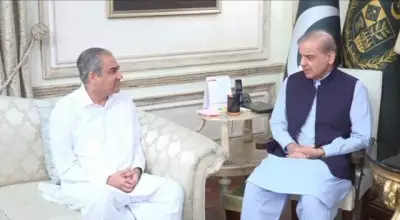
One of the first things Maryam Nawaz did upon taking office was to oversee an aggressive wave of senior bureaucratic transfers across Punjab. The Chief Minister’s office imposed a formal ban on further postings without personal approval, a decision Dawn reported in March 2024 as a sign of how centralised administrative control had become from day one.
Bureaucratic Control
Cambridge political scientist Shandana Mohmand, who has spent years studying Pakistani patronage politics, documents how bureaucratic appointments become a primary vehicle for distributing state resources to politically targeted constituencies. When the posting of a district officer depends on the Chief Minister's personal sign-off, the bureaucracy stops serving the province and starts serving the patron.
This is not unique to the Pakistan Muslim League Nawaz. Pakistan Tehreek-e-Insaf's entire electoral identity was inseparable from Imran Khan. The Pakistan Peoples Party has governed Sindh for sixteen years on the Bhutto branding. The problem is not Maryam Nawaz. The problem is the system that makes her approach rational.

The Rationality of Clientelism
The structural trap clientelism creates is this: voters rationally prioritise immediate, tangible benefits over abstract institutional goods because those benefits are contingent on political loyalty in ways that democratic rights are not. A citizen who depends on a welfare card distributed by a political office has a personal stake in keeping that office in power.
The saviour narrative surrounding Maryam Nawaz is not a misperception by uninformed citizens. It is a rational response to a system designed to make personal loyalty more rewarding than institutional citizenship.
Breaking the Cycle
Breaking that cycle does not require a better patron. It requires a different system. Welfare programmes need legally guaranteed minimum durations that cannot be rolled back when governments change. The Health Card, Ehsaas, and Benazir Income Support Programme have each been dismantled and rebuilt by successive administrations, costing billions and serving nobody. Government advertising expenditure needs independent oversight with published accounts. Bureaucratic appointments need merit-based rules insulated from electoral calendars.
None of this is impossible. None of it requires waiting for a leader generous enough to dismantle the system that keeps her in power. It requires citizens, journalists, and legislators to demand it regardless of which face is on the supplement.
The photographs will keep changing. Until the system does, the story will not.