KARACHI - Sindh Chief Minister Syed Murad Ali Shah presented a Rs 3.652 trillion budget for the fiscal year 2026-27 against estimated receipts of approximately Rs 3.41 trillion, resulting in a projected deficit of about Rs 242 billion. The budget includes no new taxes, a seven per cent increase in salaries and pensions, a Rs 400 billion development programme, a Rs 13.2 billion social protection package, and a series of long-term initiatives aimed at transforming Sindh into a regional hub for trade, finance, technology and renewable energy.
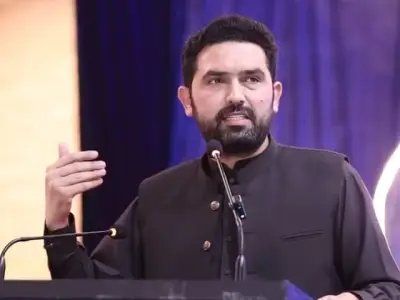
Presenting the budget in the Sindh Assembly on Wednesday, Syed Murad Ali Shah said the province had prepared its financial plan amid a challenging global and domestic environment marked by geopolitical tensions, inflationary pressures, climate-related risks and economic uncertainty. He said that while Pakistan's economy had shown signs of recovery during the outgoing fiscal year, ordinary citizens continued to face hardships due to rising living costs, energy prices and inflation.
The CM said Sindh's budget strategy for the coming year was guided by four principles: safeguarding the province's constitutional rights, maintaining fiscal sustainability, contributing to national stability and continuing investment in public welfare.

The budget envisages total expenditures of around Rs 3.562 trillion against estimated receipts of approximately Rs 3.525 trillion, resulting in a projected deficit of about Rs 36.9 billion. Sindh's budgetary size has continued to expand, with the provincial government proposing a total outlay of Rs 3.652 trillion for FY 2026–27, compared to Rs 3.442 trillion in FY 2025–26, reflecting an increase of Rs 210 billion and underscoring the government's emphasis on development spending, social services and infrastructure investment.
Syed Murad Ali Shah disclosed that the provincial government had been compelled to reduce its development portfolio from a projected Rs 575bn to Rs 400bn after contributing towards national strategic requirements under a negotiated arrangement with the federal government. “Even in a difficult fiscal environment, we have protected priority development projects and essential public services that directly affect the lives of our people,” he said.
The chief minister announced that there would be no new taxes in the coming fiscal year and instead unveiled a series of relief measures aimed at supporting education, agriculture, insurance and employment sectors. Among the measures announced were a reduction in sales tax on education support services to five per cent, continuation of concessional tax rates for overseas employment recruiting agencies and beauty salons integrated with point-of-sale systems, and reductions in taxation applicable to insurance agents and brokers.
The budget also provides relief to the agriculture sector by increasing the exemption threshold for agricultural super tax from Rs150 million to Rs500 million and reducing the applicable rate from 10pc to 8pc. In a move expected to benefit public sector employees and pensioners, the Sindh chief minister announced a seven per cent increase in salaries and pensions with effect from July 1. In salaries, a seven per cent increase has also been granted by amalgamating the Adhoc Relief Allowances (ARA) of 2022 and 2025. The minimum wage has also been increased from Rs 40,000 to Rs 43,000 per month.
The CM said the government remained committed to shielding vulnerable groups from economic hardship and announced a Rs13.2bn social protection package comprising the Kitchen Garden Initiative, Benazir Hari Card Programme, Benazir Women Agriculture Workers Programme and support schemes for widows and orphans. On the development side, the Annual Development Programme for FY27 allocates Rs 25.9bn for education, Rs 17.4bn for health, Rs 121.6 bn for local government and municipal infrastructure, Rs 40.9 bn for public health engineering, Rs 30.9 bn for irrigation, Rs 39.5 bn for transport and communications and Rs 6.3 bn for agriculture and livestock.

Syed Murad Ali Shah said the province had achieved the highest development spending in its history during the outgoing fiscal year, releasing more than Rs900bn for development activities despite inflationary pressures and rising construction costs. Highlighting reconstruction efforts following the devastating floods of 2022, he said one million houses had already been completed under the Sindh Peoples Housing for Flood Affectees Programme, while financing arrangements had been secured for approximately 1.7 million housing units with international support amounting to $1.675 billion.
The chief minister said the program had also empowered women through the transfer of land ownership rights to hundreds of thousands of beneficiaries. A major feature of the budget speech was the announcement of a new generation of large-scale PPP projects intended to position Sindh as a regional hub for trade, finance, technology, renewable energy and sustainable development. The chief minister said Sindh's PPP program had earned international recognition, including appreciation from the United Nations Economic Commission for Europe (UNECE), The Asset magazine and The Economist, and had emerged as one of the most successful sub-national PPP frameworks in Asia.
Building on that success, the government plans to launch several transformational initiatives through PPP arrangements. Among the flagship initiatives is the proposed development of Keti Bandar as a maritime, logistics, industrial and energy hub. Syed Murad Ali Shah added that Shaheed Zulfikar Ali Bhutto had launched Port Qasim while Chairman Bilawal Bhutto had directed him to initiate the Keti Bandar project. The government will undertake an internationally benchmarked viability assessment to evaluate the establishment of a modern coastal economic corridor incorporating port infrastructure, industrial zones, logistics and warehousing facilities, export-oriented manufacturing clusters, energy projects and multimodal transport connectivity. The project will also explore linkages with the Dhabeji Special Economic Zone, Thar's energy resources and emerging regional trade routes.