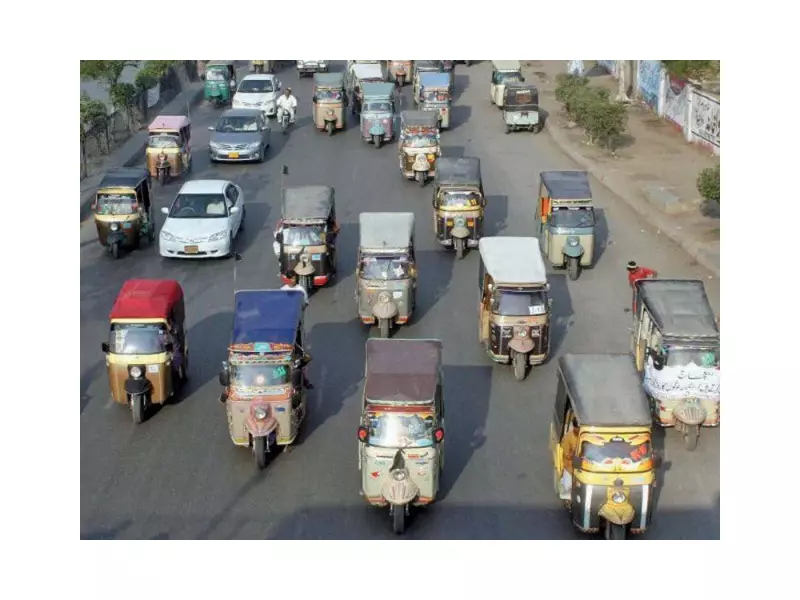
In a significant move to tackle the city's chronic traffic gridlock, Karachi authorities have imposed a sweeping ban on Qingqi rickshaws across 26 major thoroughfares. The decision, announced by Senior Superintendent of Police (SSP) Traffic, aims to restore order and improve the flow of vehicles on some of the metropolis's most congested arteries.
The List of Restricted Roads
The Karachi Traffic Police issued a formal notification detailing the specific roads where Qingqi rickshaws are now prohibited. The ban is effective immediately and targets key routes that serve as critical connectors across the city.
Some of the prominent roads included in the ban are Shahrah-e-Faisal, M.A. Jinnah Road, II Chundrigar Road, and Korangi Road. Other major arteries like University Road, Dr. Ziauddin Ahmed Road, and the roads leading to and from Karachi Airport are also covered under this restriction. The comprehensive list was crafted based on traffic volume analysis and frequent congestion points.

Rationale Behind the Regulatory Action
The primary driver for this ban is the severe traffic congestion attributed to the movement and stopping patterns of Qingqi rickshaws. Officials state that these vehicles often pick up and drop off passengers indiscriminately, causing sudden blocks in traffic lanes and leading to bottlenecks.
SSP Traffic highlighted that the unchecked operation of Qingqis on these major roads not only slows down overall traffic but also compromises road safety for other commuters. The measure is seen as a necessary step to enforce traffic discipline and ensure a smoother commute for the millions of Karachiites who use these roads daily.
Enforcement and Expected Outcomes
The Traffic Police have been directed to strictly enforce the new regulation. Violators will face legal action and fines as per the existing traffic laws. The police machinery is expected to be particularly vigilant during peak hours to ensure compliance.
This initiative is part of a broader strategy to decongest Karachi's roads. Authorities anticipate several positive outcomes from the ban:
- Improved average traffic speed on major corridors.
- Reduction in travel time for private cars, buses, and emergency vehicles.
- Enhanced road safety by minimizing unpredictable stops and lane changes.
- A more organized and regulated traffic ecosystem in the long run.
While the move directly impacts Qingqi drivers, it is framed as a necessary sacrifice for the greater good of the city's mobility. The decision underscores the administration's focus on implementing tough measures to solve Karachi's perennial traffic woes. The success of this ban will likely influence future traffic management policies in Pakistan's largest city.