In a significant political development, Khyber-Pakhtunkhwa Chief Minister Ali Amin Gandapur finds himself facing legal action as police in Dera Ismail Khan have registered a First Information Report (FIR) against him for making what authorities describe as threatening and misleading statements.
Legal Action Initiated Against Provincial Chief
The case was formally lodged at the City Police Station in Dera Ismail Khan on Tuesday, marking a serious escalation in the ongoing tensions between provincial authorities and law enforcement agencies. The FIR specifically targets the chief minister for his recent public statements that allegedly contained elements of intimidation and misinformation.
The complaint was filed by Station House Officer (SHO) Nawaz Gondal, who acted on behalf of the state, indicating the seriousness with which law enforcement is treating the matter. The case has been registered under multiple sections of the Pakistan Penal Code, including Section 505, which deals with statements conducing to public mischief, and Section 153, which addresses provocation with intent to cause riot.

Contentious Remarks Spark Legal Backlash
The controversy stems from a speech delivered by Chief Minister Gandapur during a public gathering in his hometown. According to the FIR, the PTI leader made statements that could be interpreted as threatening toward state institutions and their representatives. The police document alleges that Gandapur's remarks were designed to create fear and uncertainty among both government officials and the general public.
The timing of these developments is particularly sensitive given the ongoing political tensions in the country. As a senior leader of the Pakistan Tehreek-e-Insaf party and the elected chief minister of a strategically important province, Gandapur's statements have drawn national attention and raised concerns about institutional respect and constitutional boundaries.
Legal experts note that the inclusion of Section 505 in the FIR is significant, as this provision specifically criminalizes statements intended to cause alarm to the public or to any section of the public, thereby inducing them to commit an offense against the state or against public tranquility.
Political Reactions and Implications
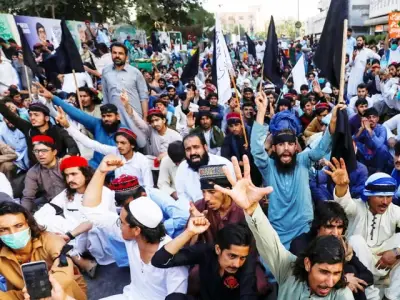
The registration of the FIR has triggered immediate political reactions across the spectrum. Supporters of the chief minister have denounced the move as politically motivated, while government officials have defended the action as necessary to uphold the rule of law and maintain institutional integrity.
This legal action represents a rare instance where a sitting chief minister faces criminal charges while in office. The development raises important constitutional questions about the balance of power between provincial authorities and federal institutions, as well as the legal immunities and responsibilities of elected officials.
The case also highlights the ongoing tensions between the PTI-led provincial government in Khyber-Pakhtunkhwa and federal authorities. Political analysts suggest that this incident could have far-reaching implications for inter-governmental relations and the political landscape in the province.
As the legal process moves forward, all eyes will be on how the judiciary handles this sensitive case involving a high-ranking elected official. The outcome could set important precedents regarding the accountability of public officials and the limits of political speech in Pakistan's democratic framework.
The Khyber-Pakhtunkhwa government has yet to issue an official statement regarding the FIR, but sources close to the chief minister indicate that legal challenges to the case are being prepared. The situation remains fluid, with potential implications for provincial governance and political stability in the region.