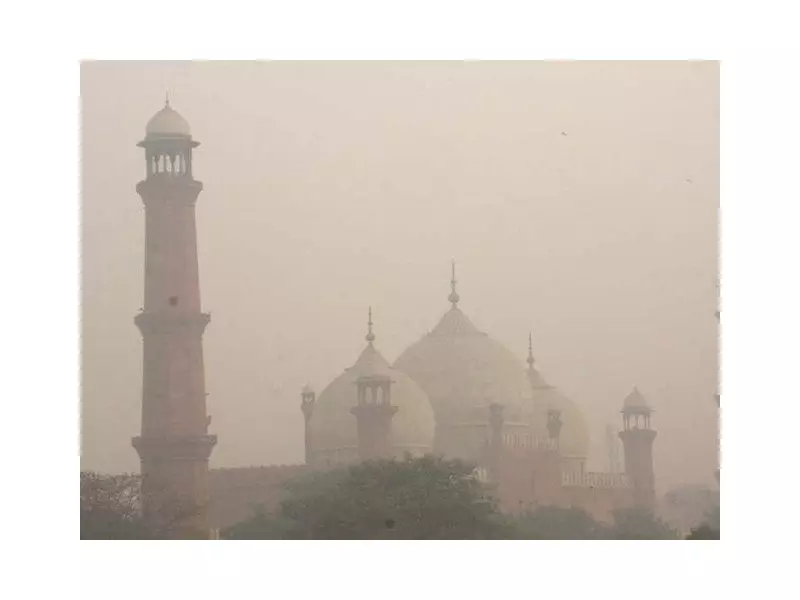
The provincial capital of Punjab continued to choke under a thick layer of smog on Monday, with air pollution levels remaining in the very unhealthy category according to official measurements. The Punjab Environmental Protection Agency reported an average Air Quality Index reading of 287, indicating serious health risks for Lahore's residents.
Citywide Pollution Hotspots
Despite brief weekend showers and occasional enforcement actions, the smog situation showed little improvement. Monitoring data collected between 8:00am and 3:00pm revealed alarming pollution concentrations across the city. Kahna Nau Hospital recorded the highest AQI at 446, followed by Government Teaching Hospital Shahdara at 367. Even recreational areas like Safari Park registered readings above 290, demonstrating that no part of the city escaped the hazardous conditions.
The Punjab Environmental Protection Agency's comprehensive assessment placed Lahore at the top of the provincial pollution chart. Other affected cities included Gujranwala with AQI 248, Dera Ghazi Khan at 245, Hafizabad at 223, and Kasur recording 222. The overall provincial average settled at 189, keeping the entire region in the unhealthy air quality bracket.

Judicial Intervention and Government Response
The Lahore High Court took serious note of the persistent smog crisis during hearing of related petitions. Justice Shahid Karim expressed clear dissatisfaction with the government's performance in tackling the environmental emergency. The court has demanded comprehensive implementation reports from all relevant departments by Wednesday, seeking concrete evidence of action.
During the proceedings, a member of the Smog Commission highlighted that heavy traffic movement after 11:00pm significantly worsens air quality. The Motorway Police DIG assured the court of full cooperation, referencing previous assistance in pilot enforcement projects. While appreciating police support, Justice Karim emphasized that without effective vehicle inspection and emission control systems, environmental conditions would continue to deteriorate.
Urban Greenery Under Threat
The court also addressed concerns about commercial encroachment in public parks. The Parks and Horticulture Authority faced questioning about restaurants and BBQ setups operating within green spaces. Justice Karim issued a clear warning against turning parks into revenue hubs by cutting trees, stressing that green spaces must be protected from commercial activities. The PHA counsel committed to submitting detailed reports after proper inspection.
In a related development, the cantonment board received directions to submit a report about trees cut in front of a bakery. The court reiterated that combating smog requires coordinated efforts across multiple fronts, including traffic regulation, vehicle fitness certification, preservation of urban greenery, and better management of nighttime heavy transport.
Health Impacts and Global Standing
Environmental experts have raised serious concerns about the health implications of prolonged exposure to such high pollution levels. Medical professionals warn that severe respiratory and cardiac illnesses can develop with continued exposure to the current air quality. Citizens have been advised to avoid unnecessary outdoor movement, wear protective masks when outside, and limit early morning exercise in open areas.
On the global stage, Lahore ranked as the fourth most polluted city worldwide, trailing only Delhi, Tashkent, and Kolkata. The Pakistan Meteorological Department reported that continental air is prevailing over most parts of the country, with dry weather expected to continue through Thursday. Shallow fog and smog are likely to develop over plain areas, and no significant rainfall is forecast in the coming days, meaning little atmospheric relief is expected from natural causes.