Iran coach Amir Ghalenoei has reiterated that his team continues to face unfair treatment from the United States at the 2026 FIFA World Cup, citing travel restrictions and visa refusals. Despite these challenges, he expressed optimism that FIFA would persuade American authorities to ease some restrictions for their final group stage match against Egypt.
Ghalenoei Voices Frustration Over Travel Constraints
Speaking through an interpreter, Ghalenoei said, “I am very glad that the Iranian nation is behind us. Our martyrs in Iran, we play for them. But I know that this kind of behavior has hurt our people. Even if we spent billions of dollars, we would not be able to have justice for our people. It just shows we are an oppressed country. But nevertheless, I hope we achieve peace, and I hope this kind of behavior does not become institutionalized in the World Cup.”
Iran returned to the Los Angeles area on Saturday for its second match against Belgium on Sunday. Ghalenoei revealed that his request to travel on Friday was denied, forcing him to cut short the team’s training session. “We needed to have 24 hours (in Los Angeles), but they gave us less than 16 hours, and that is why we had to leave our training halfway,” he said. “These constraints have made it very difficult for us.”

Appeal to Other Coaches and FIFA Intervention
Ghalenoei also called on other World Cup coaches to speak out against the treatment of the Iranian team. “I ask the other 47 coaches a question, and none of them have responded to me,” he said. “We are here for football, not politics, and we are saying that again. Our grievances are to the way they’ve behaved with us. I haven’t heard anything from other coaches (at the World Cup), and I’m sure they’re busy and preparing their own teams and we never expect them to have a reaction. But if I had seen another team being treated the way we are being treated, I would say something.”
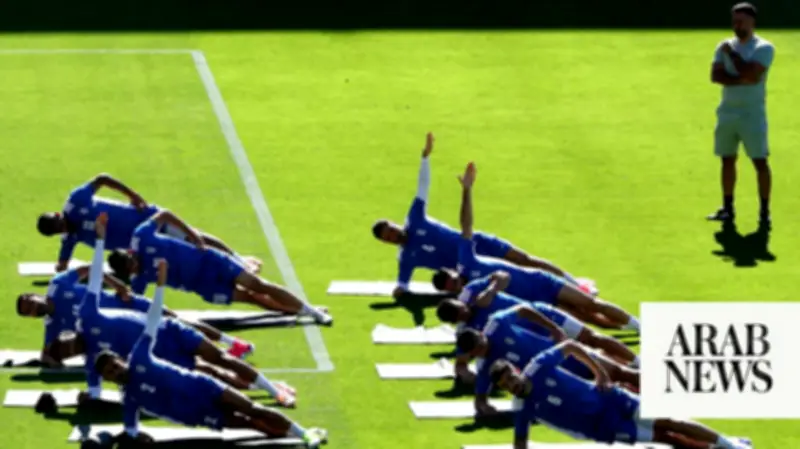
The Iranian team is operating under US-imposed travel restrictions that require them to fly to matches the day before and return immediately to their training base in Tijuana, Mexico. While some teams voluntarily adopt similar schedules, Ghalenoei believes the restrictions are unfair. Iran worked out at the LA Galaxy’s home stadium in Carson on Saturday after a short flight from Tijuana.
Players Echo Concerns
Iran midfielder Saeid Ezatolahi echoed the coach’s sentiments. “You cannot deny that our situation hasn’t been the same as all the other teams,” he said. “All the other teams have managed to focus on our planning, whereas we have had to spend so much time just commuting.”
Ghalenoei praised FIFA President Gianni Infantino for attempting to loosen the restrictions and expressed hope that the US would allow Iran to travel to Seattle two days early for their final group match against Egypt. “For the third game, they said, ‘In Seattle, you can do what you want,’” Ghalenoei said. “’You can act the way you want to, and you can come earlier.’ But my problem is, why didn’t they let us come earlier for the first two games as well? I just know for the last game, they’ve allowed us to make our own decisions with planning the travel. But unfortunately for the first two games, others made these timing decisions for us.”
FIFA’s Efforts and Visa Issues
The coach said FIFA spent much of Friday trying to persuade the US government to allow Iran to fly to Los Angeles that day. Ghalenoei waited by the phone for approval, but negotiations failed. “They said, ‘Sorry, we weren’t able to do that,’” Ghalenoei said. “And that’s going to affect us mentally, especially because as a head coach, I want to focus on technical things. I thank FIFA for that, but it doesn’t mean it’s succeeded. I just hope problems won’t occur in future World Cups.”
Iran played its opening match at SoFi Stadium on Monday, drawing 2-2 with New Zealand after a five-hour commute that included customs delays. Ghalenoei said he was surprised to be ordered out of the country immediately after the game. However, he acknowledged that on Saturday, the team cleared customs and reached their hotel more quickly, crediting US officials for smoothing some bureaucratic issues.

He renewed complaints about visa denials for members of Iran’s traveling party, including the head of the football federation, coaching support personnel, and media relations staff. “Such kind of behavior is not suitable for a World Cup,” Ghalenoei said. “You invite a team, but you don’t let in their support staff, their backroom staff?”
Belgian Player Expresses Empathy
Belgian right back Thomas Meunier expressed empathy for the Iranian team, drawing parallels to facing Ukraine after the Russian invasion. “We usually don’t mix football with politics, but it’s quite challenging to separate the two, admittedly,” Meunier said through an interpreter. “This period should push the Iranian team to do better, in my opinion. When we played Ukraine in Nations League, there was very high motivation, more energy. They want to make their people proud and defend their nation. For us, it’s an added challenge. I would imagine some Iranian players have a family that’s directly impacted by the war, and we obviously feel for these people.”