The year 2025 has been hailed as a landmark period for Pakistan's domestic cricket framework, with the Pakistan Cricket Board (PCB) implementing decisive reforms to align the system with global standards. Under a clear vision focusing on youth development, performance, and professionalism, the domestic structure witnessed significant consolidation and forward momentum.
Building the Pyramid: From School Grounds to National Team
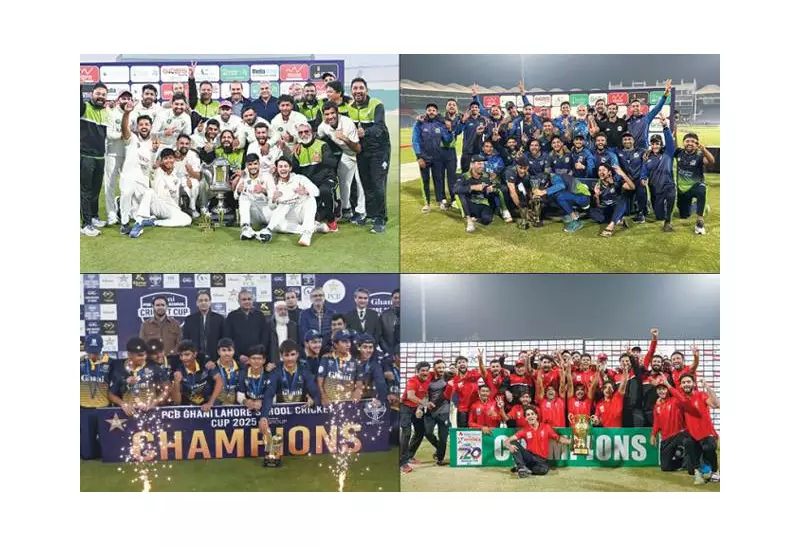
One of the most historic steps was the formal introduction of organized school cricket across the nation. This initiative, a first in Pakistan's cricketing history, established multiple competitive tiers to identify and nurture talent from an early age. Director Domestic Cricket Operations Abdullah Khurram Niazi emphasized that this move has created a clear and purposeful pathway. Players can now progress systematically from U-15 and U-17 levels to U-19 cricket, then into first-class competitions, the Pakistan Shaheens, and ultimately the national team.
This focus on youth was bolstered by age-group national tournaments complemented by specialized training camps. These camps provided young cricketers with essential technical development and exposed them to professional standards from the outset.

A Shift to Merit and Enhanced Transparency
At the senior level, the ecosystem remained vibrant with club, inter-district, departmental, and premier tournaments like the Quaid-e-Azam Trophy and Hanif Mohammad Trophy. The competitive base was notably widened with the participation of more than 28 departments at the Grade-II level.
A crucial cultural shift highlighted by Niazi was the PCB's decisive move away from a culture-based selection model. In line with PCB Chairman Mohsin Naqvi's vision, the board has firmly adopted a performance-centric system. "We have consciously moved towards rewarding performance rather than reputation or background," Niazi stated, noting the positive response and increased competitiveness this has fostered.
Transparency received a major boost through the live-streaming and broadcast of major domestic tournaments in 2025. This breakthrough allowed selectors, coaches, and fans alike to monitor player quality and performance directly, adding a new layer of accountability and engagement.
Future Foundations: Academies, Fitness, and Holistic Growth
Looking ahead, the PCB has outlined ambitious plans to establish 16 regional academies nationwide. These centers aim to standardize coaching, facilities, and player development programs. Equally critical is the board's strict new policy on fitness. Minimum fitness benchmarks have been introduced across age-group, regional, and departmental cricket. "Only players who meet the required fitness standards are allowed to compete," Niazi firmly stated, underscoring the commitment to modern athletic demands.
The role of the National Cricket Academy and high-performance centres is also expanding under a holistic model. They now extend support beyond players to include umpires, coaches, and support staff, creating a unified development environment.
With these structural reforms taking root, Pakistan's domestic cricket is evolving into a more credible and competitive system. "Domestic cricket is improving with every season," concluded Abdullah Khurram Niazi. "Our goal is clear: to build a strong foundation that consistently produces players capable of taking Pakistan cricket to the very top."