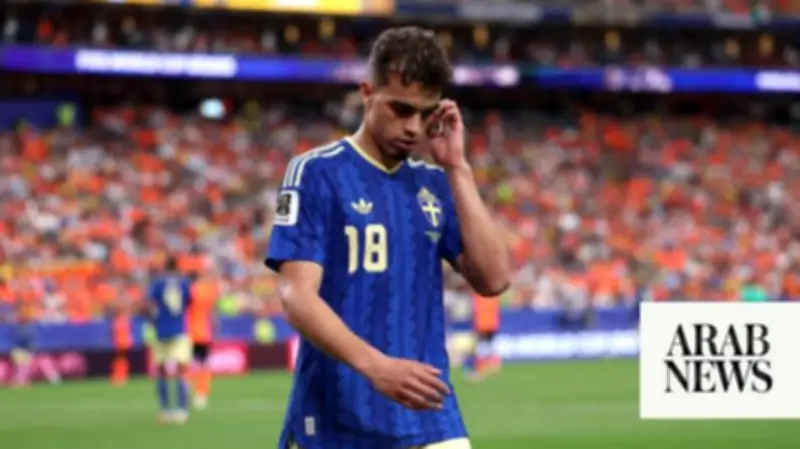
When Sweden’s Yasin Ayari scored seven minutes into his World Cup debut, he raised his arms in apology rather than celebration out of respect for Tunisia, where his father is from. The Brighton midfielder’s gesture is far from unique at a World Cup awash with players who could represent multiple nations via birth or ancestral roots.
Dual-National Players Dominate 2026 World Cup
Scouting and recruiting dual-national players has become vital to achieving success on the global stage. Nearly a quarter of the 1,248 players selected for the 2026 World Cup represent a country other than their birthplace. Morocco became the first African nation to reach a World Cup semifinal four years ago and harbor hopes of at least matching that feat in the coming weeks. During an impressive performance to hold Brazil 1-1 in their tournament opener, they became the first side in World Cup history to at one point field a full foreign-born 11.
“It was a special game for me, that’s why I didn’t celebrate in the first goal because I feel a lot for the country (of Tunisia), I love this country,” said Swedish-born Ayari, who could also have represented his mother’s nation Morocco. His story echoes many others at this tournament.

Curacao’s Dutch Connection
Curacao’s fairytale appearance on the global stage owes much to the ties between the Caribbean island of 160,000 people and the Netherlands. Of the Blue Wave’s 26-man squad, 25 are Dutch-born and they are led by former Netherlands boss Dick Advocaat. “We have the heart of our homeland. And we’ve gone through the Dutch youth academy. That’s a good combination,” forward Jurgen Locadia said after Curacao stunned Ecuador to secure their first World Cup point with a 0-0 draw.
Curacao’s Leandro and Juninho Bacuna are one of seven sets of brothers taking part at the World Cup, four of which are representing different nations. Paris Saint-Germain’s Desire Doue forms part of France’s star-studded attack, while his older brother Guela Doue is part of the Ivory Coast squad. Center-back siblings John and Harry Souttar play for Scotland and Australia respectively. Nico Williams chose to represent Spain, while older brother Inaki plays for Ghana, alongside Derrick Luckassen, the half-brother of Dutch forward Brian Brobbey.
Cape Verde’s LinkedIn Recruit
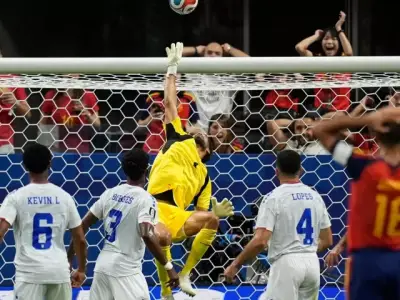
Cape Verde have been the revelation of the tournament, holding former winners Spain and Uruguay to draws in their first two World Cup matches. At the heart of the Blue Sharks defense has been Roberto ‘Pico’ Lopes. Born in Dublin to an Irish mother and Cape Verdean father, Lopes was recruited via networking site LinkedIn, but only at the second attempt. Lopes had ignored the first message sent by then coach Rui Aguas nine months earlier as it was sent in Portuguese, a language the Shamrock Rovers center-back did not speak.
Nestory Irankunda, who scored Australia’s opening goal in a 2-0 win over Turkiye, was born in a refugee camp in Tanzania to Burundian parents, who had fled civil war before moving to Perth when the winger was still a baby. Those stories that champion the power of immigration are particularly poignant in a World Cup that began against a backdrop of exclusion. Somali referee Omar Artan was denied entry to the United States, while four of the participating nations — Haiti, Iran, Ivory Coast and Senegal — are subject to US travel bans and visa restrictions.
FIFA’s Eased Rules on National Team Switches
By contrast, FIFA have moved toward a more understanding approach to players facing difficult choices on who to represent, often while still teenagers. Now players under 21 can switch allegiance if they have three or fewer senior caps and have not played in a major tournament. But it is not just smaller nations taking advantage of the change in rules. England’s Declan Rice, who will win his 75th cap against Ghana on Tuesday, played three times for the Republic of Ireland before the call came to represent the Three Lions. Jamal Musiala represented England at youth level where he grew up before being snapped up by Germany.

Bayern Munich star Michael Olize was born in London to a British-Nigerian father and Franco-Algerian mother. “I actually come from four countries: France, Algeria, Nigeria and England. I consider myself very lucky to possess these four parts, which all enrich me,” Olize told an interview with Bayern’s members magazine. France won the battle for Olize’s services, which could just prove vital to who wins the World Cup.