Sialkot's Trionda Ball: The Heart of the 2026 World Cup
From Shakira's timeless dancing to Messi's mesmerising dribbling to Ronaldo's mercurial goal-scoring, all the world's eyes in June and July will be fixed on the 'football' – the ones made in Sialkot, Pakistan. The official ball of the 2026 World Cup, named "Trionda," designed by Adidas, is manufactured by Forward Sports of Sialkot. The tournament is projected to attract 60 million attendees on the ground and over 5 billion global TV and digital viewers.
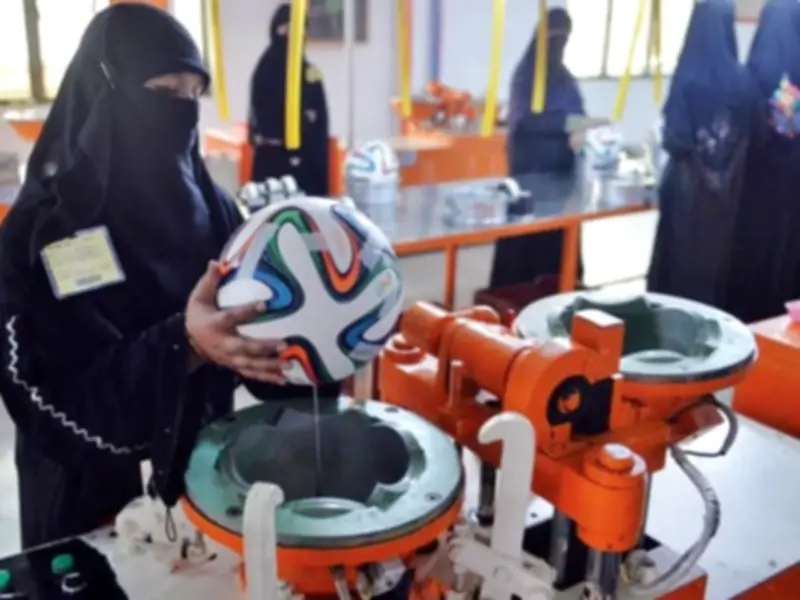
It is hard for Pakistanis to grasp that the world's most technologically advanced match ball ever made – featuring a cutting-edge AI-powered chip enabling real-time match data to support umpiring decisions – is stitched by Pakistani craftsmen in a city with broken streets and crumbling roads.
Sialkot: Global Capital of Football Production
Sialkot, often hailed as the global capital for football production, plays a central role in the international football supply chain. The city produces 70% of the world's premium footballs. Sialkot has been entrusted with crafting official footballs for many previous World Cups, including the Brazuca of 2014, the Telstar of 2018, and the Al Rihla of 2022. Steeped in a rich tradition of craftsmanship and skilled artisans, Sialkot now blends modern innovation and technology, making these footballs the world's best.

The rise of Sialkot's sports goods empire began during the British empire when the city became a garrison town overseeing neighbours such as Kashmir, Afghanistan, China, and Russia. With a large concentration of troops stationed, demand for sporting equipment grew as a means of entertainment and physical activity. Soon, a cottage industry of hand-stitched sports goods, including footballs, hockey, and cricket balls, catering initially to the needs of the British army, flourished. Supplies gradually expanded to other towns and British colonies abroad, with the city's craftsmen making an instant impression within the Raj and globally.
From Cottage Industry to Global Powerhouse
While cricket gained an elitist following initially across the British empire, football raced ahead as a truly global phenomenon, transcending age, race, borders, and income level to become the world's most popular sport. The skyrocketing worldwide demand for footballs meant Sialkot's craftsmen had to produce them faster, better, and in greater numbers. Despite football being played mostly in other countries, its manufacturing remained firmly anchored in Pakistan.
Meanwhile, Sialkot also excelled in exporting high-quality leather goods, surgical instruments, and textiles, further solidifying its status as a centre of outstanding industrial and artisanal expertise. Sialkot's transformation into a global powerhouse of sports goods manufacturing is nothing short of a business miracle. The city is braving fierce competition from manufacturers in China and other Asian countries but stoically maintaining its competitive edge. Its reputation for excellence and reliability endures, earning the trust of the biggest football brands and footballers worldwide. In the realm of the "beautiful game," Sialkot remains synonymous with craftsmanship of the "beautiful balls."
Urban Challenges Amid Global Glory
While the 16 host cities of the ongoing World Cup in the United States, Canada, and Mexico will be reaping millions and billions in income and city upgrades, Sialkot continues to face urban challenges. Unplanned growth, inadequate water, roads, and civic amenities stand in stark contrast to the city's status as a key export hub. The absence of a mass-transit system makes commuting for the city's large workforce time-consuming, delaying factory operations and inflating opportunity costs for workers and business owners.

Tucked away from GT Road galore, Sialkot had little choice but to take development matters into its own hands. Faced with challenges in swift travel and goods transportation due to reliance on distant airports like Lahore, Islamabad, and especially the port city Karachi – which is 1,400 km away – Sialkot's business community, led by the Sialkot Chamber of Commerce and Industry (SCCI), pooled money to build Pakistan's first private-sector owned and operated airport. Operational since 2007, it has been profitable and efficient. The community later launched AirSial, further showcasing private sector prowess in managing aviation projects. The entrepreneurial spirit of Sialkot exemplifies how skilled craftsmanship, innovation, and determination can empower cities and industries, uplift communities, and drive economic progress.
Government and ADB Initiatives for Sialkot's Uplift
Lately, the provincial government initiated the Punjab Intermediate Cities Improvement Investment Project (PICIIP), funded by the Asian Development Bank (ADB), to help uplift Sialkot. The project, ending July 2026, has built flyovers to ease traffic flow on Sialkot's traffic choke points, upgraded bus terminals, installed water pumping stations improving access to clean water, and laid new sewer pipelines and wastewater treatment systems. PICIIP has upgraded urban public spaces such as the city's parks, fostering improved liveability for its busy craftsmen and their families.
Yet, Sialkot being key to Pakistan's export-based growth ambitions, much more needs to be done. The industrial hub deserves affordable gas and electricity pricing, tax breaks on local raw materials, and competitive duties at the port of export. Modernising dry ports and transport for improved efficiency of the transportation value chain is essential. The city's business environment is suitable for public-private partnerships to remodel it as Pakistan's Shenzhen.
Path Forward: Special Zones and Global Recognition
Dedicated special industrial zones and tanneries, automation and digital infrastructure, data centres, research and development incubators, digital payment gateways, SME banks, and special business facilitation platforms are some of the steps to prepare Sialkot for transit into changing global business ecosystems. Pakistan needs a few more Sialkots, at least one each in Gwadar and Gilgit-Baltistan bordering the world's biggest and richest sports markets.
Finally, as a tribute to Sialkot's craftsmen and entrepreneurial spirit, the city deserves high-quality sporting facilities. FIFA may step in to encourage one of its rich member countries such as Qatar or Saudi Arabia to relocate one of their ghost stadiums and help in developing a Sialkot football tournament. That's one way for the world to say, 'Thank you, Sialkot'!