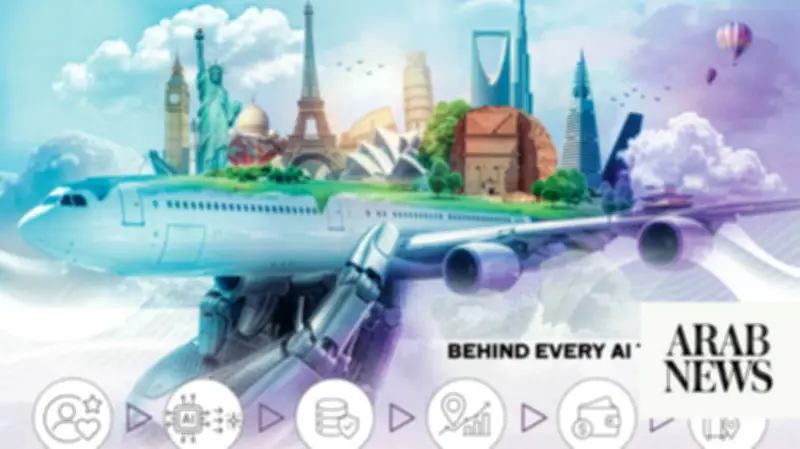
Artificial intelligence is revolutionizing Saudi Arabia's tourism sector as the Kingdom pursues its Vision 2030 goals, enabling more personalized travel planning, improved destination discovery, and smarter customer experiences. Industry leaders report significant gains, including a 22% increase in conversion rates from AI-driven recommendations.
AI Personalizes Travel Planning
Muzzamil Ahussain, CEO of Almosafer Travel and Tourism Co., told Arab News that AI is reshaping the industry by cutting through the overwhelming number of travel options and delivering more relevant recommendations. “The real problem was never having too few options; it was having too many irrelevant ones. AI shifts that equation by understanding intent first — who is traveling, with whom, for what purpose, at what budget, and with what cultural preferences,” he said.
Ahussain cited Saudi families planning trips to the Red Sea destination as an example, explaining that AI can summarize reviews from travelers with similar profiles and preferences to generate more meaningful recommendations.

Diversifying Tourism Beyond Major Hubs
The growing intersection of AI and tourism is also helping diversify travel across the Kingdom. “By highlighting trending destinations such as Abha, Jubail, and Tabuk, alongside fast-rising giga-destinations like The Red Sea and Qiddiya City, we are actively diversifying tourism beyond the traditional major hubs,” Ahussain said.
Almosafer is working with the Saudi Tourism Authority to improve destination discoverability. “Our models already summarize reviews and tag content to deliver relevant choices, resulting in a 22 percent increase in conversion rates. We are moving from a click economy to a conversation economy,” he added.
AI Behind the Scenes
Industry leaders believe AI will fundamentally reshape the tourism sector, with impact extending beyond user-facing services into software development and engineering. “Our engineering platform is supported by over 250 million lines of code and a microservices architecture that processes approximately 10 billion requests per month,” Ahussain said, adding that around 50% of Almosafer’s code is co-authored by AI and that 85% of its engineering teams actively use AI.
Trust and Governance in AI
As AI adoption accelerates, discussions around ethics, accountability, and trust are becoming increasingly important. Ayman Al-Rashed, regional vice president of IBM Saudi Arabia, told Arab News that trust will become even more critical as AI becomes embedded in travel ecosystems spanning airlines, airports, hotels, and digital travel platforms. “Tourism has always been a trust industry. Visitors share their identities, travel plans, payment information, and preferences throughout their journey.”
IBM introduced Sovereign Core, software designed to help organizations embed governance, control, and compliance into their cloud environments while creating a secure foundation for innovation. Al-Rashed said safeguarding customer information remains paramount: “The biggest consideration is not the volume of data being collected, but how that data is governed throughout its lifecycle.”
AI's Real Work Happens Behind the Scenes
Al-Rashed echoed Ahussain’s view that AI's most significant impact often takes place behind the scenes. “What customers see is often the visible layer — a chatbot, mobile application, or personalized recommendation. The real work happens behind the scenes, ensuring the AI is using trusted data, models are governed, systems are monitored, and humans can intervene when needed.”
Driven by Vision 2030, the convergence of artificial intelligence and tourism is bringing together two of the Kingdom’s fastest-growing investment sectors. Industry leaders say the sector’s long-term success will depend not only on innovation, but also on maintaining trust, transparency, and personalization while making travel more seamless for visitors.