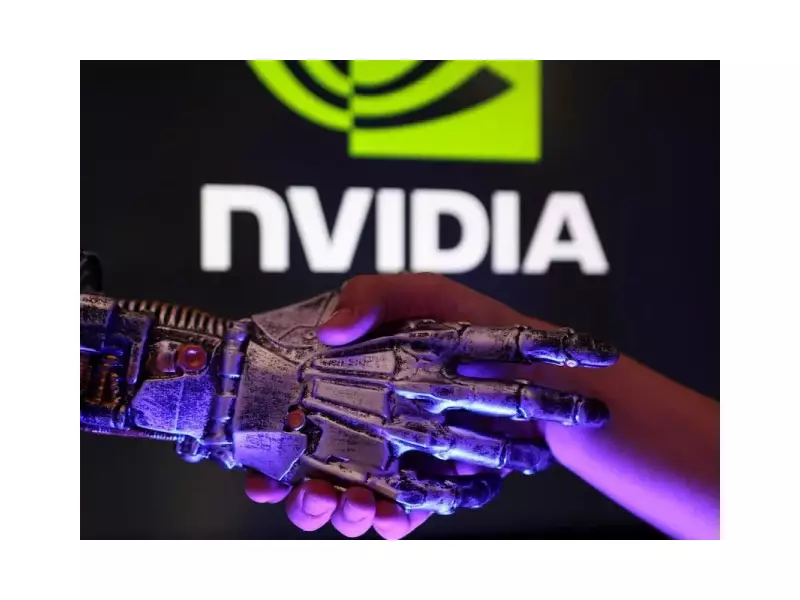
The strategic battleground of the US-China technology war has entered a new phase with the commencement of exports for Nvidia's advanced H200 artificial intelligence chips to Chinese firms. This development, confirmed by industry sources, represents a critical test of the updated US export controls implemented in late 2023 and signals a potential reset in the high-stakes semiconductor conflict.
A New Chip on the Block: Navigating Tighter Controls
In November 2023, the United States government significantly tightened its export restrictions on advanced computing chips to China. The revised rules specifically targeted cutting-edge AI processors, aiming to close loopholes that had previously allowed companies like Nvidia to sell slightly modified versions of their banned products, such as the A800 and H800 chips, in the Chinese market.
Despite these stricter controls, Nvidia has now begun shipping its latest flagship AI graphics processing unit (GPU), the H200, to customers in China. This move is possible because the H200 chip, while powerful, has been designed with a reduced interconnect bandwidth that technically complies with the updated US limits. The chip's performance in other key areas, however, remains formidable, allowing Chinese companies to continue advancing in critical AI research and applications.

This scenario underscores the ongoing cat-and-mouse game in the semiconductor industry, where chip designers continuously adjust product specifications to navigate an evolving regulatory landscape, while US policymakers strive to maintain a technological edge.
The Ripple Effects on Global Supply and Chinese Innovation
The export of the H200 chip carries significant implications for both global supply chains and China's domestic tech ambitions. On one hand, it provides a temporary lifeline for Chinese tech giants and startups heavily reliant on top-tier AI hardware for everything from large language models to autonomous systems. Companies like Alibaba and Tencent are among the major clients seeking access to these capabilities.
On the other hand, this development intensifies pressure on China's domestic semiconductor industry. The persistent restrictions have acted as a powerful catalyst, accelerating Beijing's drive for self-sufficiency. Billions of dollars in state funding are being funneled into homegrown champions like Huawei's HiSilicon and SMIC (Semiconductor Manufacturing International Corporation). The goal is clear: to develop a fully independent supply chain that can produce advanced chips without foreign dependencies.
The long-term success of US policy hinges not just on denying technology, but on outpacing Chinese innovation. If Chinese firms can achieve breakthroughs in next-generation chip design and manufacturing, the current export control regime could lose its effectiveness.
Future Trajectories and Strategic Stalemates
Looking ahead, the H200 exports mark a moment of recalibration rather than a conclusion. Analysts predict that the Biden administration will continue to monitor the situation closely and may further refine its controls to address any performance thresholds that the H200 or future chips might exploit. The technological parameters defining what constitutes a "restricted" chip are likely to be a constant point of contention and adjustment.
For multinational corporations like Nvidia, the situation presents a complex balancing act. The Chinese market represents a massive source of revenue, yet compliance with US national security directives is non-negotiable. This tension forces companies to develop intricate product segmentation strategies, creating different chip versions for different geopolitical markets—a costly and inefficient process for global commerce.
Ultimately, the saga of the H200 chip exports reinforces that the US-China chip war is a marathon, not a sprint. It is a multifaceted conflict involving national security, economic competition, and scientific prowess. Each new chip release, each policy update, and each breakthrough in domestic manufacturing shifts the balance of power, setting the stage for the next move in this defining struggle of the 21st century.