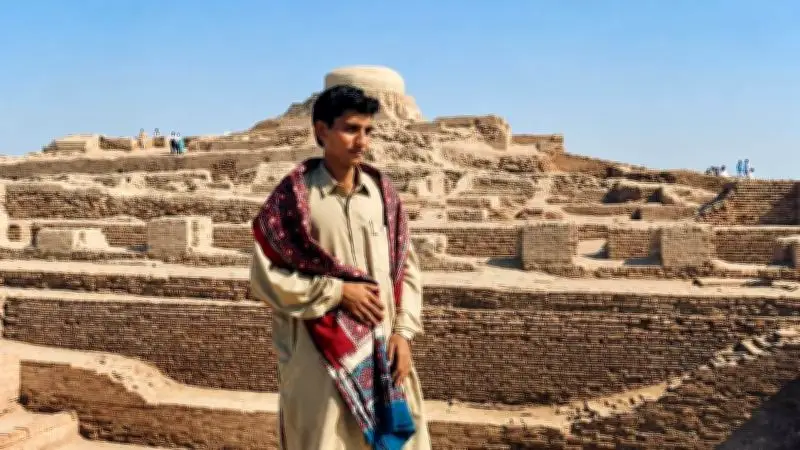
Did the brilliant builders of the ancient Indus Valley Civilisation truly vanish, or does their legacy still live and breathe in modern-day Pakistan? By weaving together archaeological discoveries, linguistic clues, and ancient Sumerian records, scholars today can reveal remarkable, unbroken connections between 4,500-year-old artisans—such as boatmen, potters, and weavers—and today's local communities. Can we spot how the ancient culture, traditional trades, and even the names of the Mohenjo-Daro people have survived the millennia? Read on to embark on a captivating journey that unearths the hidden ancestry of the people who still call the Indus Valley home.
Bhils or Bheels: Primitive Inhabitants of the Indus Valley
Hawabai Ghulam Mustafa Shah compiled a thesis for the University of Allahabad in 1942-43. Its title is Aboriginal Tribes of India and Pakistan: The Bhils and the Kolhis. The 9 chapters of her book contain the following aspects of the life of Bhils and Kolhis: Ancestry, History, Occupation and general characteristics, Death and burial customs, Folk thoughts, Cosmology, Religion, Social life, Customs and manners, Cultural identity, Folklore, and folk songs. Describing Bhils, Prof Dr Ghulam Ali Allana writes in his book Sindhi Society and Culture (2024) that: “Bhils also belong to ancient and primitive inhabitants of the Indus Valley Civilization, making them a pre Aryan race. They are mostly found in Mirpur Khas, Tharparkar, Sanghar, Badin, Matiari, Tando Muhammad Khan, Jamshoro, Hyderabad districts and Karachi town. After the functioning of Sukkur and Kotri Barrages, Bhil tribe has settled on lands as cultivators. They are also found working in the fields as labourers such as cotton picking. In view of Faiz Muhammad Soomro; In general, however, the Bhils despite their wild appearance, are well behaved and it appears that they are considered true Hindus by indigenous Hindu population. Their religion has usually been recorded as tribal in the past.” (p 153)
Tracing The Living Descendants Of Mohenjo-Daro: Ancient Tribes Of Sindh
The Bhil population speaks Bhili, a Thareli or Dhataki dialect of the Rajasthani language. Some of them also live around Larkana, Dokri, and Shahdadkot. They call their temples Ramra, for example, Chuchu Ka Ramra. Over 1000 houses of the Bhil Community live in the Mir Ji Nari and Silra villages in Shahdadkot taluka. Some of them have been converted to Islam now. The name Dokri is believed to have originated from the ancient Dhaatki language, where it roughly translates to "old woman". In many other languages such as Hindi, the word dokri or dokari refers to a "very old woman". The masculine equivalent is dokra which means old man. Bhils do not mix with other tribes but live in their own hamlets. They marry within their caste, but not within their own Nukh (immediate clan). Bhils worship Ramapir, a 14th-century deity.

Bagri or Waghris: Lords of the Bagar Raj in India
Bhil has come from the Dravidian word Vil meaning a Bow. While Villi means an Archer. There are some Mesopotamian Cuneiform Texts which mention Archers of Meluhha. It is possible that Bhils were a part of the Indus Army during the Indus Valley Civilisation (2600-1900 BC). There have been many Indus seals and sealings excavated which depict archer hunting scenes with their bows and arrows. The Bagri is a large indigenous community in Pakistan and India. The term Bagri is applied to any Hindu Rajput or Jat tribe from the Bagar Desert of Bikaner, Rajputana, India. They had the Bagar Raj in India with free Jagirs. They mostly follow Hinduism and Christianity. The Deswali, Chauhans, and Solunki of Rajasthan are said to be their relatives. They are also found in the territories of the Chitore, Hissar, Malwa, and Patiala in India. The Bagri are a very brave race of men in India and Pakistan. They were foot soldiers who followed their leaders. The Bagri Community also lives in Sindh in great numbers. They can be found in the following villages of Taluka Dokri in the Larkana District in Sindh: Dokri, Haji Mashori, Hasan Wahan, Balhreji, Channa Pul, Bakrani, Karani, and Mehrabpur Jatoi. They are mostly engaged in growing sweet melons, watermelons, iron scraping, and blanket, cloth, and pot selling, etc.

Unearthing Commerce In Mohenjo-Daro: Ports, Agriculture And Ancient Infrastructure
Meghwars: Custodians of the Indus Valley Culture and Traditions. The name is derived from the Sanskrit word Megh, meaning clouds and rain, and war meaning descendants or a group of people. The Meghwar community traces its ancestral lineage to Rishi Megh, a legendary saint believed to have had the spiritual power to bring rain through prayer. Meghwars is a scheduled caste which is found in the Sindh, Punjab, and Balochistan provinces of Pakistan. The Bhils belong to the ancient and primitive inhabitants of the Indus Valley Civilization, making them a pre-Aryan race that still cultivates the lands of Sindh today. They also live in the regions of Gujarat and Rajasthan in India. Meghwar women are experts in embroidery and other needlework. They are famous for their rich cultural heritage, particularly masterful textile weaving, mirror-work embroidery, and vibrant Rilli-making.
Kolhi Culture and the Dancing Girl Statue of Mohenjo-Daro
Kol refers to an indigenous Austroasiatic ethnic group native to central and eastern India. Kolpur (5,890 feet above mean sea level) Railway Station lies between Sir-e-Bolan and Quetta in Balochistan. The Bolan River rises near Kolpur. A few pieces of cultivated land lie between Machh and Kolpur. Prof Dr Ghulam Ali Allana writes in his book Sindhi Society and Culture (2024) that: “In view of scholars, the Kolhis are primitive people of Indus Valley. They are found scattered in Mirpur Khas, Tharparkar, Sanghar, Badin, Hyderabad, Matiari, Tando Muhammad Khan, Jamshoro, Thatta districts and Karachi town. According to their own legend they are descended from Meds of Sindh.” “Kolhis are very good cultivators and labourers. They worship the Hindu gods and goddesses, and some belong to the Swami Narayana and other sects. Kolhis speak Gujrati and Thareli (Dhataki) but those who are settled around Nagarparkar region speak Parkari dialect which is a mixture of Sindhi (Thari dialect) and Dhataki. After the functioning of Kotri Barrage and its canals, the Kolhis have tended more and more to settle on the land instead of wandering about and doing cotton picking, earth work and similar kind of labour.” (pp. 251-53)
Discovering Mohenjo-Daro's Ancient Defences
The Bronze Statue of the Dancing Girl discovered from the HR Area at Mohenjo-Daro resembles Kolhi Culture. Similar bangles are worn by Kolhi women in Sindh today. A large number of the Kolhi Community members used to visit the Mohenjo-Daro Area during the annual wheat harvesting season. Some of the family members, especially ladies, also sell glass bangles in the Resham Gali, Larkana. Besides Bhils, Bagris, Meghwars, Kolhis, and Oads, there are other castes in the Hindu Community: Lohanas, Bhatias, Brahmans, Amils, Doghra, Gadee, Khatris, Maheshwaris, Kanooga, Meranee, Malhis, Rabaris, Mahajan, Rathore, Sodhas, and Rajputs. The low-caste Hindu clans are the Gurgula, Kabutra, Kumchra, Harijan, etc.
Ode / Oads: The House and Forts Builders
The Oad (or Odh) is a well-known Hindu Rajput Community which has lived in India and Pakistan for thousands of years. They are also called Beldar and are known for their masonry, i.e., construction of mud houses and large forts for landlords. There are more than 250 to 300 houses of the Oad Community in Dokri. Their branches or septs are Gurgat, Dewat, Madai, Kharwar, Saadi, Gadai, Jeeani, Kalhiya, Doodia, Majooka, Jeeprot, Udesi, Panhia, Beroka, and others. Kuntali means Kudal or Kodar in the Dravidian language. Their original land is Odisha, formerly Orissa, on the Bay of Bengal in India. Oads worship many gods or goddesses like Shiva, Brahma, Vishnu, Varuna, Durga, and Kali. They also worship Ram and Krishna, the two Avatars of Lord Shiva. Oads sacrifice goats to Pabu or the Saviour in front of the Patir Temple, frequently called the Odero Lal Shrine, on annual festivals like Dussehro and Navratri. They bury their dead in Muslim graveyards located in the Abu Bakar Muqam Larkana, Manghan Shah Muqam Dokri, and But Muqam Bagi areas. Many Oads also live in the Kamber, Shahdadkot, and Qubo Saeed Khan Talukas in the Kamber Shahdadkot District. Jeeal Oad and Lalchand Oad are famous writers and social workers from this community. Many Oads live in Badeh town, mostly engaged in labour. There is another small community called Gund which originates from the Rajput or the Jat tribe. The Gund surname and clan are also associated with the Maratha Community. Sindhu Sauvira, the Kingdom of the Chawra Kingdom, flourished around 1000-518 BC with its capital at Roruka or Rohri.
Tracing Lahore’s Progressive Urdu Poetry Legacy
Alexander’s Campaign against Oxycanus, Oskana or Channa. Arrian further describes in Anabasis of Alexander that, “Then he took the archers and the Agrianians and the cavalry which was sailing with him, and marched against the governor of a district in that part of the country whose name was Oxykanos, because he neither came himself nor sent envoys to offer the surrender of himself and his country. At the first assault he took by storm the two largest cities under the rule of Oxykanos, in the second of which that chief himself was taken prisoner. The booty he gave to the army, but the elephants he led away and reserved for himself. After Alexander, Seleucus Nicator I and Ptolemy used elephants in wars against their enemies. The other cities in the same country surrendered without attempting resistance wherever he advanced; so much were the minds of all the Indians paralysed with abject terror by Alexander and the success of his arms” (McCrindle, 1896, p. 158). Eggermont speculates these may have been distinct rulers—one governing Azeika (Axika), the other Pardabathra—though Lassen identifies them as one under the name Portikanos. Modern scholars often merge them as Oxykanos. I propose that Oxycanus might have been Ucha Channa, a prominent Sindhi tribe still present in Sindh and Balochistan, and that “Acha” could indeed refer to a specific caste within Sindhi society. Earlier, Alexander had learnt that the Kathians and other independent tribes were preparing for battle. He also learned that the city near which they meant to engage him was strongly fortified, and was called Sangala. Alexander passed through forests and deserts and finally crossed the Hydraotes (Ravi). The people of the Kathia tribe lived in the Sahiwal, Jhang, and Multan regions. Many Kathias or Cathaei left Sindh and entered modern-day Indian Gujarat. There, they founded Kathiawar State in Saurashtra. The Samma origin Katia or Kathia caste and Kathia Bazar old Muhalla in Nasirabad Taluka in the Kamber Shahdadkot District in Sindh. Kathiawar, a peninsula in the south-western Gujarat state in India, bordering the Arabian Sea. Channa today live in different villages around Mohenjo-Daro: Dhandh-Lanyaro, Mehar Behan, Channa Pul, Dokri, and Gajidero. Channal is a sub-clan of the Brohi tribe.
Decolonising Climate Action: Why Ancient Knowledge Still Matters
Kalhora, a local Sindhi tribe, is also said to be of Channa origin, but they called themselves Abbasi when they came under the royal flag of Mughal emperors of India in the 17th century AD. The Kalhora Dynasty ruled Sindh from 1701 to 1783 AD. They dug the Ghar Wah and Nara Canals from the River Indus to irrigate agricultural lands in the Chandookah Purguna or Larkana district. They brought peace and prosperity to the province and developed trade and commerce. They also founded cities like Khudabad (Dadu), Muhammad Abad (Nawabshah), and Hyderabad during their rule. They had socio-political and commercial ties with the Indian, Afghan, and Persian royal courts. Hazrat Shah Abdul Latif Bhittai (1689-1752) was the famous Sufi saint and poet of Sindh during the Kalhora Dynasty of Sindh. Daudpota tribes were closely related to the Kalhora rulers of Sindh. The Kalhora chief Mian Noor Muhammad Kalhoro, who claimed his descent from the line of Abbass, the uncle of Prophet Muhammad (PBUH), fought the Daudpotas for control of Shikarpur in 1722. Due to these internal blood feuds and conflicts, the Daudpotas, led by Nawab Sadiq Khan Daudpota, eventually broke away, migrating from the Sindh region to settle in areas that later became Abbassi Rulers of the Bahawalpur State, in the Punjab Province of Pakistan. The State of Bahawalpur was founded by Nawab Bahawal Khan Abbasi I in 1748.
Maurya or Moriya: The Founders of the Mauryan Dynasty in India
A peacock is called Mayil or Mayilu in Dravidian languages. This root gave rise to the Sanskrit word mayura and the Hindi mor. The people of Sindh also call a male peacock Mor and a female peacock Del. Historians believe that Chandragupta Maurya belonged to Sindh. He conquered Sindh, Punjab, and Nanda regions following the power vacuum left by the withdrawal of Alexander the Great's armies. He founded the Mauryan Dynasty around 321-22 BC. Mostly, he was guided by his mentor Chanakya. Chandragupta Maurya had met with Alexander the Great during his Taxila Campaign in 326 BC. Plutarch confirms that this was the time when Sandrocottus (Chandragupta), a young warrior, met Alexander and gave him his opinion about his eastern expedition. Later, we see that this youth laid the foundation of the Mauryan Empire in India, which is famous for uniting the Indian Subcontinent. When Alexander conquered Sindh, he saw 2 states of Moeres or Mauryans called Moeres I and Moeres II. Moriya or Mauryans are locally known as the Moria after peacocks. Aristobulus records that the Macedonian forces arrived in Patala at the rising of the Dog Star, in mid-July 325 BC. According to Q Curtius Rufus, “Alexander marched thence into the Patalian territory. Its king was Moeres, but he had abandoned the town and fled for safety to the mountains.” (p 256). After settling Moeres' affairs, Alexander went to Arabitai and Oretai or Lasbela.
Pakistan’s Power Paradox: Paying For Plenty, Living With Shortage
Chuhra: The Scavenger and Sweeper Classes. In Dravidian, totti means a scavenger or a sweeper. This word is used for a lazy man in Sindhi. According to Shaikh Sadik Ali Sher Ali Ansari (1901), Chuhra is a scavenger and sweeper tribe. It is also a term of contempt applied to persons of black colour (p 131). There are 19 septs of the Chuhra. He writes about another scavenger caste called Dapher after Dapho. It is a class of scavengers who kill wild animals, especially pigs, and jackals, with the dapha or Javelin (a spear of 6 feet) and eat them. The Dhedh are the 3rd caste of the scavengers. It is a class of scavengers who eat the carcasses of dead animals in the villages. Based on folklore and cultural beliefs, the Dhedh is considered a specific type of spirit or Jinn. The Shikari is another scavenger tribe living in Sindh. This is a scavenger and sweeper caste. The term Shikari means literally a hunter, and applies to a class of scavengers who hunt and kill wild animals like crocodiles, pigs, jackals, porcupines, cats, tortoises, lizards, and frogs with the aid of dogs. They also gather dead animals, eat their flesh, and sell their bones. The Kehal or Kihal and Mor are also indigenous communities of the River Indus banks. They mostly live a semi-nomadic life. They survive through fishing, weaving baskets and birdcages from river reeds, and acting as local ferrymen. They are found between the Chashma and Taunsa Barrages in Punjab, as well as parts of Sindh near Larkana and Naudero. Baleshahi are the descendants of Balo Shah. Bala Shah was the King or mythical high priest of the Chuhras or scavenging classes. His descendants are called the Baleshahi. A legend traces the origin of Baleshahi to Balmiki, commonly known as Bala Shah or Lal Beg in various regions of Punjab. He was a dacoit who changed his ways and became a saint. Their profession is scavenging and sweeping.
From Living The Moment To Going Live Instead
Bhangi is also a scavenger and sweeper caste. There were others who were called Bazigars. Bazi means "acrobat" or "game". Traditionally, Bazigars are famous as street performers who travel between local fairs and villages to showcase breathtaking acrobatics, tightrope walking, contortion, and traditional magic tricks. According to Barkat Jeho, the Bazigars live around Bazigaran Wari Pul in Larkana. Khalid Kunbher, alias Khalid Jogi, has published 2 books on the indigenous tribes and clans of Sindh entitled Jhang Ja Manhu (2025) and Khanabadosh Qabeela or The Nomadic Tribes (2020). He has mentioned Sansi, Koochirra, Sami, Jogi, Bheel, and many groups including Kanjriyun. In the book Jhang Ja Manhu (The Forest Tribes) he describes Kabootri, Gurgula, Jandawara, Jogi, Rabari, Barha, Madari, Bahroopia, Bhawaya, and others. Today, these indigenous people of Sindh, including Bazigars, live in huts and tents with no education, health services, and economic growth.
After the Persian conquest in 519 BC came Greeks, Scythians (Saka), Parthians, Kushans, Huns, Sasanians, and the Arabs. After the Muslim conquest of Sindh by Arab forces in Sindh (711 AD), we see new migrations moving towards Sindh: Umayyads, Abbasids, and Habbaris. After the fall of the Soomra and Samma dynasties came the floods of Iranian Balochis, Turko-Mongol Arghoons, Tarkhans, Mughals, and Afghans or Pathans. These continuous migrations into Sindh have changed the demography of the land by causing socio-economic, political, and cultural issues. Under the name of Sirai, 62 tribes and castes from Siro, Punjab, migrated to Sindh during the 17th century AD. During all this long period of wars, indigenous people of Sindh defended their land; therefore, they were deprived of their rights, property, and dignity.
Chilam Joshi: A Journey Into The Living Heritage Of Kalash Valley
The Indus Valley Civilisation continues up to this day. Its clear evidence or proof is the agriculture and farming techniques and patterns, cattle-breeding, fishing and hunting birds, boat-making, textile-making, pottery-making, and brick-making work. Other evidence is the house building styles, art of carpentry work, metals smelting work, and water reed-roof making. The evidence of Indus traditions continues in the shape of bullock carts, millstones for grinding grains, wooden/plastic combs, pottery ceramics, terracotta toys, wooden boats, Sindhi caps, and Rilli-making work, gold and silver jewellery making, bangle making, stone bead making, weapons like axes and knives, leather sandals locally known as Multani Juti, and clay toys. Furthermore, social life, wedding ceremonies, festive glories, folklore, mythology, games, and sacred pilgrimages also tell stories of the past.
The author of this story has been collecting data from historical and colonial records, oral traditions, and anthropological archives regarding these aboriginal and indigenous tribes, clans, and families of the Mohenjo-Daro Area for the last 7 years. This is the first effort to publish such kind of information on the Indigenous tribes of Sindh. Like the Indian Aboriginal tribes of Gond, Santal, Garo, Jarawa, Angami, Bhil, Munda, and Irula, the indigenous tribes of Sindh also face many social issues. We expect that the Government of Sindh and International NGOs will focus on developing these marginalised socio-economic groups, scheduled castes, and minorities.