An invisible crisis is unfolding along Pakistan's southern coastline, where the Indus River meets the Arabian Sea. Saltwater is contaminating fertile lands, mangroves are shrinking, fish stocks are declining, and freshwater sources are drying up. For generations, communities in Thatta, Sujawal, Badin, Keti Bunder, and Shah Bunder have relied on agriculture and fishing. Now, many are abandoning their ancestral homes as the environment can no longer sustain them.
Indus Delta: Pakistan's Natural Shield Under Threat
The Indus Delta is the world's largest arid delta and hosts nearly all of Pakistan's mangrove forests. These ecosystems provide natural storm protection, support fisheries, sequester carbon, and preserve biodiversity. However, decades of reduced freshwater flow downstream of the Kotri Barrage, sea-level rise, coastline erosion, salinization, overdevelopment, and climate change have severely weakened this natural shield.
Disappearing Delta: A National Development Crisis
The Asian Development Bank's Preparing the Sindh Coastal Resilience Sector Project study reveals that about 3.8 million people in Thatta, Sujawal, and Badin face increasing exposure to flooding, seawater intrusion, land degradation, and climate-related disasters. The report emphasizes that these risks are symptoms of structural problems. Climate resilience cannot be achieved through engineering alone; it requires healthy mangroves, restored wetlands, strong institutions, community knowledge, and sound policies.

Freshwater Scarcity: Root Cause of Coastal Crisis
The primary driver of the coastal crisis is the severe decline in freshwater reaching the Indus Delta. Water diversion projects have drastically reduced flows below Kotri Barrage, increasing saltwater intrusion. Salinity rises in agricultural lands, contaminates water sources, and degrades ecosystems. Crops yield poorly, wells turn brackish, and farming families lose their livelihoods. Fishing communities face similar devastation as mangroves decline and freshwater inflows diminish, forcing fishermen to travel farther for fewer catches.
Climate Migration: Slow, Silent Exodus
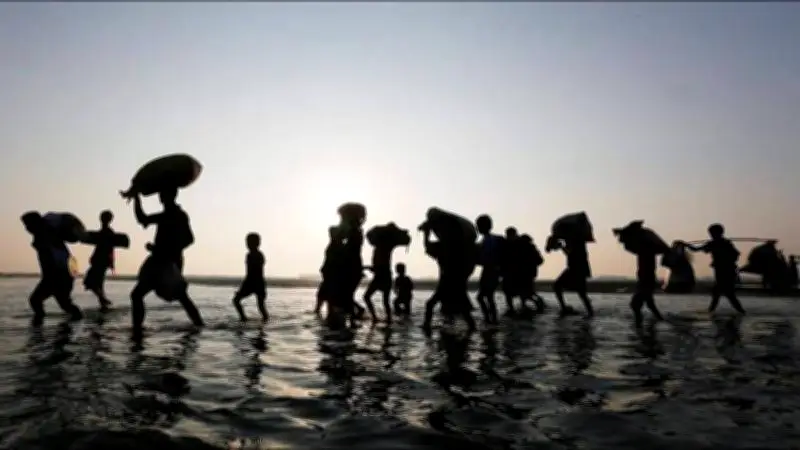
Unlike sudden disasters, climate migration along the Sindh coast happens gradually. Year after year, crops fail, fish catches shrink, homes flood, and water supplies run dry. Eventually, families conclude they must move to survive. These stories rarely make national headlines, but they signal Pakistan's climate future. The 2022 floods exposed vulnerabilities in water governance, drainage, disaster management, and land-use planning. The ADB argues these problems are interconnected: flood management requires ecosystem restoration, coastal protection needs healthy mangroves, and agriculture resilience depends on freshwater flow.
Nature as Critical Infrastructure
The ADB report highlights that nature itself is critical infrastructure. Mangroves buffer storms, stabilize shorelines, enhance fisheries, sequester carbon, and preserve biodiversity. Wetlands store water and recharge aquifers. Investing in ecosystems is not environmental philanthropy but sensible economics. Successful restoration projects involving the Sindh Forest Department, WWF-Pakistan, local communities, and international partners have expanded mangrove forests, gaining international recognition.
Governance: The Key to Resilience
The coastal crisis is fundamentally a governance problem. Multiple agencies oversee irrigation, forestry, disaster management, coastal development, environment protection, and local governance, often operating in silos with conflicting priorities. Climate change does not respect administrative borders. Adaptation requires coordinated action, shared vision, and clear responsibilities. The ADB recommends establishing a coordination mechanism for coastal resilience within the province to address institutional fragmentation and ensure science-based development.

Blue Economy: An Opportunity for Pakistan
Globally, coastal zones are embracing the blue economy: sustainable fisheries, mangrove conservation, eco-tourism, carbon markets, renewable energy, and climate-resilient infrastructure. Pakistan's Sindh coastline, with its vast mangrove forests, has significant potential for blue carbon markets. Climate finance institutions like the Green Climate Fund and Adaptation Fund are seeking projects that combine restoration and resilience. Universities and research organizations must continue scientific studies on hydrology, coastal ecosystems, fisheries, and disaster risk reduction to ensure adaptation is evidence-based.
Time for Action: Political Will Needed
Each year of inaction increases future restoration costs. Each lost hectare of mangrove weakens coastal defenses. Each displaced family proves that climate change is about people, not statistics. The knowledge, science, and global funding exist. Communities are ready to participate. What is needed is political will that transcends electoral cycles and recognizes climate resilience as central to national development. The Indus Delta has shaped Sindh's geography, economy, and culture for centuries. Allowing it to degrade further would fail the environment, national planning, and future generations. The fate of the Indus Delta and the fate of Pakistan are linked.