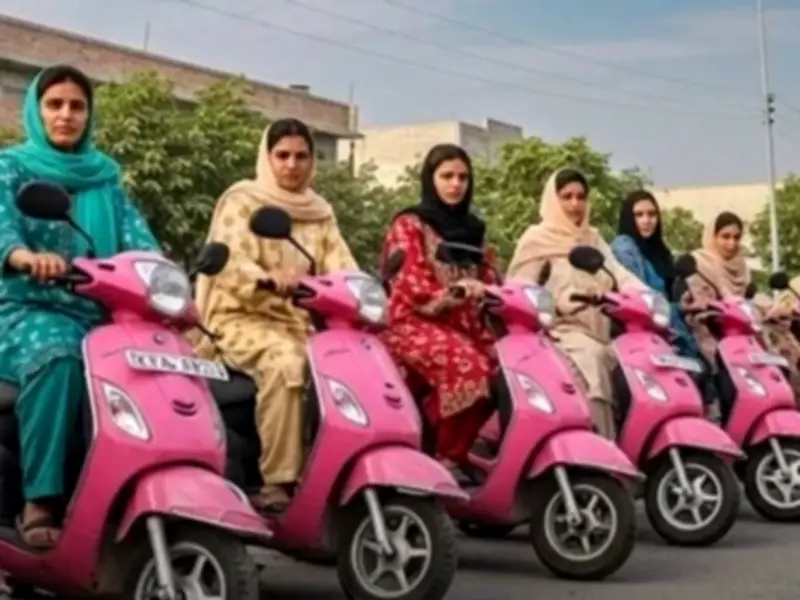
LAHORE: Electric bikes and scooters are becoming an increasingly common sight on Lahore's roads, with office workers, university students, and food delivery riders embracing them as a cost-effective alternative to petrol-powered vehicles. The surge in fuel prices has significantly boosted interest in electric mobility, yet challenges such as expensive batteries, limited charging infrastructure, load-shedding, and high upfront costs continue to impede broader adoption.
Personal Experiences Highlight Benefits and Drawbacks
Fakhra Batool, a Lahore resident, purchased an electric scooter a few months ago to escape rising petrol and rickshaw fares. She previously spent thousands of rupees monthly on transport, but now her electricity costs are substantially lower. However, Batool expressed concern that replacing the battery would be difficult due to its high price.
Ahmed Hassan of Gulberg acquired an electric bike through a government subsidy scheme. He reported that his monthly fuel expenses dropped from approximately Rs12,000 to around Rs2,500 for electricity and charging. “However, load-shedding can make charging difficult, raising concerns about battery range during longer trips,” said Hassan.

Cost Comparison: Electric vs. Petrol Motorcycles
The primary differences between electric and petrol motorcycles lie in purchase and operating costs. A standard petrol motorcycle in Pakistan typically costs between Rs150,000 and Rs160,000, while a quality electric bike generally costs Rs250,000 or more. Although government subsidies reduce prices, electric bikes remain more expensive to buy initially. However, operating costs are significantly lower, with users spending only a fraction of what they would on petrol, making electric bikes increasingly attractive for regular travelers.
Expert Insights on Electric Mobility Transition
According to Sarim Zia, Research Assistant at the Sustainable Development Policy Institute (SDPI), Pakistan's large motorcycle population means two- and three-wheelers will play a key role in the country's electric mobility transition. “Rising petrol prices are encouraging people to consider alternatives, while public awareness campaigns could further increase demand,” said Zia.
Dr Fahim Gohar Awan, Chairman of the Department of Electrical Engineering at the University of Engineering and Technology (UET) Lahore, emphasized that successful adoption of electric vehicles requires more than just selling bikes. “Local battery manufacturing, charging infrastructure, skilled workers, and a reliable electricity supply are all necessary for long-term growth,” said Dr Awan.
Dr Kiran Siraj, a faculty member at Lahore University of Management Sciences (LUMS), argued that subsidies alone are insufficient. “There is a need for affordable loans and leasing options for middle-income consumers. The shortage of charging stations and battery-swapping facilities remains a major obstacle to consumer confidence,” said Dr Siraj.
Mechanics and Dealers Report Growing Demand
Iftikhar Hussain, a mechanic servicing electric bikes in Township, Lahore, revealed that the number of customers seeking repairs and maintenance has increased several times over the past two years. However, spare-parts shortages and complaints regarding battery warranties remain common.
Ziauddin, an electric bike dealer in Lahore, shared that interest among young people, women, and food delivery riders has risen significantly. “Despite subsidies, prices remain beyond the reach of many buyers, and most customers ask about battery life and replacement costs before making a purchase,” he said.
Import Dependence and Potential for Local Production
Hidayatur Rehman, Director of Sales and Marketing at EVEON, noted that most lithium batteries and key components used in Pakistan are imported. “Local production of lithium batteries could reduce electric bike prices by 50 to 60 per cent,” said Rehman.
Conclusion: Challenges Ahead for Wider Adoption
Experts believe electric bikes are becoming increasingly popular in Pakistan due to their lower operating costs. However, expensive batteries, load-shedding, limited charging facilities, and high purchase prices remain significant challenges. Addressing these issues will be essential for the wider adoption of electric bikes across the country.