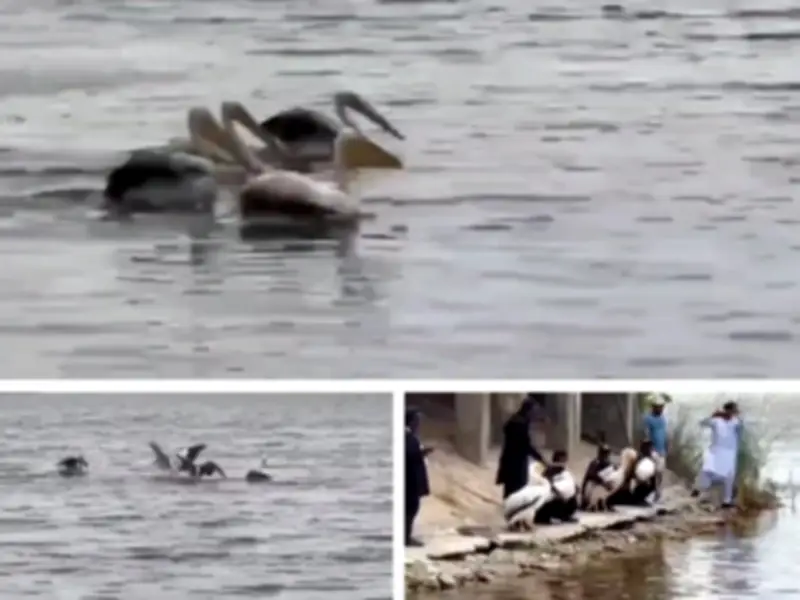
The Sindh Wildlife Department has released four pelicans into their natural habitat at Haleji Lake Wildlife Sanctuary after they were seized during an illegal transport attempt to Karachi. According to Chief Conservator Sindh Wildlife Javed Mahar, 15 pelicans were taken into custody during transit from Dadu to Karachi. Their eyes had been stitched shut with needle and thread, and the department carried out a procedure to open them. Upon detailed examination, the wildlife team found that 11 of the pelicans had their wings clipped and were unable to fly. However, four pelicans had intact wings and were found to be in satisfactory health. Considering their condition, they were released into their natural environment at Haleji Lake. The remaining 11 pelicans have been shifted to the pond at Karachi Zoo for care.
Goats Used as Cover
Mahar said the suspects had concealed the pelicans by keeping nine goats in the same vehicle. As per court orders, the goats remain in the custody of the Sindh Wildlife staff, and the owner will bear the cost of their feed. Earlier, the Sindh Wildlife Department foiled an attempt to smuggle pelicans and rescued 16 birds that were being transported in sacks under inhumane conditions. Acting on a tip-off, a wildlife team conducted a late-night raid and intercepted a loading truck carrying the birds from Dadu to Karachi. The pelicans were found tightly packed in sacks and were immediately taken into custody. Three suspects were arrested, while the birds were seized under Sections 33 and 34 of the Sindh Wildlife Protection Act. Officials said a criminal case would be registered against the accused, which could lead to fines and imprisonment.
Legal Action and Warnings
Deputy Conservator Sindh Wildlife Mumtaz Soomro said the operation was carried out on intelligence regarding illegal wildlife trafficking. "The birds were being transported in an extremely cruel manner. Legal proceedings have been initiated against those involved," he added. According to officials, pelicans are among the largest flying birds, with a wingspan of up to 10 feet. Known for their long-distance flights, they primarily feed on fish and inhabit freshwater lakes and rivers. Experts say the birds are often targeted for their body fat, which is extracted and sold as oil in the black market by unqualified practitioners at high prices. Medical professionals warn that such remedies lack scientific backing and can pose serious health risks.

Ecological Importance and Threats
Pelicans are considered one of the oldest bird species, with a history spanning millions of years. They are found across Asia, Africa, Europe, Australia and the Americas. Pakistan is among the countries that host migratory pelicans during winter, with wetlands such as Keenjhar, Haleji and Manchar lakes serving as seasonal habitats. However, environmental degradation, pollution, illegal hunting and climate change are posing increasing threats to their survival. Conservationists stress that pelicans play a vital role in maintaining ecological balance. Known for their distinctive large bill and throat pouch, pelicans use a unique hunting technique, scooping fish along with water and then draining the excess before swallowing their prey. Despite their heavy build, they are capable of gliding long distances using warm air currents. Wildlife experts have called for stricter enforcement of conservation laws and greater public awareness to curb illegal hunting and protect endangered species.