Iran launched missiles and drones targeting US military facilities in Kuwait and Bahrain on Sunday, retaliating for fresh American strikes on Iranian territory. The attacks severely strained a fragile peace process brokered by Pakistan between the United States and Iran. Tehran threatened a "complete halt" in negotiations if Washington continued its attacks.
The Islamic Revolutionary Guard Corps (IRGC) said its naval and air forces struck US military installations, warning that continued American attacks would end diplomatic efforts and that US bases in the region would "experience hell in the coming days." The attacks came shortly after US President Donald Trump warned that Washington could "militarily complete the job" if Iran failed to honor the ceasefire. "There may come a point when we are no longer able to be reasonable," Trump wrote on social media, adding that if the conflict resumed, "the Islamic Republic of Iran will no longer exist."
US Confirms No Casualties in Iranian Strikes
A US official confirmed that Iranian missiles and drones targeted American facilities in Bahrain and Kuwait but reported no US casualties or major damage, although the situation remained fluid. Kuwait said its air defenses intercepted two ballistic missiles without casualties. Bahrain reported that an Iranian strike damaged a residential building in Muharraq province, and air raid sirens sounded twice across the kingdom. Bahrain later called for an urgent meeting of the UN Security Council to hold Iran accountable.

Qatar reported that one of its nationals was killed and another injured after a vessel was struck by shrapnel during military operations on Saturday, though authorities did not specify responsibility.
US Strikes on Iranian Targets Follow Ceasefire Violations
The latest exchange followed fresh US strikes against Iranian military targets after Washington accused Tehran of violating the ceasefire by attacking commercial shipping in the Strait of Hormuz. According to a report by Axios on Sunday, Iran and the United States agreed to stop strikes against each other and anticipate a meeting Tuesday in Doha to resolve their dispute over the Strait. There was no official confirmation from either side.
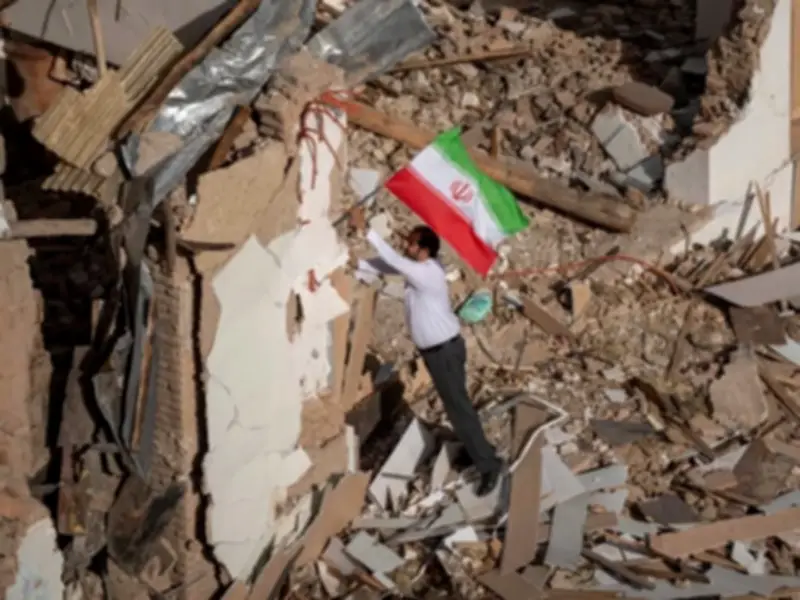
Earlier, US Central Command said American aircraft struck Iranian surveillance infrastructure, communications systems, air defense positions, drone storage sites, and mine-laying facilities in response to continued Iranian aggression against commercial shipping. Iranian media reported explosions in the southern port area of Sirik. The Revolutionary Guards insisted the attacks would not weaken Tehran's control over the Strait of Hormuz, through which about one-fifth of global oil and liquefied natural gas supplies normally pass.
Iran Warns Against Challenging Strait of Hormuz Control
Iranian Foreign Minister Abbas Araghchi warned that any attempt to challenge Tehran's administration of the strategic waterway or establish alternative shipping arrangements would further complicate efforts to reopen the strait and heighten regional tensions. Speaking in Baghdad, where he discussed bilateral issues including coordination for the funeral ceremonies of assassinated Supreme Leader Seyyed Ali Khamenei at Iraqi shrines, Araghchi called on all parties to adhere to the memorandum of understanding brokered under Pakistan's mediation and proposed a new regional security framework involving Gulf states without outside powers.
Although shipping traffic has gradually resumed in the Strait of Hormuz after weeks of disruption, maritime security remains fragile. A Panama-flagged tanker was attacked on Saturday following an earlier strike on a cargo vessel, prompting heightened concern over the safety of one of the world's most critical energy routes. Iran has insisted that commercial vessels use shipping lanes authorized by Tehran, while the United States promotes an alternative route along Oman's coastline.

Interim Ceasefire Agreement Under Threat
The interim 14-point agreement, brokered through Pakistan, was intended to halt a conflict that began with US and Israeli military action against Iran in late February, reopen the Strait of Hormuz, and create space for negotiations on Tehran's nuclear program. While Washington has already eased some sanctions and senior American and Iranian officials have held mediated talks in Switzerland, both governments now accuse each other of undermining the ceasefire through continued military operations.
Regional tensions extended to Lebanon, where Israel said it carried out strikes against Hezbollah fighters and rocket launchers in the Nabatieh area despite a separate US-backed ceasefire agreement reached with Beirut on Friday. Iran maintained that Israel's continued operations in Lebanon breached the broader understanding reached under the US-Iran peace process and argued that Washington bore responsibility for ensuring its ally's compliance. Foreign Ministry spokesman Esmaeil Baghaei called for a clear timetable for Israel's withdrawal from occupied areas of Lebanon, describing it as essential for a lasting agreement to end the war, according to Iran's Press TV.
Iran's Supreme Leader Calls for Legal Pursuit of Rights
Meanwhile, Iran's Supreme Leader Ayatollah Seyyed Mojtaba Khamenei called on the country's judiciary to pursue and restore the rights of Iranians violated during the United States' and Israel's wars of aggression against Iran over the past year. In a message issued to mark Judiciary Week and the anniversary of the killing of Ayatollah Mohammad Beheshti and his companions, Khamenei cited the killing of children, war crimes in the southern Iranian cities of Minab and Lamerd, attacks on medical and public service facilities, and the deaths of civilians ranging from newborn infants to elderly people. He called for determined efforts to pursue such cases through both domestic and international legal mechanisms.
"The pursuit and restoration of the rights violated by international criminals and aggressive powers, particularly over the past year, is among the judiciary's most important responsibilities," he said. "The blood of those killed in the two wars of aggression against Iran - waged by the US and Israel in June 2025 and February 2026 - together with the physical, psychological, material and spiritual damage inflicted on Iran and its people inside and outside the country, forms the basis for hundreds or even thousands of significant legal cases." He said Iran's judiciary was responsible for protecting citizens' rights, safeguarding public freedoms, combating corruption, enforcing justice, and ensuring the implementation of the law, adding that success in fulfilling these duties would strengthen public confidence in the judicial system.