People across Malakand Division have unanimously rejected any proposal to abolish the region’s long-standing tax-free status, declaring that they will not accept any compromise on what they describe as their historical, constitutional and legal right. Representatives of political parties, traders, lawyers, journalists, civil society organizations and other public forums have called upon the federal and provincial governments to immediately review any policy aimed at imposing taxes in the region.
Economic Hardships and Opposition to Taxation
According to public representatives and various stakeholders, the people of Malakand Division are already facing severe economic hardships and are in no position to bear the burden of additional taxation. They maintained that any unilateral decision to impose taxes on the region would be strongly opposed and categorically rejected by the local population. Speakers from different segments of society emphasized that Malakand Division, formerly part of the erstwhile State of Swat, has enjoyed tax-free status since its accession to Pakistan.
Historical and Legal Basis of Tax-Free Status
They asserted that at the time of the merger, a written agreement was concluded between the Government of Pakistan and the former State of Swat, under which the region was granted exemption from taxation. They argued that this special status has historical, constitutional and legal significance and must remain intact. The participants maintained that the tax-free status is not merely an economic concession but a legally recognized right linked to the historical accession agreement. They stressed that any attempt to alter this status without the consent of the people would be unacceptable and could undermine commitments made at the time of the region’s integration into Pakistan.

Impact of Natural Disasters and Militancy
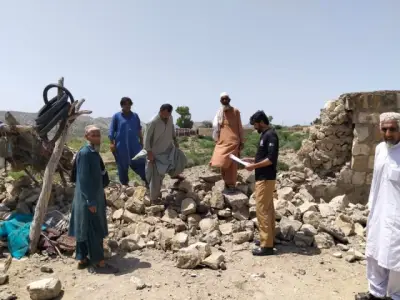
Community leaders pointed out that Malakand Division has suffered extensively over the past two decades due to repeated natural disasters, prolonged militancy, security challenges and economic decline. They noted that devastating earthquakes, flash floods, landslides and other calamities have caused widespread destruction to infrastructure, agriculture and livelihoods, while years of terrorism severely affected trade, investment and business activity across the region. According to local representatives, despite improvements in the overall security situation, the economy of Malakand Division has yet to fully recover. They said thousands of families continue to struggle financially, businesses remain weak, and employment opportunities are limited. Under these circumstances, they argued, imposing new taxes would place an unbearable burden on already distressed communities.
Demand for Economic Rehabilitation
The representatives said the people of Malakand Division have repeatedly demonstrated resilience in the face of extraordinary challenges, yet successive disasters and economic setbacks have significantly weakened the region’s financial capacity. They maintained that before considering any taxation measures, the government should prioritize economic rehabilitation, infrastructure development, investment promotion and job creation. Political leaders, members of the business community, lawyers, journalists and representatives of civil society organizations were united on the issue, stating that preserving Malakand Division’s tax-free status is a matter of collective public interest. They affirmed that all sections of society stand together in defending what they described as the region’s constitutional and legal rights.
Warning Against Unilateral Action
The participants warned that if either the federal or provincial government proceeds with any plan to impose taxes on Malakand Division, it could trigger a strong public reaction across the region. They urged the authorities to immediately withdraw any taxation policy or proposal under consideration and instead engage with local stakeholders before making decisions affecting the area. The representatives concluded by reiterating that the people of Malakand Division—including traders, lawyers, journalists, political workers, civil society organizations and members of the general public—would continue to pursue all democratic, constitutional and legal avenues to protect the region’s tax-free status.