Cultural heritage plays an important role in shaping a nation's identity and international perception. The UNESCO World Heritage framework supports the conservation of heritage sites through a process where inclusion on the tentative list serves as a critical step towards full inscription. This enables access to funding, technical expertise, and conservation support, helping countries preserve their heritage while strengthening their global standing.
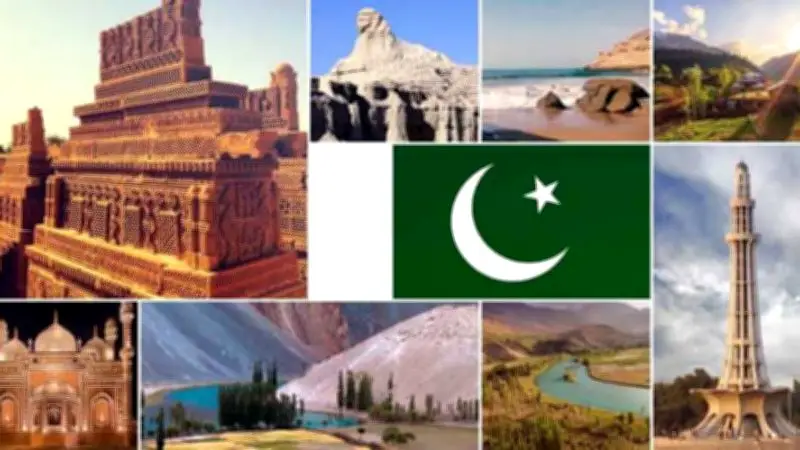
"Pakistan's heritage dilemma is not rooted in scarcity of civilizational assets, but in the absence of a coherent state-led preservation strategy that aligns culture with governance and development." Pakistan's heritage spans from Bronze Age Indus Valley cities to Mughal architecture, including ancient urban centres, Buddhist sites, necropolises, and forts, reflecting its rich cultural history. Despite this, Pakistan currently ranks 58th in the global UNESCO World Heritage ranking. This insight argues that Pakistan's low ranking on the UNESCO World Heritage List is due to weak management systems, the absence of strategic nomination planning, and a lack of federal-provincial coordination.
UNESCO World Heritage Framework
Globally, the protection and recognition of heritage sites is governed by UNESCO and the World Heritage Convention. The convention outlines criteria for recognising, protecting, preserving, and promoting sites that possess Outstanding Universal Value (OUV). Sites are required to meet at least one of the ten selection criteria and demonstrate qualities of authenticity, integrity, and management systems.

Pakistan's Current Status
Currently, Pakistan has 6 UNESCO World Heritage sites, which were added between 1980 and 1997. However, no new site has been inscribed since 1997. Pakistan has proposed 26 sites on its tentative list, but none of these sites has progressed to inscription. The sites on the list remain for an unlimited period until a country is prepared to meet UNESCO requirements.
Funding Challenges
The budget of the World Heritage Fund for the financial year 2026-2027 remains limited at $7.3 million, out of which only $3 million is provided as International Assistance to 195 UNESCO member states for conservation and protection. However, this amount represents only a small fraction of what is required globally. Despite operating as the constitutional forum for federal-provincial coordination since 2011, the Council of Common Interests (CCI) has not held any substantive discussion on heritage sites protection or UNESCO nomination planning in the last five years.
Additionally, the available funding is unevenly distributed. The funding depends on urgency, site condition, and national requirements. Limited resources and selective distribution lead to insufficient financial support for many sites in relation to global conservation requirements. Despite this, countries actively seek UNESCO listing because it brings global recognition, increases tourism, and strengthens international standing.
Comparison with Top Countries
A comparison with the world's top three countries—Italy, China, Germany—and other countries like Turkey, Indonesia, Sri Lanka, South Africa, India, and Iran highlights Pakistan's underperformance. Italy, China, Germany, and India viewed UNESCO inscription as a national strategy. These countries ensured a well-structured inscription system through serial nominations (that group multiple sites into unified dossiers), legal mandate, state diplomacy, and decentralised heritage systems. Iran, Turkey, Indonesia, South Africa, and Sri Lanka achieved successful inscriptions through consistent political commitment, international research collaborations, UNESCO capacity-building programmes, and active participation in the World Heritage Committee.

Post-Devolution Heritage Management
Following the 18th amendment in 2010, Pakistan's heritage management evolved from a centralised federal system into a devolved province-led structure. This transferred 402 registered and protected sites from the federal government to the provinces, resulting in each province establishing its own Department of Archaeology, following the Antiques Act of 1975. At the federal level, the National Heritage and Culture Division (NHCD) and the Department of Archaeology and Museums (DOAM) in Islamabad handle international agreements, coordination with UNESCO, excavation permissions, site management, and oversight of national museums. The formal excavation permissions and UNESCO nomination authority continue to rest with the federal authority. At the provincial level, each province is responsible for the daily management of heritage sites (listed/non-listed) through archaeology and cultural departments.
The division of authority created institutional friction. For instance, in April 2025, in Punjab, the Lahore High Court decided that the provincial Archaeological Department is responsible for managing Lahore Fort and Shalimar Gardens instead of the federally administered Walled City of Lahore Authority. Post devolution, provincial budget patterns reveal clear disparities, with Punjab allocating funds, while other provinces lack separate budgets, leading to uneven preservation outcomes.
Historical Context and Partnerships
Before 1997, the six inscribed sites were added because the UNESCO criteria were less demanding. The country operated on a well-funded centralised Federal Archaeology Department, supported by decades of British-era documentation and foreign research institution partnerships. After 1997, the requirements for inscription have become more demanding. Countries must demonstrate proper management plans, climate risk assessments, integrity evaluations, and proper conservation systems before a nomination is considered by UNESCO.
Pakistan has been actively involved in public-private partnerships. Notable examples include collaboration between Aga Khan Trust for Culture (AKTC), the Government of Punjab, and the World Bank, as well as technical assistance partnership between UNESCO and Pakistan's Federal and Provincial Departments. However, there is no equivalent provincial-level partnership in Sindh, KP, and Balochistan. Although UNESCO, federal, and provincial departments collaborate on technical assistance and disaster response, these efforts are mostly project-based.
Several countries with strategic, historical, or civilisational interests in Pakistan have funded projects on a site-specific and ad hoc basis. A notable example includes Italy's seven-decade investment in the Buddhist Stupas of Swat Valley. The Italian Ministry of Foreign Affairs and ISMEO funded EUR 2.4 million under the Pak-Italian Debt for Development Swap Agreement (PIDSA). The initiative restored sites such as Jahanabad Rock Buddha, Swat Museum, and Saidu Sharif Sanctuary.
Recommendations
Rather than expanding the tentative list further, priority should be given to securing inscription status for the existing 26 sites by acquiring dedicated and skilled heritage professionals trained in conservation and documentation to establish each site's Outstanding Universal Value. Despite operating as the constitutional forum for federal-provincial coordination since 2011, the Council of Common Interests (CCI) has not held any substantive discussion on heritage sites protection or UNESCO nomination planning in the last five years. Whereas the federal government should adopt an advisory and policy-making role by setting national nomination priorities, the provincial governments need to engage with UNESCO proactively on site-specific management, while keeping the federal authority in the loop. This would create a structured and coordinated framework for heritage governance in Pakistan.