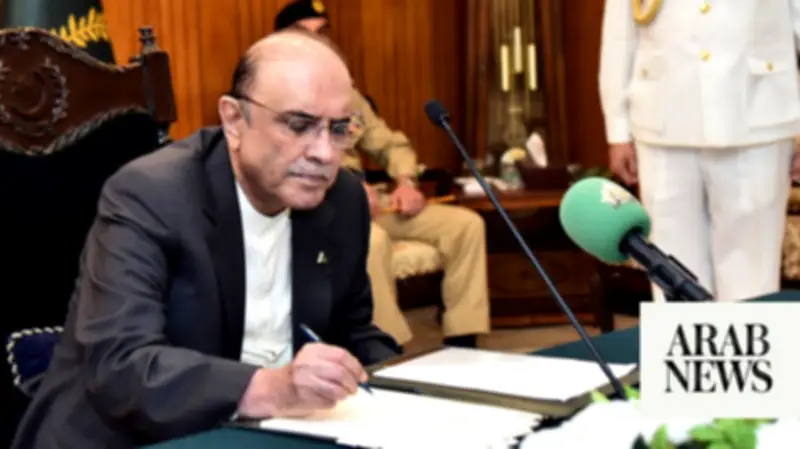
President Asif Ali Zardari gave his assent to the Finance Bill for fiscal year 2026-27 on Friday, formally enacting Pakistan's federal budget after parliamentary approval. The bill, which takes effect July 1, outlines revenue generation, new taxes, and fiscal policies.
Budget Targets and Key Allocations
The Rs18.8 trillion ($67.5 billion) budget aims for 4% economic growth and 8.2% inflation in the upcoming fiscal year. Defense spending rises 18% to Rs3 trillion ($10.8 billion), while Rs1 trillion is allocated for development projects. The government projects a fiscal deficit of 3.6% of GDP and a revenue collection target of Rs15.264 trillion ($54.8 billion).
Parliamentary Approval and Debate
On June 23, parliament passed the finance bill via voice vote after days of debate on economic priorities, taxation, federal spending, and resource distribution between the federal government and provinces. Lawmakers discussed reliance on provincial funds to meet fiscal and defense needs under a $7 billion International Monetary Fund (IMF) program.

“President Asif Ali Zardari has assented to the Finance Bill, 2026, relating to the Federal Budget for fiscal year 2026-27,” the president’s official X account posted.
Defense Spending and Security Concerns
The defense increase follows last year’s military confrontation with India and ongoing security issues along the western border with Afghanistan. Some lawmakers argued repeated reliance on provincial funds could constrain local development and public services.
Fiscal Strategy and IMF Program
The government aims to strengthen public finances and sustain macroeconomic stability through ambitious revenue targets and deficit control, while remaining on track with the IMF program.