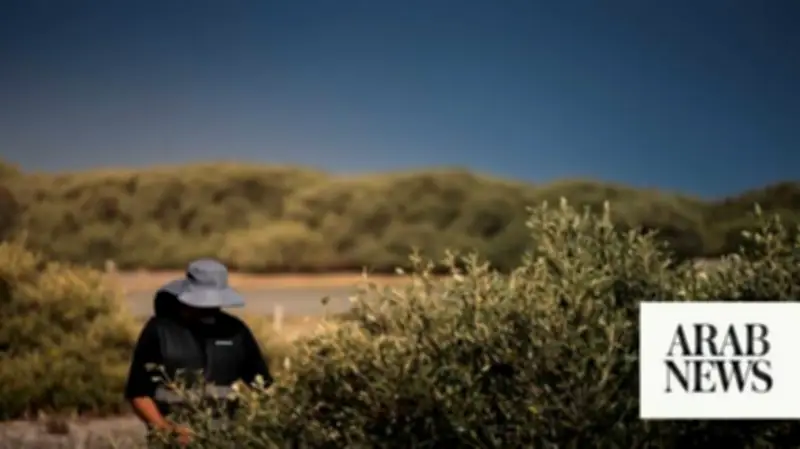
Ras Tanura's Mangrove Eco-Park, the only one of its kind in Saudi Arabia, is a free public park launched in 2021 to protect coastal wetlands and educate visitors as part of the Saudi Green Initiative. Authorities have committed to planting 100 million mangrove trees by 2030 to support sustainability goals and net-zero emissions by 2060.
Park Features and Research
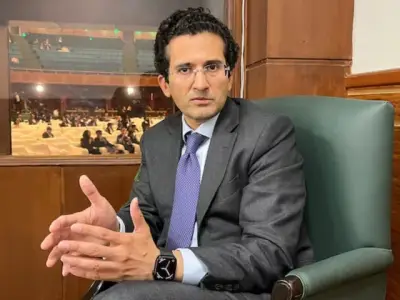
The park covers approximately 64 sq. km and includes public boardwalks, educational facilities, and long-term scientific monitoring systems, according to Thamer S. Al-Mutairi, manager of Aramco's Mangrove and Forestation Division. The park is powered by Aramco and serves as a research hub for studying the Grey Mangrove (Avicennia marina).
Challenges and Adaptations
Al-Mutairi noted that the primary challenge is the extreme salinity and temperature fluctuations in the Arabian Gulf. Aramco treats mangrove restoration as a rigorous, science-based endeavor, relying on long-term monitoring, sensors, and collaborations with universities such as King Abdullah University of Science and Technology (KAUST) and King Faisal University.

“We are also leveraging advanced technologies, such as drones, to ensure effective monitoring and maximize mangrove carbon credit generation,” Al-Mutairi added. “We carefully match local mangroves to specific micro-habitats, adjust planting densities, and refine our timing around tides and temperature extremes.”
Blue Carbon and Carbon Sequestration
Blue carbon, sequestered in coastal ecosystems like mangroves, is a key climate change mitigation mechanism. Aramco has established a carbon stock assessment verified by third parties. “We continuously monitor the health, growth, and carbon-sink capabilities of our mangrove forests using a network of sensors and drone technology,” Al-Mutairi said.
Planting Progress and Future Ambitions
By the end of 2025, Aramco had planted over 49 million mangrove trees in the Kingdom, including approximately 6 million in 2025 alone. The company has an ambition to plant 300 million mangroves by 2035. “Beyond Ras Tanura, these data-driven approaches are being scaled across our wider coastal restoration portfolio,” Al-Mutairi noted.
Ecological and Social Impact
The restored mangroves function as “living laboratories,” stabilizing shorelines, filtering water, and providing nurseries for juvenile fish and invertebrates. The Eco-Park has become a community and educational hub, attracting schools, universities, and families interested in learning about Saudi Arabia’s coastal environments. “The data we collect at the Mangrove Eco-Park serves as a blueprint,” Al-Mutairi said, informing future restoration projects and supporting Aramco’s net-zero ambition by 2050.