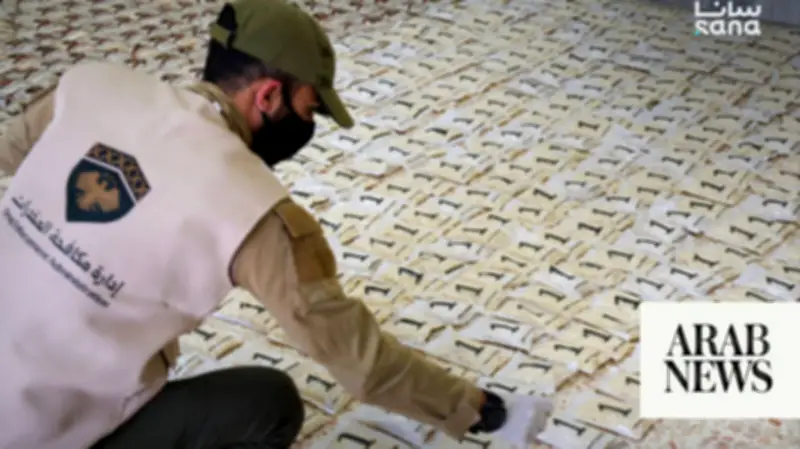
Syrian authorities have thwarted a major drug smuggling attempt, seizing over 832,000 captagon tablets being trafficked from Lebanon into the Al-Nabek district, according to the state-run Syrian Arab News Agency (SANA). The operation, conducted by the Drug Enforcement Administration in coordination with the Internal Security Command in Rif Dimashq governorate, resulted in the arrest of one suspect. Both the individual and the confiscated narcotics have been referred to the judiciary for legal proceedings, officials confirmed.
Smuggling Corridor in Anti-Lebanon Mountains
Al-Nabek, located along the eastern edge of the Anti-Lebanon mountain range near the Syrian desert, has historically served as a key corridor for cross-border smuggling activities. The region's rugged terrain and proximity to the Lebanese border make it a favored route for illicit trafficking. This latest seizure underscores the persistent challenges faced by Syrian authorities in curbing the flow of captagon, a highly addictive amphetamine-like drug.
Shift in Syria's Role in Captagon Trade
Syria's involvement in the regional captagon trade has reportedly evolved since the fall of former President Bashar Assad, whose government was widely accused of profiting from the production and trafficking of the drug. The interim administration, led by President Ahmad Al-Sharaa, has pledged to combat drug trafficking through all legitimate means, pursuing a vision of a “Drug-Free Syria.” According to the UN, large-scale captagon production in Syria was significantly disrupted after Assad's ouster on December 8, 2024. However, major seizures continue to occur across the region.

Recent Seizures and Regional Impact
On June 25, Syrian authorities seized approximately 150,000 captagon tablets at the Jaber border crossing with Jordan in a joint operation with Jordanian anti-narcotics forces, as reported by the North Press Agency. In December, the UN Office on Drugs and Crime (UNODC) verified the seizure of at least 177 million captagon tablets across the Arab region since Assad's downfall. The agency noted that Gulf countries remain the primary destination market, although shortages have begun to appear in several nations.
Last month, the Saudi Press Agency reported that Saudi authorities seized over 1.4 million amphetamine tablets hidden inside a rock-crushing machine in the Kingdom's Northern Borders region. These incidents highlight the ongoing battle against captagon trafficking despite the disruption of production in Syria.