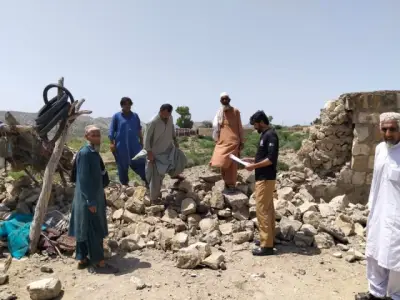
A worsening water crisis has left hundreds of residents of Mari village in Tehsil Jand of Attock district struggling for every drop, with an entire population now dependent on a single overburdened well as their only source of clean water. With no alternative supply in sight, locals say the situation has become “unbearable” for both households and livestock, turning a basic necessity into a daily battle.
Single Well Overwhelmed by Growing Demand
Residents told The Nation that Mari’s domestic and agricultural needs are being met almost entirely from one central well fitted with several water pumping electric motors. The setup once served the community, but rapid population growth and rising water demand have pushed it beyond its limit.
“The well runs for hours, but the water level keeps dropping,” said Malik Sajjad of the village. “In the morning, there are long queues of women and children with buckets and pitchers. By afternoon, the motors often suck air instead of water.”

Most households rely on this single source for drinking, cooking, washing, and watering cattle and goats. Farmers report that livestock are now showing signs of stress and reduced milk yield due to inconsistent supply.
Indus River Nearby but Unreachable
The irony, villagers say, is that the mighty Indus River lies just a few kilometers from Mari. Yet, despite decades of requests, no government or departmental project has been launched to bring river water to the village through a pipeline or a treatment scheme.
“It is painful to see water flowing so close while we wait in line for a few buckets,” another resident noted. “We are not asking for luxury. We are asking for our right to clean and potable drinking water.”
Public and social circles in the area have voiced similar frustration, calling the absence of a water project a serious administrative gap. They argue that a pipeline from the Indus or approval of an alternative water supply scheme would immediately relieve pressure on the well and secure the village’s future.
Health and Economic Impacts
Water scarcity is now affecting more than convenience. Health workers in nearby Jand say irregular and contaminated supply increases the risk of waterborne diseases, especially among children and the elderly. For livestock-dependent families, reduced water also means lower income and food insecurity.
“Clean water is a fundamental right of every citizen under the Constitution,” said a member of a local social welfare group. “The people of Mari have been waiting for years. The authorities must act now before the crisis turns into a disaster,” added social worker Sadiq Qureshi.
Demands for Immediate Action
Residents have demanded that the Public Health Engineering Department, tehsil administration Jand, and district administration prioritize Mari for an urgent water supply project. The proposal on the table is straightforward: lay a pipeline from the Indus River or fast-track an alternate scheme to ensure safe, reliable supply.
Until then, the people of Mari continue to queue at the lone well each day in this scorching heat, hoping the motors will not fail and the water will not run out. For them, the river is visible on the map, but relief remains out of reach.