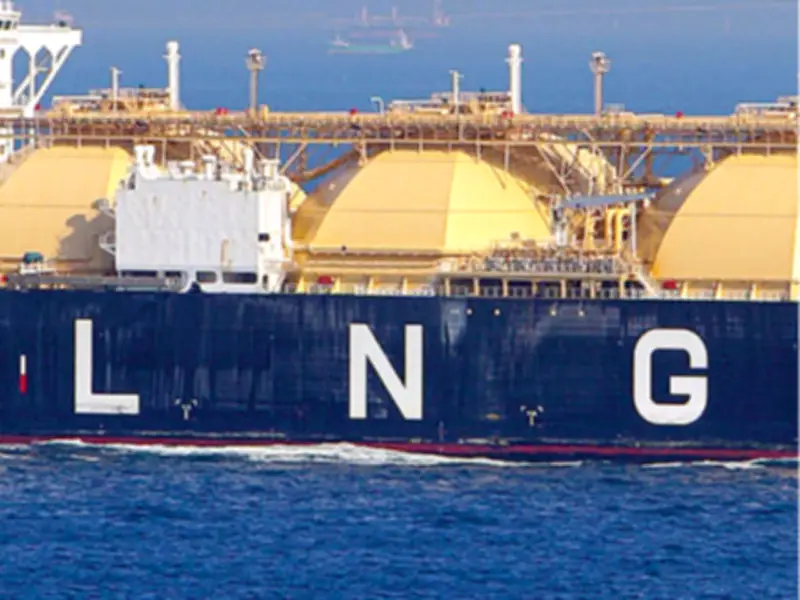
The Economic Coordination Committee (ECC) has deferred a proposal to fix a higher tariff for indigenous natural gas supplied to liquefied natural gas (LNG)-based power plants after top officials of the Petroleum Division failed to attend the meeting. The decision comes amid a Middle East conflict that disrupted LNG supplies from Qatar.
Petroleum Division officials absent
When the matter was taken up, the ECC was informed that the petroleum secretary, who moved the summary for the gas tariff, was not present. The special secretary petroleum also did not attend. Additionally, views and comments from the concerned ministry were unavailable, which were required to decide on the proposal. As a result, the ECC deferred the proposal.
ECC members directed that principal account officers who move summaries must attend meetings to pursue their cases. The Petroleum Division had sought approval for a high tariff on indigenous gas provided to LNG plants when Qatari LNG supply halted due to the Gulf crisis.

Background of the gas diversion
Following the eruption of a crisis in the Gulf in late February 2026, QatarEnergy declared force majeure on LNG cargo supplies. To mitigate the shortage, the National Coordination and Management Council decided to provide indigenous gas to LNG power plants from April to June 2026. Sui Northern Gas Pipelines Ltd (SNGPL) redirected 48 million cubic feet per day (mmcfd) of gas from CNG stations in Khyber-Pakhtunkhwa to meet power sector needs.
The indigenous gas was supplied to tackle extensive electricity load-shedding in April and May 2026 across the country.
Tariff proposals and concerns
The Oil and Gas Regulatory Authority (Ogra) had set the standard re-gasified LNG (RLNG) sale price at $12.4913 (Rs3,498) per million British thermal units (mmBtu) for March 2026, which increased to $15.6237 (Rs4,375) per mmBtu for May 2026. The Power Division argued that applying the standard RLNG tariff on indigenous gas supplied from April to June 2026 would force power plants to file for upward fuel charges adjustment of Rs0.5 to Re1 per kWh, raising consumer tariffs.
To avoid this, a meeting chaired by the prime minister decided that SNGPL should charge a lower price of Rs2,000/mmBtu for indigenous gas supplied to those plants, instead of the regular RLNG tariff. The National Coordination and Management Council reviewed the proposal in May 2026.
Circular debt warnings
The Petroleum Division cautioned that charging the lower price instead of the full RLNG tariff would prevent the sector from earning additional revenues and increase circular debt in the gas sector, which stood at Rs1.8 trillion (principal amount) as of December 2025. It also noted that a higher tariff would help SNGPL clear outstanding receivables against RLNG sales.
Ogra's review of estimated revenue requirement set SNGPL's average prescribed price at Rs1,853/mmBtu for FY26, subject to final settlement at year-end.
Regulatory framework
The Petroleum Division informed the ECC that the government had amended the Ogra Ordinance 2002 by adding a new section, allowing the regulator to issue monthly RLNG prices subject to policy guidelines. RLNG sales are ring-fenced from indigenous gas pricing unless explicitly diverted to domestic users, requiring recovery via price adjustments twice a year. All RLNG consumers are billed monthly based on Ogra-set prices according to federal policy.