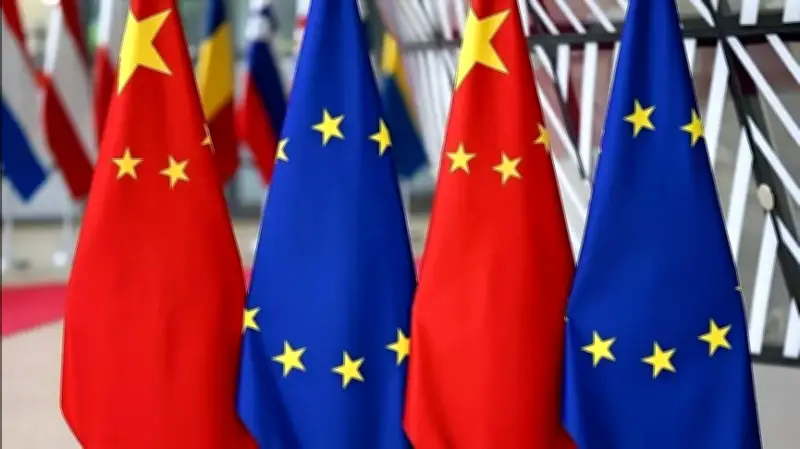
The European Union and China have agreed to establish a new high-level dialogue mechanism aimed at stabilizing and rebalancing their trade and investment relationship. The agreement was reached during the inaugural meeting of the EU-China Trade and Investment Consultations (TIC) held in Brussels on Monday.
Meeting of Top Trade Officials
EU Trade Commissioner Maros Sefcovic and China’s Commerce Minister Wang Wentao led the discussions. According to a joint statement, both sides acknowledged the challenges in their trade relationship and committed to seeking practical solutions. The primary objective of the new mechanism is to strengthen ministerial-level dialogue on trade and investment policies, with a focus on creating a more stable and balanced economic relationship.
Four Initial Workstreams Identified
The consultations identified four initial workstreams: trade and investment balancing, export controls, intellectual property rights, and World Trade Organization (WTO) reform. Officials have been mandated to advance work in these areas, with ministers expected to meet again in the fall.

Both sides also agreed to establish a joint monitoring mechanism to exchange data, track trade flows, and support technical work intended to improve transparency, build trust, and manage trade frictions. Discussions included possible tariff and non-tariff measures aimed at improving market access, with both sides exchanging lists of concerns and agreeing to continue talks under the trade balancing workstream.
Progress on Export Controls and Critical Materials
On export controls, the EU and China noted positive progress in dialogue on rare earth elements and other critical materials. They agreed to strengthen exchanges on regulatory frameworks and licensing policies, and to further cooperation aimed at supporting the stability of global supply chains.
Commitment to WTO Reform and IP Protection
Both sides underlined the importance of cooperation within the WTO and expressed support for advancing WTO reform and strengthening its effectiveness. In addition, they recognized technical discussions on intellectual property rights, agreeing to address systemic issues and improve fairness, efficiency, and transparency of IP protection and enforcement.