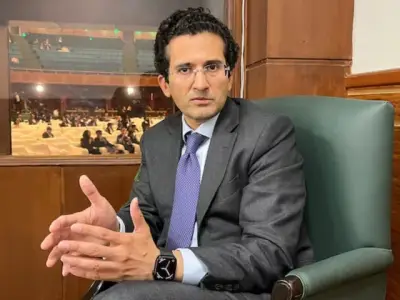
Bill Savitt, a partner at Wachtell, Lipton, Rosen & Katz, has achieved a rare feat: defeating Elon Musk in court not once, but twice. Savitt represented Twitter in Musk's attempt to back out of the $44 billion acquisition, winning that case. He then represented Sam Altman and OpenAI in Musk v. Altman, securing another victory. In an interview, Savitt discussed his preparation for cross-examining Musk, his use of a guitar to relax, and the future of artificial intelligence in law.
Cross-Examination Strategy Against a Formidable Witness
Savitt described Musk as a "formidable personality" who is "very smart" and has the "capacity to see around corners." To prepare, Savitt emphasized "massive preparation" — knowing every relevant document intimately. He stressed the importance of "never taking the bait" and avoiding a fighting match with the witness. However, he also cautioned against sticking rigidly to a script, advising lawyers to chase "rabbits" that run across the road during examination — unexpected opportunities that arise.
The Importance of Chronology
Savitt agreed that presenting a coherent timeline is crucial for jury understanding. He noted that nearly every attempt to present facts non-chronologically is a mistake. In Musk v. Altman, the sequence of events was "exceedingly important" for establishing the case.

Nonlegal Objectives in Litigation
Savitt observed that most lawsuits have commercial or reputational objectives beyond the legal dispute. He emphasized the role of a lawyer as a counselor, managing the broader universe of problems a case poses. "It's about your client and your adversary's client and what they're trying to achieve," he said.
Preparation Rituals: Playing Guitar
During his time in San Francisco for the trial, Savitt brought a Fender Telecaster with P-90 pickups and a Cube amplifier. Playing guitar, he said, is "pacifying" and puts his mind at rest, allowing him to engage in a non-legal activity. He also cycles for similar mental clarity.
AI and the Future of Law
Savitt predicted that artificial intelligence will be a focal point of legal debate. He raised questions about whether AI-generated advice is privileged, whether AI output is admissible as evidence, and whether a computer could be cross-examined. He expects the Delaware Court of Chancery to be a leading bench on AI issues and foresees the emergence of AI specialists in law.
Savitt declined to discuss specifics of Musk v. Altman due to an ongoing appeal, but his track record suggests he may have developed a blueprint for litigating against Musk.