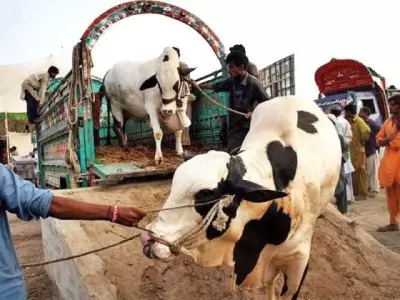
An analysis of Pakistan's $457 billion informal economy reveals why businesses resist formalization and what experts like Burhan Mirza suggest for tackling this issue. Walk through Karachi's Saddar market on any morning and you will see Pakistan's real economy at work. Electronics, clothing, spare parts, medicine, food: all of it changes hands in cash, without receipts, outside the reach of any tax office. This is not a black market. This is simply how the majority of Pakistan's businesses have always operated.
The Scale of the Informal Economy
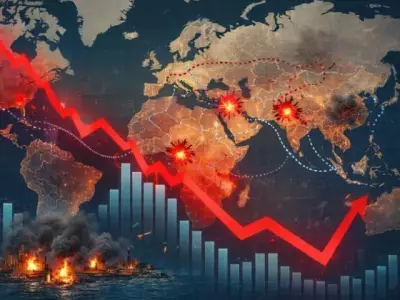
According to a study published by the Small and Medium Enterprises Development Authority (SMEDA) and the International Labour Organization (ILO) in May 2024, Pakistan's informal economy is worth around $457 billion. The country's formal, documented economy at the same time was only $340 billion. That means the shadow economy is roughly 64 percent larger than the one the government actually tracks. Around 72.5 percent of workers outside agriculture are employed in the informal sector. Pakistan's tax-to-GDP ratio sits at just 10.2 percent, one of the lowest in Asia and the world.
Government Efforts vs. Ground Reality
The government knows this is a problem. Federal officials have called for full economic digitization. New laws have been passed. Mobile payment platforms like Raast have attracted millions of users. Digital transactions grew 35 percent in 2024 alone. But policy announcements and what actually happens at street level are two very different things. The core question remains unanswered: why do so many Pakistani businesses choose to stay informal, even when they are ready to grow?

Expert Insight: Muhammad Burhan Mirza
Muhammad Burhan Mirza is one of the people best placed to answer that question. An entrepreneur with a portfolio of more than 15 IT startups, he co-founded The Coach360 in 2021, a mentorship platform for young professionals, and launched Skills360 in 2024, a skills training institute focused on IT careers. “The market is maturing”, Burhan explained in an interview. “People are expected to be disciplined, adaptable, and grounded in reality. Success is no longer about having a flashy idea; it’s about building something the market can endure”. Mirza has worked directly with hundreds of founders facing this exact issue: the point when an informal business tries to grow and discovers that the system was not built to help it.
Why Businesses Stay Informal
His view is clear. Businesses do not stay informal because they are dishonest or lazy. They stay informal because going formal costs more than it offers. Registration alone means dealing with multiple government bodies, each with their own fees, timelines, and paperwork. A process that takes a few days in Singapore or Estonia can take weeks or months in Pakistan, often with unofficial costs along the way. The financial pressure makes things worse. Formal businesses must pay income tax, sales tax, and social security contributions. An informal workshop competing in the same market pays none of these. The cost difference can be enough to push a formally registered business out of profit entirely.
The Banking Problem
Then there is the banking problem. Most formal credit products require documented income and a credit history, which informal businesses do not have. You need formal status to access a loan, but you need a loan to afford the cost of going formal. It is a circle with no easy entry point.
Practical Solutions from Burhan Mirza
Mirza's response to this has been hands-on. Through Skills360, he is trying to build people into formal employment from the very beginning, with practical IT courses designed to produce job-ready graduates in months rather than years. Through The Coach360, he provides mentorship for founders navigating the transition from informal operator to investable business. His approach is grounded in what he has called realism: the ability to turn vision into results inside real constraints. "We need institutions solely dedicated to IT skills; programs which can land you a job within months of learning a new skill," he said.

The Fiscal Burden and the Cycle
The wider picture remains difficult. Formal sector workers, who are just two percent of the labour force, paid Rs 243 billion in taxes in the first half of 2024 alone. The formal economy carries a disproportionate fiscal burden precisely because the informal economy carries almost none. That gap makes formal businesses less competitive, which pushes more activity underground, which increases the burden on those who are left. Breaking this cycle requires more than a digitization campaign. It requires rebuilding the basic bargain between business and the state: reducing the cost of compliance, making credit accessible to businesses without formal histories, and creating a regulatory environment stable enough to trust.
Conclusion: Building a Formal Economy Worth Joining
Pakistan's informal economy is not a failure. It is what happened when tens of millions of people built livelihoods in a system that could not accommodate them. The formalization problem is not about punishing those people. It is about building a formal economy that is genuinely worth joining. That means cheaper registration, simpler taxes for small businesses, accessible credit, and institutions people can trust. Until that bargain is on the table, the $457 billion will stay where it is: productive, resilient, and invisible.