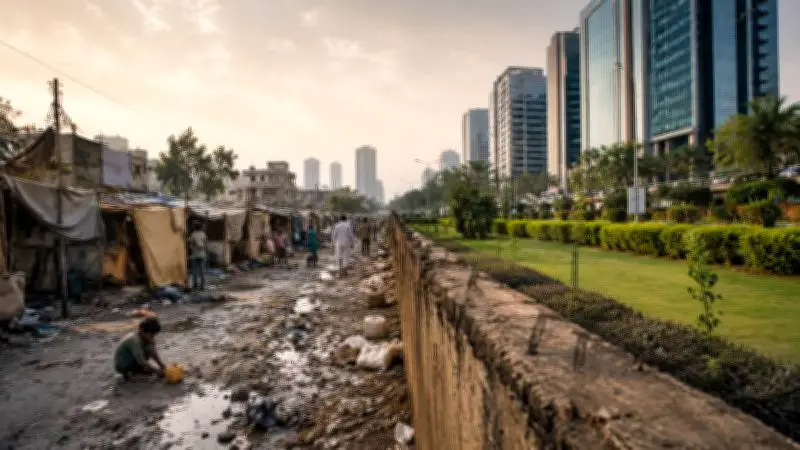
The dust has settled on the latest federal budget, and as expected, the reactions are as polarised as the economic strata of the country. On television screens and in post-budget seminars, business leaders and policymakers are trading nods of approval. There is an undeniable air of satisfaction within the chambers of commerce. Yet, step outside those air-conditioned halls and onto the streets of Karachi, and you will find the mood shifts from strategic celebration to weary survival. The government's latest fiscal measures present a textbook study in contrast: a package that offers genuine structural relief to corporate elites, gives nominal, almost psychological breathing room to the middle-class professional, and completely leaves behind the invisible underbelly of the workforce.
Victory for Business Class
For the business class, particularly the export sector, this budget is an undeniable victory. The abolition of the regressive corporate Super Tax is a bold and necessary step towards correcting a long-standing policy flaw. In a region where Pakistan must compete with the aggressive corporate tax structures of neighbouring economies, heavy taxation on top-tier earners was actively starving companies of liquidity and discouraging documentation. By removing this burden, the government has handed large export houses an immediate, massive cushion—ranging from Rs. 5 million to upwards of Rs. 60 million annually for a single large enterprise.
To understand the Rs. 5 million figure, consider a mid-sized exporter earning Rs. 250 million in annual profit. Under the abolished Super Tax, such a company paid an additional 2 per cent levy—exactly Rs. 5 million (Rs. 250 million × 0.02). That money now stays with the company. For larger firms earning Rs. 500 million or more, the 6 per cent to 10 per cent slabs yield savings of Rs. 30 million to Rs. 60 million. This is high-velocity capital injected back into the formal corporate bloodstream, meant to drive investment, secure foreign exchange, and keep Pakistani goods competitive globally. It is no wonder business councils are expressing profound pleasure; on paper, the state has prioritised the engines of macroeconomic growth.

The Unequal Burden of Austerity in Pakistan
Then comes the formal salaried class, whose reaction can best be described as a faint, bittersweet smile. On one hand, the slashing of the lowest taxable bracket to a flat 1 per cent on income between Rs. 600,000 and Rs. 1,200,000 provides a visible mathematical reduction in their tax bills. For an employee making Rs. 1.2 million annually, a drop from a previous tax liability of Rs. 30,000 down to just Rs. 6,000, feels like a rare gesture of empathy from the state. It represents annual savings of Rs. 24,000.
But this relief is quickly viewed through a lens of profound disbelief once measured against the brutal physics of daily inflation—and regional benchmarks. Across the border, India's fiscal structure handles its salaried class with a vastly wider safety net. Under India's default tax regime, combining standard deductions and enhanced rebates, salaried individuals are effectively exempt from income tax up to INR 1.2 million. When adjusted to our currency, that is an exemption threshold of roughly PKR 3.2 million. In Pakistan, however, an employee making PKR 3.2 million is not exempt; they are pushed deep into a punishing progressive tax bracket, carrying a heavy direct tax burden on top of skyrocketing indirect levies.
Even for lower-paid workers closer to the Rs. 800,000 mark, the token direct tax relief is instantly incinerated by the kitchen budget. For a commuter travelling daily from Malir to Tower in Karachi, the cost of fuel or surging bus fares alone devours up to Rs. 15,000 a month. Add to that basic house rent of Rs. 15,000, utility bills touching Rs. 9,000 and loaded with hidden government surcharges, primary school fees of Rs. 3,000 per child, and staple food items like milk priced at Rs. 260 per litre. The household budget for someone making Rs. 800,000 to Rs. 1,200,000 is not just tight; it is mathematically underwater. The state's tax relief prevents them from slipping further backwards, but it does nothing to rescue them from the crushing weight of structural inflation.

Pathology of Judicial Relief
Yet, the truest, darkest failure of the current economic landscape lies entirely beyond the coverage of this relief package. It resides in the lives of the millions who do not even qualify for the conversation: our security guards, sanitary workers, and daily-wage labourers. This week, the well-known social activist and journalist, Naeem Sadiq, wrote a letter to the Chief Minister of Sindh and suggested that the minimum wage for unskilled workers (of all categories and all types of employment) for the year 2026–27 be notified at Rs. 60,000 per month for eight hours of work and 26 working days. Highlighting the plight of these poor people, he further added in his letter that thousands of SSWMB sanitation workers, even today, receive Rs. 18,000 per month, making a mockery of the Sindh Government's interest in, and ability to ensure compliance with, its own laws.
While the Speaker of the National Assembly received a 660 per cent raise, these sanitation workers in Karachi still take home Rs. 18,000—a criminal gap that no budget speech has yet dared mention. The same week, a state-owned think tank, the Pakistan Institute of Development Economics (PIDE), suggested that the government increase the minimum wage by at least 12.5 per cent to Rs. 45,000 and ensure its rule-based enforcement, rather than making a notional announcement.
For the estimated 1.2 million contract workers in Sindh alone—security guards, sanitary workers, and daily-wage labourers—the budget might as well have been written in a foreign language. They do not benefit from tax threshold adjustments because they do not earn enough to be taxed. They exist entirely outside the formal conversation. Thousands of security guards and sanitary workers are trapped in unregulated, third-party contract systems, taking home a mere Rs. 18,000 to Rs. 25,000 a month for gruelling 12-hour shifts. They exist entirely without the safety nets mandated by law—no old-age benefits (EOBI), no social security health insurance (SESSI), and no job security.
Budget, State, Taxes and Human Rights
For this segment of Pakistan, the budget is irrelevant. A monthly salary of Rs. 20,000 cannot even cover the basic rent and milk for a family, let alone flour, utilities, or medicine. To survive, these families are forced into devastating human compromises: skipping meals, accumulating endless debt to local shopkeepers, and pulling their children out of school and into domestic labour. Worse still, while they are completely excluded from direct tax relief, they bear the highest relative burden of the state's indirect taxes. Every litre of petrol in the buses they ride, every unit of electricity powering a single bulb in their rooms, and every basic grocery item they buy is heavily taxed to fund the national apparatus.
When policymakers stand before the nation and celebrate "relief for the formal sector", they are combining two entirely different universes into a single sentence. The business elite walks away with millions in structural liquidity to protect its corporate capital. The salaried middle class is left with a few thousand rupees—a nominal gesture that is quickly swallowed by the kitchen budget, while regional peers enjoy far wider cushions. And at the very bottom, the lowest tier of human capital is left completely unprotected, bearing the brunt of indirect taxation while being exploited right under the nose of state regulators.
To build a truly sustainable economy, Pakistan cannot rely solely on easing the burdens of those at the top while hoping the benefits trickle down. Until minimum wage laws are fiercely enforced, informal workers are legally documented into safety nets, and the tax burden is shifted away from basic survival goods, the budget will remain a document that serves the balance sheets of industry while failing the kitchen tables of the people who keep it running.