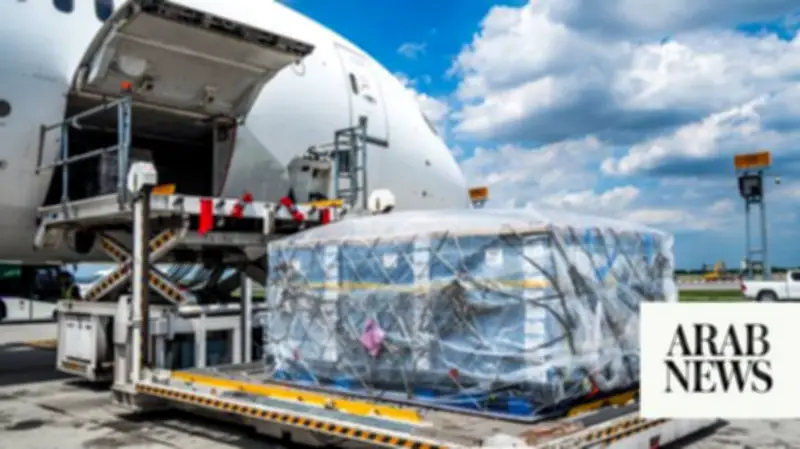
The International Air Transport Association reported that Middle Eastern air cargo demand fell 8.9 percent year on year in May 2026, marking the weakest performance of any region globally. Capacity among Middle Eastern carriers also declined by 9.2 percent from a year earlier. IATA linked the contraction to the continuing conflict in the region, which began on Feb. 28 and involves the US, Israel, and Iran. The war triggered widespread airspace closures and grounded passenger and freighter services at major Gulf hubs, including Dubai, Abu Dhabi, and Doha.
Global Air Cargo Growth Contrasts with Middle East Decline
In contrast to the Middle East, worldwide air cargo demand, measured in cargo tonne-kilometers, increased 6 percent compared with May 2025, including a 6.5 percent rise in international operations. Available cargo capacity rose 1.9 percent globally and 2.8 percent for international operations. The global cargo load factor increased by 1.8 percentage points to 46.3 percent. The Middle East’s load factor rose by 0.2 percentage points to 46.5 percent despite the declines in both demand and capacity.
IATA Director General Willie Walsh commented: “May’s strong performance, coupled with macro-economic factors, gives cautious optimism for air cargo’s prospects over the remainder of the year. Trade and manufacturing output are both growing. Airlines have adapted operations to align with shifting demand patterns and supply chain needs.” He added: “It’s still a tough year, particularly as Middle East uncertainties weigh heavily on parts of the industry, but robust demand and airline resilience are clear.”

War Disruption Hits Gulf Trade Routes Hard
War-related disruption was particularly evident on Gulf-linked trade routes. IATA reported that cargo traffic between Europe and the Middle East declined 19.8 percent year on year, marking a third consecutive month of contraction. Demand on the Middle East-Asia corridor fell 16.5 percent, also for a third consecutive month. Reuters reported in March that global air cargo capacity initially fell 22 percent, while freight rates rose by as much as 70 percent on some routes as shipments were stranded and carriers rerouted aircraft. Although airlines later restored services, security concerns and route restrictions continued through June.
Other Major Trade Lanes Show Strong Growth
Other major trade lanes recorded growth. Asia-North America cargo demand increased 19.9 percent, followed by Africa-Asia at 14.1 percent, intra-Europe at 11.5 percent, and Europe-Asia at 10 percent. The Asia-North America route, which accounted for 23.5 percent of global cargo traffic in 2025, recorded its fourth consecutive month of growth. Europe-Asia, representing 21.5 percent of the market, extended its growth run to 39 consecutive months.
Regional Air Cargo Performance Varies Widely
African airlines recorded the strongest regional growth, with cargo demand rising 13.3 percent and capacity increasing 1.3 percent. The region’s cargo load factor climbed five percentage points to 46.9 percent. North American carriers posted demand growth of 10.5 percent against a 2.4 percent increase in capacity. Asia-Pacific airlines recorded an 8 percent rise in demand and a 5.1 percent expansion in capacity. European carriers reported demand growth of 6.7 percent and capacity growth of 2.2 percent. Latin American and Caribbean carriers recorded a 1.9 percent increase in demand, while capacity rose 5.6 percent. The region’s load factor declined by 1.2 percentage points to 34.8 percent.
Macroeconomic Environment Supports Cautious Optimism
The broader operating environment remained supportive but uneven. Global trade increased 5 percent year-on-year, extending a run of 25 consecutive months of annual growth. The Global Manufacturing Output Purchasing Managers’ Index rose to 53.5 in May, indicating continued expansion in manufacturing activity. The New Export Orders Index remained below the 50-point threshold at 49.6, suggesting that air cargo growth was driven by selected trade flows rather than a broad increase in global exports. Jet fuel prices declined 16.3 percent from April but remained 93.5 percent higher than a year earlier, maintaining cost pressure on airlines.