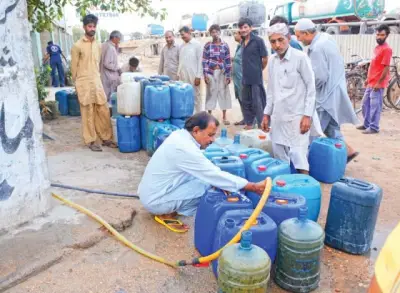
Pakistan's economic landscape has entered 2026 facing a formidable challenge: a persistent and sharp rise in inflation that is squeezing household budgets and testing government policy. The nation is grappling with increasing prices across essential commodities, energy, and services, putting immense pressure on the common citizen and prompting urgent calls for effective countermeasures.
Understanding the Inflationary Pressures
The current wave of inflation is not an isolated phenomenon but the result of multiple converging factors. Global market volatility continues to play a significant role, affecting the prices of imported goods, including crucial items like oil, edible oils, and machinery. This external pressure is compounded by domestic issues such as supply chain disruptions and currency depreciation, which make imports more expensive.
Furthermore, structural issues within the domestic economy, including energy sector inefficiencies and certain fiscal policies, have contributed to the rising cost of doing business. These costs are inevitably passed on to consumers, leading to a broad-based increase in the price of goods and services. The situation is particularly acute for low and middle-income families, who spend a larger portion of their earnings on basic necessities like food and utilities.

Government's Policy Response and Measures
In response to the escalating crisis, the government has outlined a multi-pronged strategy aimed at stabilizing prices and providing relief. Key focus areas include enhancing regulatory oversight to prevent hoarding and profiteering, especially in the markets for essential food items. Authorities have signaled a crackdown on illegal activities that distort market prices.
Monetary policy is also a critical tool being employed. The State Bank of Pakistan is tasked with managing inflation through interest rate adjustments, a delicate balancing act that aims to cool the economy without stifling growth. On the fiscal side, the government is reviewing subsidies and support programs to ensure they are targeted effectively towards the most vulnerable segments of society, aiming to shield them from the worst effects of inflation.
Broader Economic Implications and Future Outlook
The sustained high inflation has far-reaching consequences for Pakistan's economic stability and growth prospects. It erodes purchasing power, reduces real incomes, and can lead to decreased consumer spending, which in turn slows down economic activity. For businesses, uncertainty about costs makes planning difficult and can discourage new investment.
Economists emphasize that while short-term measures are necessary to provide immediate relief, long-term solutions require addressing fundamental issues. These include boosting domestic agricultural and industrial production to reduce import dependency, implementing energy sector reforms to lower production costs, and pursuing policies that encourage exports to strengthen the country's foreign exchange reserves.
The path ahead requires careful navigation. The effectiveness of the government's current policies will be closely watched in the coming months. Success in curbing inflation will be crucial not only for economic stability but also for maintaining social cohesion and public confidence in the country's economic management. The situation remains fluid, and all stakeholders are urged to adopt a collaborative approach to steer the economy towards calmer waters.